




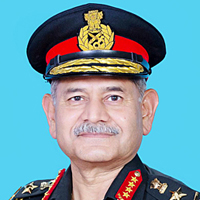
The insightful articles, inspiring narrations and analytical perspectives presented by the Editorial Team, establish an alluring connect with the reader. My compliments and best wishes to SP Guide Publications.
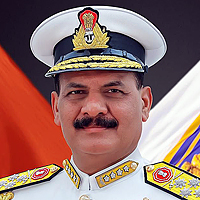
"Over the past 60 years, the growth of SP Guide Publications has mirrored the rising stature of Indian Navy. Its well-researched and informative magazines on Defence and Aerospace sector have served to shape an educated opinion of our military personnel, policy makers and the public alike. I wish SP's Publication team continued success, fair winds and following seas in all future endeavour!"

Since, its inception in 1964, SP Guide Publications has consistently demonstrated commitment to high-quality journalism in the aerospace and defence sectors, earning a well-deserved reputation as Asia's largest media house in this domain. I wish SP Guide Publications continued success in its pursuit of excellence.
Systemic delays, bureaucratic inertia, and vested interests have undermined indigenous innovation, forced imports despite capable domestic technologies, and weakened accountability in defence procurement and induction processes
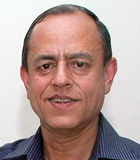 |
The Author is Former Director General of Information Systems and A Special Forces Veteran, Indian Army |
The slogan of Atamnirbhar Bharat in Defence has been consistently making headlines over the last decade plus. But the question is how serious are we about this concept and how vested interests are sabotaging its full potential by design or default. This became pretty apparent at the recent two-day Chanakya Defence Dialogue, having the theme 'Reform to Transform – Sashakt, Surakshit Aur Viksit Bharat', conducted by Indian Army in collaboration with the Centre for Land Warfare Studies (CLAWS) at the Manekshaw Centre, New Delhi, with Defence Minister Rajnath Singh attending the inaugural session.
When Bharat Forge produced the indigenous artillery guns in 2016, why were they not allowed to test these guns in our field firing ranges?
It was a revelation to hear Baba Kalyani, Chairman and Managing Director of Bharat Forge saying that they are exporting indigenous artillery guns worth ₹2,000 crores to Europe that have a range of 48-km and Circular Error Probability (CEP) which is twice as good as any existing artillery gun in the Indian Army arsenal. India is also the largest producer of 155mm artillery ammunition in the world. The irony is that when Bharat Forge produced the said guns in 2016, why were they not allowed to test these guns in our field firing ranges? Why did Bharat Forge have to take these guns to the US for undertaking trials? This raises an unmistakable stink. Wasn't this because of the DRDO-bureaucratic nexus which did not want the Indian Army to conduct user trials, and following successful trials, introduce these guns in service over those produced by the state-controlled defence-industrial complex/DRDO.
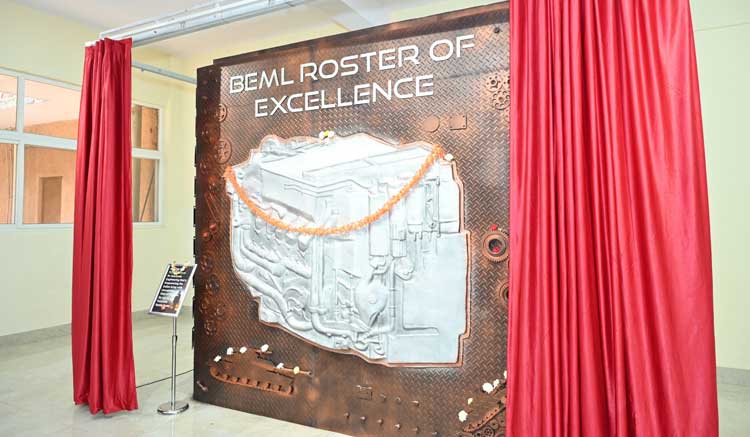
This also raises the question whether the military brass in 2016 was aware these guns were being sent to the US for trials and was the army hierarchy dissuaded from conducting trials of these guns in India? Talking of Atmanirbhar Bharat in Defence, Baba Kalyani remarked that even after 75 years, we are not making engines for our tanks and importing them. He focused on the subtle difference between 'Indigenisation' and 'Innovation'. BEML has reportedly test-fired the indigenous 1500 HP engine for the MBTs (https://www.spsmai.com/experts-speak/?id=1489&q=Indigenous-Engines) but when will it be productionised and introduced to stop importing talk engines?
Talking of Atmanirbhar Bharat in Defence, even after 75 years, we are not making engines for our tanks and importing them
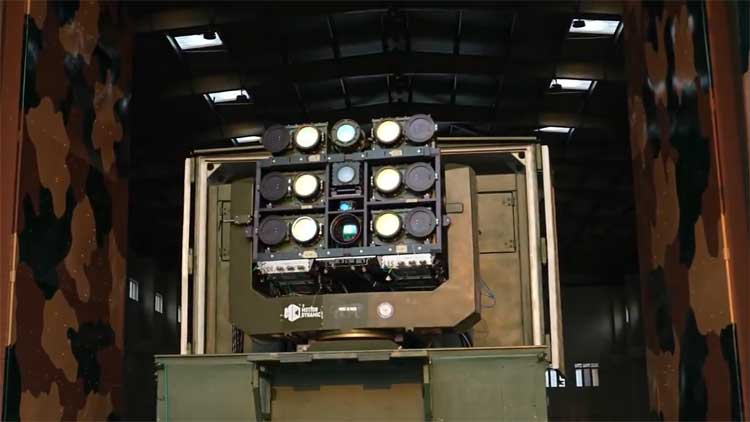
Separately, it is no secret that much of 'Make in India', including drones and armed drones, boils down to "assembling". With reference to India developing the next level Durga directed energy weapon (DEW) system (https://www.spsmai.com/experts-speak/?id=1752&q=Next-Level-DURGA-DEW-System), a very senior three-star vetern says, "Strange that the DRDO has not been able to develop a laser-guided or beam-riding Anti-tank and AD missile system but jumped to the next level of Durga.
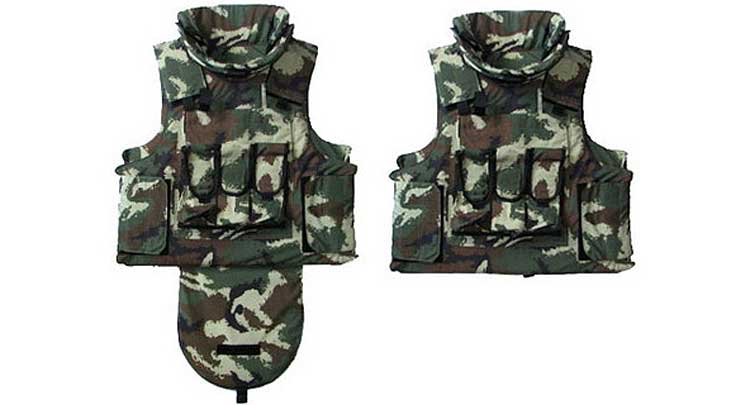
Next in the Chanakya Defence Dialogue, Sanjay Mitra, former Defence Secretary came up with another surprise. Speaking in the concluding session on 'Civil-Military Fusion', he talked about bulletproof jackets developed by IIT, Delhi (IITD), which could withstand six bullets from a short range of 10 feet, but were never procured by the Army. Hence the IPR was shared with two private companies who are now exporting it. He quipped that it would have been a great value addition had the IITs and other reputed institutions been invited to this Seminar. Mitra was appointed Defence Secretary in May 2017. Typical of him as a bureaucrat, to deflect blame on the Army, while brushing under the carpet, how the DRDO (with bureaucratic support) delayed induction of indigenous bullet-proof jackets in the Indian Army.
It is no secret that much of 'Make in India', including drones and armed drones, boils down to "assembling"
Since Mitra was the Defence Secretary in 2017, he would know that Dr Shantanu Bhowmik of Amrita University, Coimbatore had offered highly advanced technology bullet proof jackets (BPJs) and the proposal titled "Development of Hyper Velocity Impact Resistant Ultra-Light Weight High Temperature Resistant Thermoplastic Polymer-Carbon Fiber Composite" was lying with Ministry of Defence (MoD), as reported in these columns in April 2017. The University had claimed that this BPJ had passed the most up to date National Institute of Justice Standard 0101.06, and offered protection from full contact shots. Dr Bhowmik's initial efforts to push the proposal through were ignored until he forwarded the proposal through the DRDO.
Thereafter, the joint TDF-DRDO proposal was sent to MoD. Dr Shantanu Bhowmik, Head Research & Projects, Department of Aerospace Engineering, Amrita University, Coimbatore also wrote to then Defence Minister Manohar Parrikar that the issue must be progressed expeditiously since similar research was ongoing by foreign companies like Boeing, EADS, Airbus, Lockheed Martin, Bombardier etc for developing high performance thermoplastic-carbon fibre composite for various applications in aviation and defence, pointing out that delay in implementing this technology in India, would result in these foreign companies exploiting the Indian market. Bhowmick had dedicated his invention to Netaji Subhas Chandra Bose.
Bulletproof jackets developed by IIT, Delhi (IITD), which could withstand six bullets from a short range of 10 feet, were never procured by the Army
This was a time when India was spending ₹1.5 lakh per jacket used by the Military and Central Armed Police Forces (CAPF). Bhowmick's jacket was to cost about 50,000 per jacket and weighed 1.8 kg compared to BPJs being used by security forces weighing 10-15 kgs. The contract for manufacturing these indigenous jackets was eventually awarded to SMPP Pvt Ltd by the MoD for providing more than 1.8 lakh BPJs under the 'Make in India' project for the Indian Army.
The inability of DRDO to produce a state-of-the-art assault rifle for the Indian Army is also well documented. Even after providing top assault rifles from 11 countries, the DRDO took 15 years to produce the 5.56 INSAS rifles, which were nowhere close to the top 10 models available of the shelf. To top this, red tape delayed production of the AK-203 assault rifles, necessitating the import of SIG 716 Assault Rifles from the US. The first lot of 72,400 of these rifles (66,400 for Army, 4,000 for IAF and 2,000 for Navy) costing ₹647 crore was inked in February 2019. The second deal for importing 73,000 SIG 716 Assault Rifles costing ₹837 crores was inked in August 2024, and in October 2025 a third deal was signed for ₹659 crore to import Advanced Night Sight for SIG 716 Assault Rifle. So much for forethought and planning.
The inability of DRDO to produce a state-of-the-art assault rifle for the Indian Army is also well documented
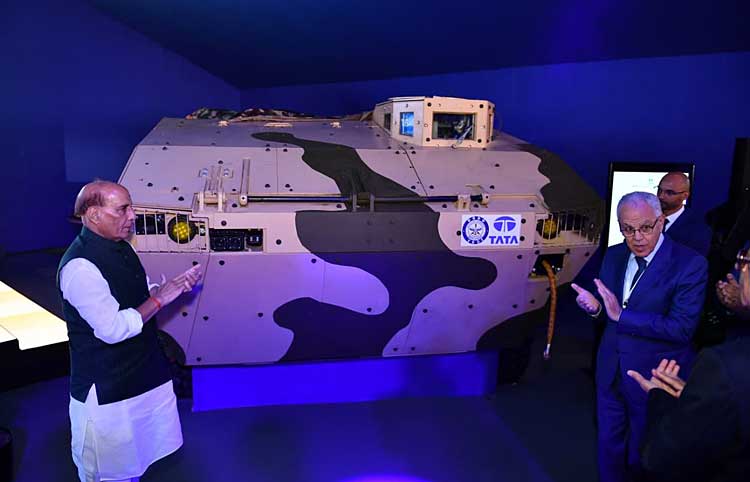
On September 23, 2025, Defence Minister Rajnath Singh inaugurated India's first overseas defence manufacturing facility in Morocco, which produces the Wheeled Armoured Platform (WhAP 8x8). The facility was established by Tata Advanced Systems Limited (TASL) in collaboration with the DRDO. WhAP8x8, a modular combat platform that can be configured as an infantry fighting vehicle (IFV), armoured personnel carrier (APC), ambulance, and other variants. The induction of WhAP into the Indian Army was given low priority despite it also being amphibious, which the Army wants, and all the variants are yet to be provided to the Army. This was not only to push through the Zorawar light tank, but more because the MoD was pressuring the Army for joint production of the vintage Stryker vehicles of the US, which the US has deployed along the Mexican border for anti-infiltration and used Stryker ICVs are now being given to Poland at one dollar apiece.
Finally, the question is can we eliminate these vested interests, ensure accountability and go full throttle for Atmanirbhar Bharat in Defence? The inordinate delay in DRDO's reorganisation and chances of the eventual outcome being an eyewash, doesn't inspire much confidence.