





The insightful articles, inspiring narrations and analytical perspectives presented by the Editorial Team, establish an alluring connect with the reader. My compliments and best wishes to SP Guide Publications.

"Over the past 60 years, the growth of SP Guide Publications has mirrored the rising stature of Indian Navy. Its well-researched and informative magazines on Defence and Aerospace sector have served to shape an educated opinion of our military personnel, policy makers and the public alike. I wish SP's Publication team continued success, fair winds and following seas in all future endeavour!"

Since, its inception in 1964, SP Guide Publications has consistently demonstrated commitment to high-quality journalism in the aerospace and defence sectors, earning a well-deserved reputation as Asia's largest media house in this domain. I wish SP Guide Publications continued success in its pursuit of excellence.
India's push for strategic self-reliance through domestic rare earth magnet manufacturing while continued defence cooperation with the US, underscores the tension between industrial autonomy and an ongoing dependence on foreign military technology
 |
The Author is Former Director General of Information Systems and A Special Forces Veteran, Indian Army |
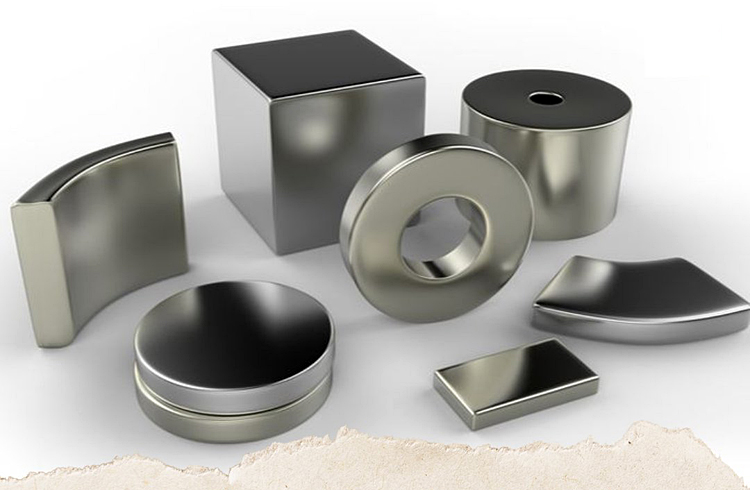
On November 26, 2025, the Union Cabinet headed by Prime Minister Narendra Modi approved a landmark ₹7,280-crore scheme to kickstart India's first integrated manufacturing ecosystem for sintered Rare Earth Permanent Magnets (REPM), a critical input for electric vehicles, renewable energy systems, aerospace platforms, and advanced defence technologies. This marks a major step in reducing India's import dependence and positioning the country as a competitive global supplier in a sector dominated by just a few nations. This approval is to promote manufacturing of Sintered Rare Earth Permanent Magnets, which aims to establish 6,000 metric tonnes per annum (MTPA) of domestic REPM production capacity to boost self-reliance and reduce import dependence, especially amidst global supply chain issues, especially Rare Earth Elements (REE) imports from China. This also aligns with India's long-term Net Zero 2070 commitments by strengthening the clean-energy supply chain.
REPMs, known to be among the strongest permanent magnets, are indispensable for EV motors, wind turbines, precision electronics, and strategic defence systems. Despite rapidly growing demand, India currently imports nearly all its REPM requirements. Consumption is projected to double by 2030, driven by the accelerating shift toward electric mobility and renewable power. The new scheme includes ₹6,450 crore in sales-linked incentives over five years and ₹750 crore as capital subsidy for setting up manufacturing lines covering the entire value chain, from rare-earth oxides to metals, alloys, and final magnet production.
India's first integrated manufacturing ecosystem for sintered Rare Earth Permanent Magnets (REPM) marks a major step in reducing India's import dependence and positioning the country as a competitive global supplier in a sector dominated by just a few nations
The media speculation is that potential beneficiaries in the race are Hindustan Zinc and Gujarat Mineral Development Corporation (GMDC). Other potential players are Vedanta and state-owned Indian Rare Earth Limited (IREL). The total capacity will be allocated to five global/domestic beneficiaries (each up to 1,200 MTPA) through a global competitive bidding process. The scheme has a total duration of seven years, including a two-year gestation period for setting up facilities and five years for incentive disbursement on sales.

By enabling India's first full-stack REPM production capability, vital for electric vehicles (EVs), wind turbines, defence and aerospace sector, and consumer electronics, the initiative is expected to boost advanced manufacturing, create high-skill jobs, reduce strategic vulnerabilities, and elevate India's role in global clean-energy and defence supply chains.
Earlier on November 19, 2025, America's Defense Security Cooperation Agency (DSCA) approved two key military deals that will replenish India's stock of Excalibur artillery shells and Javelin anti-tank missiles worth over $92 million. This was the first Foreign Military Sales (FMS) approval since India–US relations were strained by steep tariffs imposed by US President Donald Trump in August 2025. The approval includes 216 x Excalibur projectiles and 100 x Javelin missile systems, which would contribute to India's precision strike capability across the Line of Control (LoC) with Pakistan and strengthen infantry firepower along high-risk frontiers.
The new scheme includes ₹6,450 crore in sales-linked incentives over five years and ₹750 crore as capital subsidy for setting up manufacturing lines covering the entire value chain, from rare-earth oxides to metals, alloys, and final magnet production
America's Raytheon-produced Excalibur GPS-guided artillery projectile proved its value in Operation 'Sindoor' during May 2025 in targeting Pakistani terrorist camps. Fired from the M777 Ultra-Light Howitzer, Excalibur rounds can adjust trajectory mid-air to home in on their target, making them ideal for mountainous terrain and cross-border precision strikes. India purchased 145 M777 howitzers from the US arm of British defence firm BAE Systems nearly a decade ago, primarily to strengthen capabilities along the China and Pakistan borders. With their long range, rapid deployment, and Excalibur's extremely tight strike radius, this combination has become a potent tool for punitive precision operations. The new deal approved includes a portable electronic fire control system, technical data, repair support, and logistics assistance, essential for operational readiness in forward areas.

The second DSCA approval was for India's request for 100 x FGM-148 Javelin missiles and 25 x lightweight command launch units (CLU). Produced jointly by American firms Lockheed Martin and Raytheon, the Javelin is one of the world's most combat-proven anti-tank systems, famed for its fire-and-forget infrared (IR)-guided technology. Its top-attack profile allows the missile to strike the thinner upper armour of tanks, while its direct-attack mode is designed for bunkers, buildings, and concealed targets, making it extremely versatile for mountain warfare and close combat. The package now approved includes trainers, simulation rounds, technical manuals, spares, integration services, lifecycle support, and refurbishment, ensuring long-term operational use, not just one-time procurement.
America's Defense Security Cooperation Agency (DSCA) approved two key military deals that will replenish India's stock of Excalibur artillery shells and Javelin anti-tank missiles worth over $92 million
Notably, the US DSCA emphasised that the sales will strengthen the security of "a major defence partner," signalling Washington's intent to maintain strategic momentum despite political frictions. Excalibur enhances India's ability to conduct cross-border counter-terror operations with limited collateral damage. The Javelin's fire-and-forget capability gives Indian soldiers a modern, high-survivability anti-tank weapon. The DSCA also clarified that the sales will not disturb the regional military balance, obviously to reassure Pakistan and China. It is being said that the approvals signalled that despite ongoing tariff disputes, defence cooperation continues to expand, underlining the strategic weight both sides place on military interoperability. But it means money for the US and continuing dependency of India on these products.