






The insightful articles, inspiring narrations and analytical perspectives presented by the Editorial Team, establish an alluring connect with the reader. My compliments and best wishes to SP Guide Publications.

"Over the past 60 years, the growth of SP Guide Publications has mirrored the rising stature of Indian Navy. Its well-researched and informative magazines on Defence and Aerospace sector have served to shape an educated opinion of our military personnel, policy makers and the public alike. I wish SP's Publication team continued success, fair winds and following seas in all future endeavour!"

Since, its inception in 1964, SP Guide Publications has consistently demonstrated commitment to high-quality journalism in the aerospace and defence sectors, earning a well-deserved reputation as Asia's largest media house in this domain. I wish SP Guide Publications continued success in its pursuit of excellence.
India's strategic posture is advancing in missile defence, but persistent delays in nuclear-powered submarine induction continue to undermine the credibility and balance of its overall deterrence architecture
 |
The Author is Former Director General of Information Systems and A Special Forces Veteran, Indian Army |
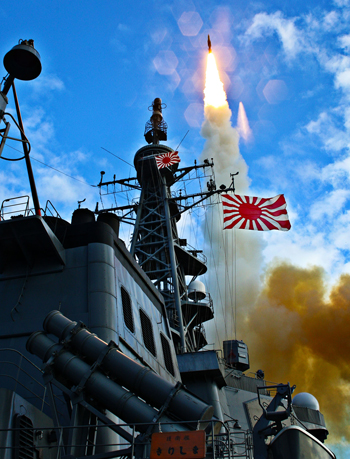
Leading global sea-based missile defence systems centre around America's Aegis Ballistic Missile Defence (BMD) using SM-3 interceptors on destroyers and cruisers, complemented by specialised radars like the Sea-Based X-Band Radar (SBX). Key technologies include advanced radars (SPY-1, SPY-6), space-based sensors and standard Missile-3 (SM-3), Standard Missile-2 (SM-2), Standard Missile-6 (SM-6), with automated systems to manage detection and engagement for command and control. The interceptor flies into space to destroy the warhead during its midcourse phase (before atmospheric re-entry). The Aegis BMD also supports NATO's missile defence, with vessels from allies contributing.
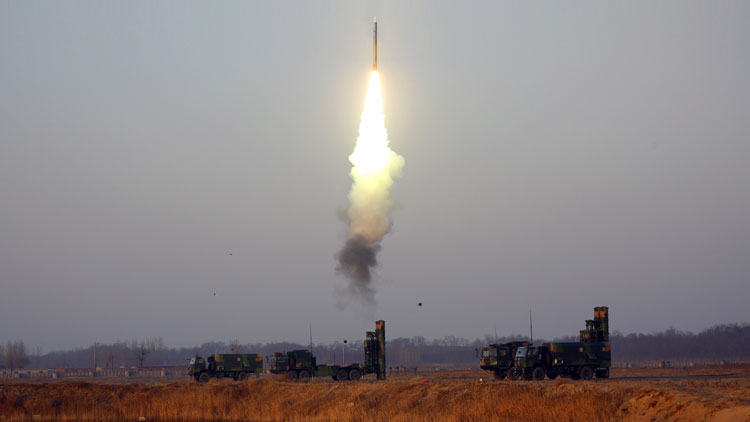
China's sea-based missile defence is evolving from coastal systems like the naval HHQ-9 (a variant of the HQ-9) to advanced, integrated networks, including the development of the HQ-26 interceptor for BMD, and a vast, sensor-heavy "Golden Dome" early warning system, aiming for global coverage to protect maritime interests and counter potential threats, using advanced technology on platforms like Type 055 destroyers. The goal is to create a resilient, unified defence network capable of tracking numerous simultaneous launches and distinguishing threats from decoys. Other nations, including Japan, South Korea, France, the UK, and India, are developing or deploying their own naval BMD capabilities. India is actively testing its own sea-based interceptors from warships to create an effective sea-based BMD capability.
Sea-based Phase-II deployment could operationalise by 2027, integrating with Project 'Kusha' long-range SAMs for a THAAD-like hybrid shield
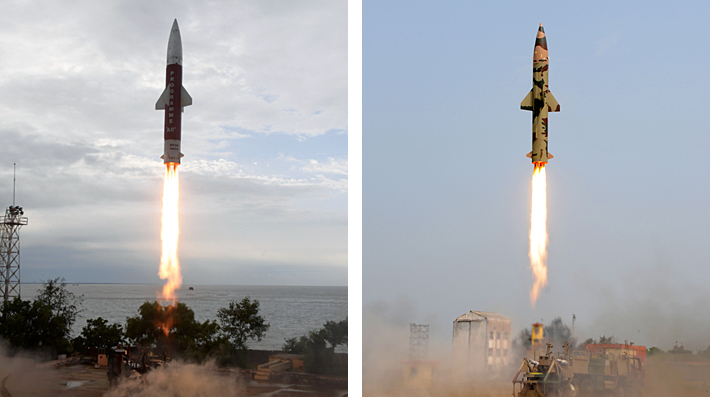
Hypersonic vehicles demand exquisite precision, supported by indigenous seekers and divert thrusters for hit-to-kill impacts. China's DF-21 deployments and Pakistan's 'Ababeel' MIRV advancements have intensified the threat from ballistic missiles. This has accelerated the need for India to develop its indigenous sea-based BMD architecture. Defence Research and Development Organisation (DRDO) and the Indian Navy are collaborating on a system integration of Phase II Interceptors, AD-1 and AD-2, designed for lightweight, warship-capable launches. These hypersonic weapons, lighter and more agile than land-based variants, will arm modified vessels in the Arabian Sea / Bay of Bengal, extending layered protection to coastal assets and key chokepoints.
India's underwater deterrence stands delayed. Chakra-III, originally scheduled for delivery by 2025, is now slated for delivery in 2028
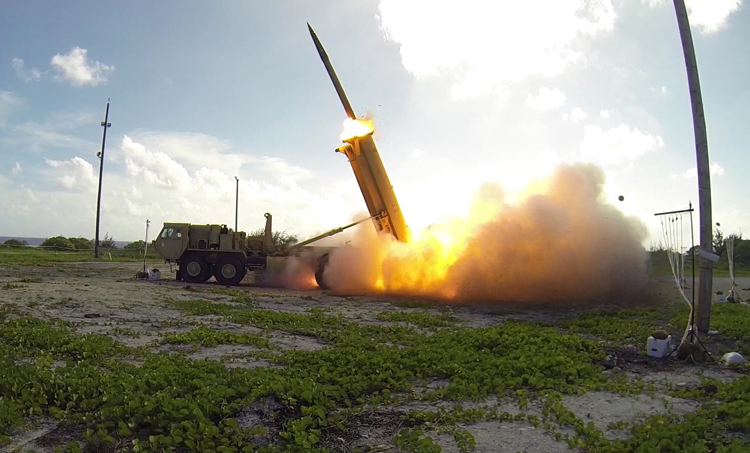
The AD-1 and AD-2 are the exo and endo atmospheric interceptors, engineered for ranges up to 5,000 km against intermediate-range ballistic missiles (IRBMs) and medium-range ballistic missiles (MRBMs), which is the core of the sea-based BMD under development. Unlike the bulkier Phase-1 Prithvi Air Defence (PAD) system, these Phase-II missiles prioritise compactness. The AD-1 is a two-stage solid propellent endo-atmospheric interceptor, is the decisive factor at under 1,000 km altitude ceiling, while the AD-2 now under development targets higher exo-atmospheric zones at Mach 6-7 speed for mid-course kills. They can enable warship launches, with vertical hot-launch adaptation akin to the Terminal High Altitude Area Defence' (THAADs) canister-based system, enabling round rapid salvos from cramped decks without extensive modifications. These are much lighter, with streamlined propulsion for naval stability, which is ideal for the proposed warships.
On May 6, 2012, VK Saraswat, the then DRDO chief had announced Phase-I completion and timelines for the Phase-II 5,000-km safeguards. "We will protect against missiles up to 5,000", he had asserted, eyeing THAAD parallels as a blueprint for the indigenous sea-based BMD. However, delays fuelled by technical hurdles and funding, pushed the debut of AD-I to November 2022. A successful maiden vertical launch BMD test from a warship off the Odisha coast in 2023 fired a short-range interceptor against a Prithvi target proved the concept. Detection ranges on radars scanning beyond DRDOs Over-the-Horizon (OTH) Swordfish derivatives (80 per cent indigenous) anchor this, upgraded from Phase-I 600-km limits. Sea trials incorporate ship-borne X and S-band AESA arrays on DRDO's Floating Test Range (FTR) vessel under construction at Hindustan Shipyard Limited (HSL).
The earlier leased SSN (the previous INS Chakra II) returned to Russia in 2021, leaving India without a nuclear-powered attack submarine since then
On July 24, 2024, the successful Phase-II test at Chandipur, an AD-I variannt intercepted a simulated IRBM in under four minutes, leveraging network-centric cues from land-based and sea-based radars. Against threats like Pakistan's Shaheen-III (2,750-km) or China's Dongfeng-21 (2,150-km), the duo offers engagement layers, neutralising MIRVs before re-entry. With scalability for the AD-series potency, Phase-II concepts for ICBMs (beyond 5,000-km) would be under development, but sea-based Phase-II deployment could operationalise by 2027, integrating with Project 'Kusha' long-range SAMs for a THAAD-like hybrid shield.
Ironically, India's underwater deterrence stands delayed. According to an agreement signed between India and Russia in 2019, Russia was to provide an Akula-class SSN to India for 10 years under a $3 billion lease; giving India formidable underwater capability. But the earlier leased SSN (the previous INS Chakra II) returned to Russia in 2021, leaving India without a nuclear-powered attack submarine since then. The modernised Akula design promises significant capabilities, such as stealth, deep-diving endurance, high sustained speeds, and armament flexibility (torpedoes, heavyweight weapons, and, reportedly, long-range cruise missiles such as the 3M14K "Kalibr" with up to 1,500-2,000 km reach). However, Chakra-III, originally scheduled for delivery by 2025, is now slated for delivery in 2028.