



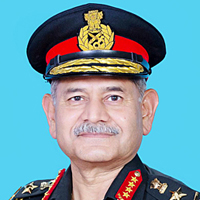
The insightful articles, inspiring narrations and analytical perspectives presented by the Editorial Team, establish an alluring connect with the reader. My compliments and best wishes to SP Guide Publications.
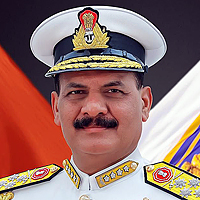
"Over the past 60 years, the growth of SP Guide Publications has mirrored the rising stature of Indian Navy. Its well-researched and informative magazines on Defence and Aerospace sector have served to shape an educated opinion of our military personnel, policy makers and the public alike. I wish SP's Publication team continued success, fair winds and following seas in all future endeavour!"

Since, its inception in 1964, SP Guide Publications has consistently demonstrated commitment to high-quality journalism in the aerospace and defence sectors, earning a well-deserved reputation as Asia's largest media house in this domain. I wish SP Guide Publications continued success in its pursuit of excellence.
India is accelerating efforts to strengthen its layered air defence architecture through a potential second S-400 acquisition while simultaneously advancing the indigenous Project Kusha programme, reflecting a strategic push towards technological self-reliance and enhanced capability
 |
The Author is Former Director General of Information Systems and A Special Forces Veteran, Indian Army |
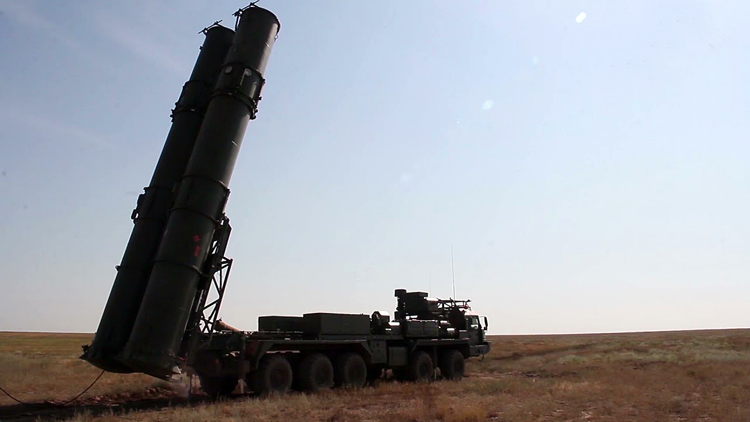
The news of Russia operationally deploying its S-500 AD Missile System, which it reportedly also offered to India, was covered in these columns earlier. There is now indication that India is considering a second S-400 deal with Russia, drawing lessons from the US-Israel War on Iran and Tehran's retaliatory strikes in the Gulf region. According to Igor Korotchenko, Director of the Moscow-based Centre for Analysis of World Arms Trade (CAWAT), India's decision reflects concerns over the performance of US-origin air and missile defence systems like the Patriot and THAAD in live combat scenarios. Speaking to Russian state media, Korotchenko claimed that American systems were unable to adequately protect key military bases and critical infrastructure during the recent hostilities in the Gulf, shaping perceptions among global buyers, including India.
What Korotchenko said has also been commented upon in global media – poor performance of the Patriot and THAAD systems citing multiple reasons, including the tactics and attacking modes employed by Iran. Korotchenko also suggested that India could compliment the S-400 with systems like the Pantsir-SIM for point defence, since such systems are designed to protect high-value assets like long-range air defence batteries from saturation attacks by drones and precision guided munitions, ensuring survivability in modern combat environments.
India's Defence Acquisition Council (DAC), headed by Defence Minister Rajnath Singh, has reportedly cleared a package of procurement estimated at around $25 billion
India's Defence Acquisition Council (DAC), headed by Defence Minister Rajnath Singh, has reportedly cleared a package of procurement estimated at around $25 billion, which includes S-400 systems, medium transport aircraft and armed drones. With a second S-400 deal, India would significantly expand India's layered air defence system, which is being strengthened with indigenous and imported systems, as well as through Project 'Sudarshan Chakra'.
The news now is that the DRDO is advancing Project Kusha, officially known as the Extended Range Air Defence System (ERADS), to develop a powerful, indigenous alternative to the Russian S-400 Triumf. According to sources, the system has been fundamentally designed to eliminate reliance on foreign suppliers, delivering similar operational ranges while offering unmatched benefits in terms of national sovereignty, lower costs, and long-term sustainability.
DRDO is advancing Project Kusha, officially known as the Extended Range Air Defence System (ERADS), to develop a powerful, indigenous alternative to the Russian S-400 Triumf
Kusha has a single-shot kill probability of over 80% and is planned for phased induction between 2028 and 2030. Moreover, while India acquired five squadrons of the Russian S-400 for roughly $5.43 billion (around ₹45,000 crore); the Indian Air Force (IAF) is to procure five Project Kusha squadrons for an estimated ₹21,700 crore ($2.6 billion) – practically cutting the capital expenditure in half; while achieving superior capabilities by integrating advanced indigenous AESA radars and being tailored for hypersonic and stealth threats.
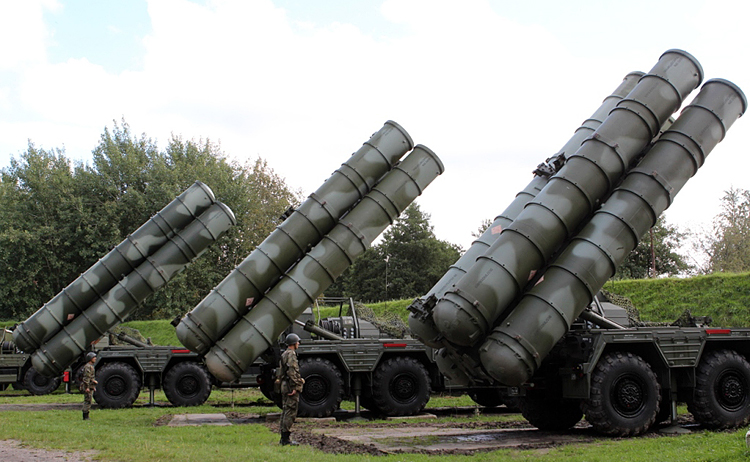
Project Kusha utilizes a layered shield consisting of three interceptor variants: the M1 (approximately 150 km range), M2 (approximately 250 km range), and the heavy M3 (350–400 km range). Each of these missiles is projected to cost between ₹40 to ₹50 crore, which is almost 50 per cent cheaper than equivalent Russian interceptors. This is possible by the domestic supply chain, with Bharat Electronics Limited (BEL) manufacturing the advanced Multi-Function Control Radars and Bharat Dynamics Limited (BDL) producing the missiles, which feature highly effective dual-pulse solid rocket motors.
The system has been fundamentally designed to eliminate reliance on foreign suppliers, delivering similar operational ranges
The most significant benefit of Project Kusha is absolute software independence. By developing Kusha entirely in India, the armed forces gain total authority over the mission algorithms and core software. This completely removes the risk of foreign interference, operational limitations, or hidden "kill switches" that could theoretically disable the weapon system during a crisis. This complete technological control enables the military to swiftly counter newly emerging threats. If hostile forces deploy new stealth technologies or advanced electronic warfare methods, like in China's J-20 stealth fighters, India can seamlessly tweak its radar detection and tracking software.
Project Kusha will be serviced entirely within India, ensuring rapid repairs, stable maintenance costs, and continuous modernization without being hindered by global supply chain disruptions. Moreover, Kusha can be easily networked into India's current military infrastructure since the system is built to communicate natively with the Integrated Air Command and Control System (IACCS). This allows it to share instantaneous data with homegrown assets like the Netra early warning aircraft, future AWACS, Tejas Mk2 fighter jets, and ground-based radars.
The most significant benefit of Project Kusha is absolute software independence
Kusha's ability to draw from a single, unified pool of data ensures that commanders can make split-second engagement decisions far more effectively than they could with a fragmented network of mismatched systems. No doubt S-400 will continue to form a critical layer of India's aerial shield. However, the advancement of Project Kusha, which successfully completed initial developmental flight tests for the M1 interceptor in early 2026, marks a permanent shift in India's defence strategy. It proves that India can build a high-tier, strategically independent air defence network that perfectly serves its long-term goals of technological self-reliance and national security.