



The insightful articles, inspiring narrations and analytical perspectives presented by the Editorial Team, establish an alluring connect with the reader. My compliments and best wishes to SP Guide Publications.
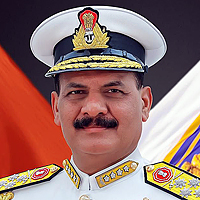
"Over the past 60 years, the growth of SP Guide Publications has mirrored the rising stature of Indian Navy. Its well-researched and informative magazines on Defence and Aerospace sector have served to shape an educated opinion of our military personnel, policy makers and the public alike. I wish SP's Publication team continued success, fair winds and following seas in all future endeavour!"

Since, its inception in 1964, SP Guide Publications has consistently demonstrated commitment to high-quality journalism in the aerospace and defence sectors, earning a well-deserved reputation as Asia's largest media house in this domain. I wish SP Guide Publications continued success in its pursuit of excellence.
India's Ministry of Defence signed a sustainment package for its 24 MH-60R Seahawk helicopters, developed by Lockheed Martin. The defence deal is designed to ensure long-term operational availability of the fleet, adding advanced anti-submarine capability.
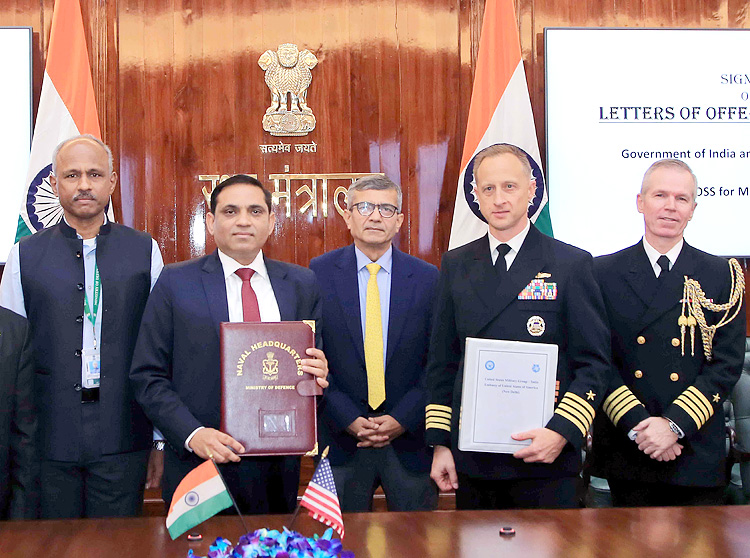
Building on the existing defence cooperation in the maritime, India has signed a ₹ 7,995-crore ($946 million) sustainment and support package with the United States for the Indian Navy's fleet of 24 MH-60R 'Romeo' Seahawk multi-role helicopters.
The agreement, cleared under the US Foreign Military Sales (FMS) programme, is designed to ensure long-term operational availability of the fleet—one of the most advanced anti-submarine and anti-surface platforms in the world.
The agreement, cleared under the US Foreign Military Sales (FMS) programme, is designed to ensure long-term operational availability of the fleet
The US State Department, confirming the development in a post on X, underlined the strategic weight of the pact, tweeted: "Great news in our defence relationship with India. India's Ministry of Defence signed a sustainment package for its 24 MH-60R Seahawk helicopters, developed by Lockheed Martin."
"This package will enhance the Indian Navy's maritime capabilities, build interoperability with the US and regional partners, and make both our nations safer and more prosperous", it added.
The MH-60R, inducted by the Indian Navy from 2021 onward, serves as the backbone of many Western navies for anti-submarine warfare (ASW) and anti-surface warfare missions. Designed for deployment from frontline destroyers, frigates and aircraft carriers, the helicopters give naval commanders an extended and highly agile reach into the battlespace.
For India, which faces increasing submarine activity across the Indian Ocean Region (IOR), the ability to detect, track and engage underwater threats at long ranges is critical
For India, which faces increasing submarine activity across the Indian Ocean Region (IOR), the ability to detect, track and engage underwater threats at long ranges is critical. Romeo's formidable ASW suite includes advanced dipping sonar capable of prosecuting deep-water and shallow-water threats and sonobuoy launch systems for area search and tracking.
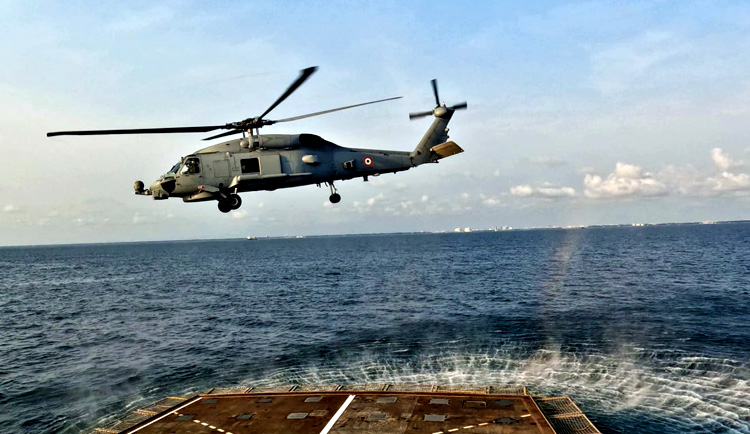
Additionally, MH-60R is equipped with multi-mode maritime radar for surface surveillance and target acquisition, along with Mk-54 lightweight torpedoes designed to neutralise fast, deep-diving submarines
These capabilities significantly strengthen India's layered maritime security architecture, particularly as China expands its undersea presence
Together, these capabilities significantly strengthen India's layered maritime security architecture, particularly as China expands its undersea presence from Djibouti to the Malacca Straits.
While acquisition brings capability, sustainment determines whether that capability can be projected reliably at sea. The newly signed agreement covers spare parts, depot-level maintenance, technical support, software updates and logistics systems—all vital for keeping the high-technology fleet mission-ready.
With this package, the Navy is expected to achieve higher mission-availability rates for the Romeos, ensuring that carrier groups and frontline warships can field fully armed ASW helicopters whenever deployed.
With this package, the Navy is expected to achieve higher mission-availability rates for the Romeos, ensuring that carrier groups and frontline warships can field fully armed ASW helicopters
The sustainment deal comes as India deepens operational coordination with the US, Japan, Australia and France in the Indo-Pacific. Shared platforms and support systems allow Indian crews to train and operate seamlessly with partner navies during exercises such as Malabar, RIMPAC, and La Pérouse.
Enhanced interoperability also allows quicker sharing of maritime domain awareness (MDA) data, critical in tracking submarines, illegal fishing networks, and hostile surface activity.
For years, the Indian Navy grappled with an acute shortage of multi-role helicopters—essential for both ASW and over-the-horizon targeting. The arrival of the MH-60R fleet, now backed by an assured sustainment package, is expected to close that gap.
The helicopters will be deployed across India's aircraft carriers—INS Vikramaditya and INS Vikrant—as well as its newest stealth destroyers and frigates, significantly enhancing the fleet's protective shield.
For New Delhi and Washington alike, the pact signals the continuity of a shared commitment to maintaining stability in one of the world's most strategically vital waterways.
Manish Kumar Jha is a Consulting & Contributing Editor for SP's Aviation, SP's Land Forces and SP's Naval Forces and a security expert. He writes on national security, military technology, strategic affairs & policies.