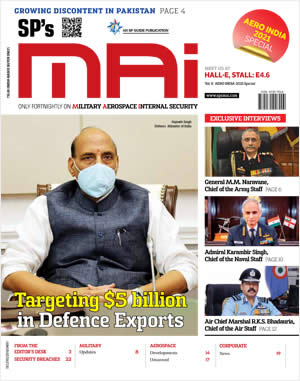





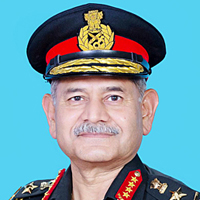
The insightful articles, inspiring narrations and analytical perspectives presented by the Editorial Team, establish an alluring connect with the reader. My compliments and best wishes to SP Guide Publications.
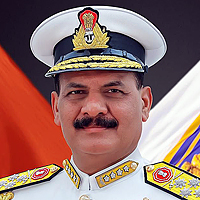
"Over the past 60 years, the growth of SP Guide Publications has mirrored the rising stature of Indian Navy. Its well-researched and informative magazines on Defence and Aerospace sector have served to shape an educated opinion of our military personnel, policy makers and the public alike. I wish SP's Publication team continued success, fair winds and following seas in all future endeavour!"

Since, its inception in 1964, SP Guide Publications has consistently demonstrated commitment to high-quality journalism in the aerospace and defence sectors, earning a well-deserved reputation as Asia's largest media house in this domain. I wish SP Guide Publications continued success in its pursuit of excellence.
Army Chief announced the continuity of major force restructuring within 'all arms brigade' and next-gen weapons acquisition.
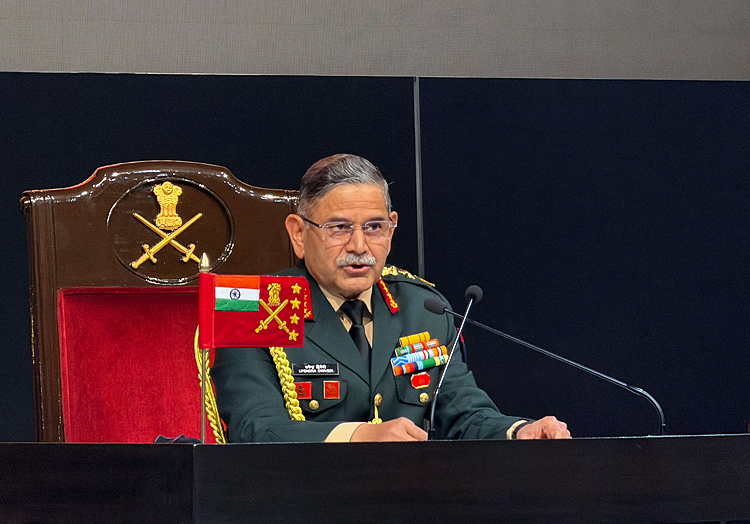
Addressing a press conference ahead of Army Day, Chief of Army Staff General Upendra Dwivedi emphasised that the global rise in armed conflicts over the past year shows a simple reality--nations that stay prepared prevail. He announced the continuity of major force restructuring and next-gen weapons acquisition.
The Army Chief linked the successes of 2025 to the JAI framework—Jointness, Atmanirbharta (self-reliance) and Innovation—propelled by national leadership and defence reforms.
He said the Army is satisfied with the progress made in capability development, modernisation and transformation efforts in the past year.
The Chief majorly pointed out that the ongoing force restructuring focuses on reviewing organisational structures to enhance multi-domain combat potency and achieve an optimal "teeth-to-tail" balance
On the Northern Front, he spoke about stability with continued vigilance and confidence-building measures.
On the Western Front, the Army remains prepared to face threats, keeping an eye on terrorist camps across the Line of Control and International Border.
Touching upon ongoing reforms, he said force restructuring aimed at achieving an optimal "teeth-to-tail" balance was underway.
"We have re-oriented and created several new structures: Rudra Brigades (all arms brigade) for high-tempo multi-domain ops and Bhairav Battalions for agility and disruptive effect. Similarly, Shaktibaan Regiments and Divyastra Batteries of Artillery will use UAS/C-UAS for extended reach and real-time targeting. Ashni Platoons and other organisations on the design board will enhance precision, surveillance and strike options at the tactical level, he said.
"Immediate focus is on innovative kitting of legacy platforms. The next phase involves developing new systems and finally culminating in network-enabled multi-domain operations" —General Upendra Dwivedi, Chief of the Army Staff
The Chief pointed out some of the key areas to look into from an operational perspective. "The Army is advancing in areas such as self-reliance, networking and data-centric operations for the future," he said. The Chief majorly pointed out that the ongoing force restructuring focuses on reviewing organisational structures to enhance multi-domain combat potency and achieve an optimal "teeth-to-tail" balance. "We have adopted a spiral development approach centred on organisation rather than equipment alone," he added.
The Chief also gave a timeline for the further restructuring, said, "A large number of Govt Sanction Letters (31) for organisational changes have been approved over the past 14–15 months, including pathbreaking IBGisation of 17 Corps and raising of aviation brigades. Territorial Army recruitment recommenced in 2025, after a gap of five years."
Army Chief General Dwivedi clearly outlined the modernisation priorities - improving mobility and protection, strengthening network-enabled operations, enhancing communications, deploying terrain-specific EW systems, inducting new-generation munitions and expanding UAS/UAS capabilities.
"Immediate focus is on innovative kitting of legacy platforms. The next phase involves developing new systems and finally culminating in network-enabled multi-domain operations", he said.
The Army Chief said that insights gained from Operation SINDOOR have driven a renewed focus on enhancing combat capability, including the large-scale induction of drones, missiles and air-defence weapons
'Advanced EW systems, BrahMos, Pinaka ELGR systems, Pralay missiles, QRSAM with extended range, loiter munitions and drones/UCAVs are among the game-changing equipment," Chief also projected the specific upgrade and advancement in the pipeline.
One of the key aspects to highlight is the spending of the capital outlay, which usually remains unspent. "Emergency Procurements (EP 1 to 6) have sharply reduced acquisition timelines and created opportunities for the Indian industry. Funding has increased substantially, and for the first time, Corps Commanders have been empowered with EP powers, Chief explained.
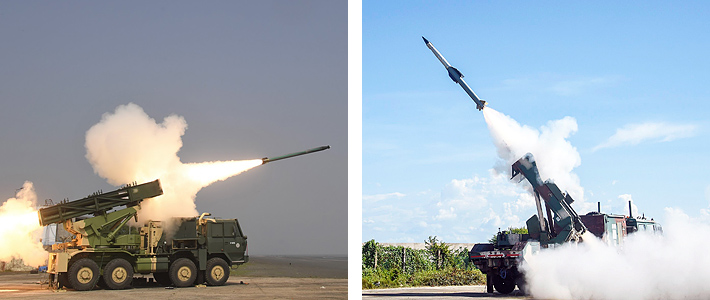
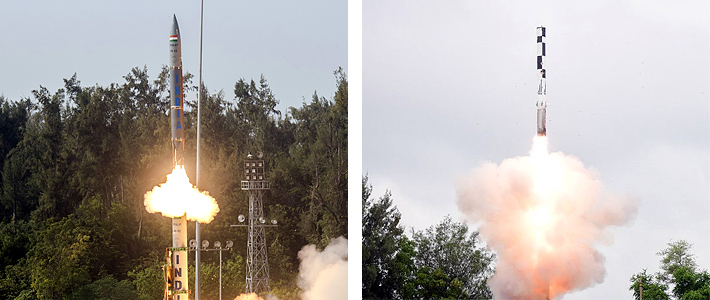
The COAS also spoke about the new potential areas under deliberation on the rocket and missile force structure. "It is the need of the hour that we also have such a force, for India to develop a dedicated rocket-missile force, drawing lessons from recent conflicts and India's own operational experience," he said.
Referring to regional developments, he added, "We are looking towards a rocket-missile force. Pakistan has established a rocket force, and China has also created one."
The Army Chief said that insights gained from Operation SINDOOR have driven a renewed focus on enhancing combat capability, including the large-scale induction of drones, missiles and air-defence weapons. Highlighting China's PLA Rocket Force as a potent example, he said Beijing has continuously strengthened its missile arm since 2016.
General Upendra Dwivedi categorically rejected China's claim over the Shaksgam Valley, asserting that the Pakistan–China pact under which the territory was ceded is illegal and has never been recognised by India
Emphasising the evolving nature of warfare, General Dwivedi said, "Rockets and missiles have become interdependent in today's time. If we want a major impact, then we need both rockets as well as missiles." He pointed to the induction of systems such as BrahMos, Pralay and Pinaka as key enablers of India's long-range strike capability.
On command and control, the Army Chief said a decision was yet to be taken on where the proposed "rocket-cum-missile force" would be positioned. "We have to decide whether it will be operated at the Army level, or directly under the Ministry of Defence or at the level of the CDS. This is the question we need to decide," he said, adding that initially it would function under the Army's artillery regiments. "It may see a different look in terms of size, scope and command and control in future."
Currently, the Corps of Army Air Defence (AAD) and the Artillery regiments are largely responsible for the rockets and missiles in the Army.
Chief of Army Staff General Upendra Dwivedi on Tuesday categorically rejected China's claim over the Shaksgam Valley, asserting that the Pakistan–China pact under which the territory was ceded is illegal and has never been recognised by India. "India has never accepted this so-called agreement. The area in question is Indian territory, and any arrangement between Pakistan and China regarding it has no legal standing," Gen Dwivedi said, firmly dismissing Beijing's position. He reiterated that Pakistan has no authority to transfer territory that does not belong to it, underlining that India's sovereignty over the region remains unquestionable and unchanged.
Summing up the Army's transformation journey, Gen Dwivedi said the goal was to build "a different Indian Army—capable of thinking smart, seeing all, striking deep, moving fast, connecting domains, standing resilient and, most importantly, winning together."
Manish Kumar Jha is a Consulting & Contributing Editor for SP's Aviation, SP's Land Forces and SP's Naval Forces and a security expert. He writes on national security, military technology, strategic affairs & policies.