


The insightful articles, inspiring narrations and analytical perspectives presented by the Editorial Team, establish an alluring connect with the reader. My compliments and best wishes to SP Guide Publications.
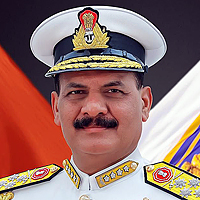
"Over the past 60 years, the growth of SP Guide Publications has mirrored the rising stature of Indian Navy. Its well-researched and informative magazines on Defence and Aerospace sector have served to shape an educated opinion of our military personnel, policy makers and the public alike. I wish SP's Publication team continued success, fair winds and following seas in all future endeavour!"

Since, its inception in 1964, SP Guide Publications has consistently demonstrated commitment to high-quality journalism in the aerospace and defence sectors, earning a well-deserved reputation as Asia's largest media house in this domain. I wish SP Guide Publications continued success in its pursuit of excellence.
INDIAN NAVY GEARS UP FOR IFR 2026
As the Indian Navy prepares to host the International Fleet Review (IFR) 2026, the exercise—paired with Exercise MILAN and the Indian Ocean Naval Symposium—has evolved far beyond ceremonial display into a pivotal platform for maritime diplomacy, cooperation and regional strategy.
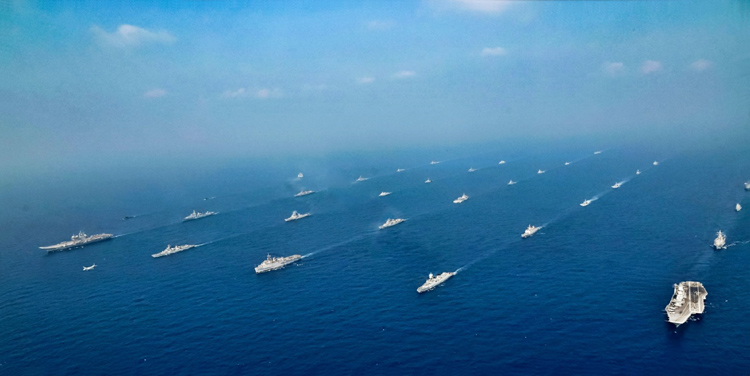
As dawn breaks over the Bay of Bengal, warships will soon line Visakhapatnam's deep waters - disciplined, purposeful and unmistakably strategic. Masts will rise against a brightening horizon, ensigns will ripple in the breeze, and beneath the surface, submarines will remain silently poised. This is not mere pageantry. It is a definitive projection of identity, capability and intent.
The International Fleet Review (IFR) is the Indian Navy's most visible instrument of maritime diplomacy. To a casual observer, it may appear as an orderly assembly of ships and colours. In reality, it is a carefully calibrated demonstration of presence, partnership and resolve, where naval power aligns with national policy.
"Fleet Reviews are strategic signals — communicating capability, strengthening partnerships and reinforcing resolve without coercion."
The historical relationship between India and the sea runs deep. Ancient mariners traversed the Arabian Sea and Bay of Bengal, forging trade links and cultural exchange. Over time, strategic focus shifted inland, and maritime power receded from national priority. Today, with global trade and geopolitics increasingly centred on the oceans, India has re-embraced the sea as a strategic theatre. The Indian Navy has grown into a key instrument of diplomacy, with IFR and Exercise MILAN reinforcing India's role as a responsible maritime power.
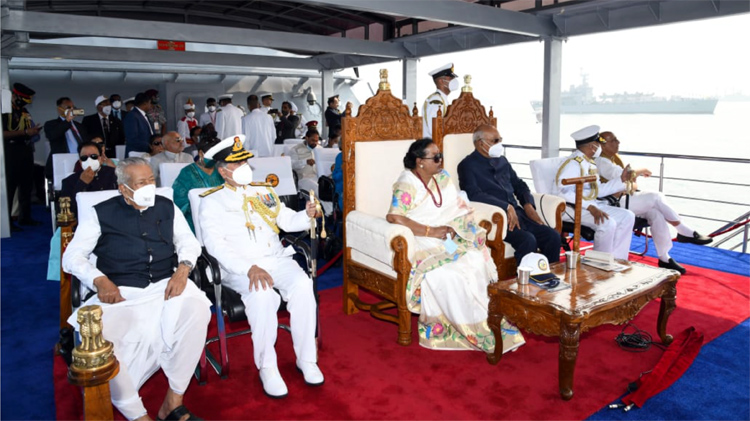
Fleet Reviews are often dismissed as ceremonial neat lines of warships, polished decks and formal protocol. In practice, they are an established instrument of maritime statecraft, used by major naval powers to signal capability, build trust and reinforce national resolve.
India adopted this tradition early.
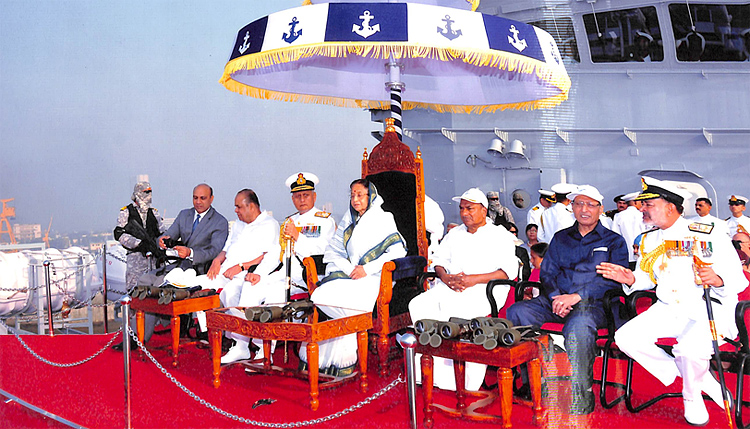
On 10 October 1953, President Rajendra Prasad reviewed 33 ships off Bombay in the nation's first Presidential Fleet Review. While modest by global standards, it was transformative for the Indian Navy: sailors who once served under colonial command now saluted their own Head of State beneath the tricolour.
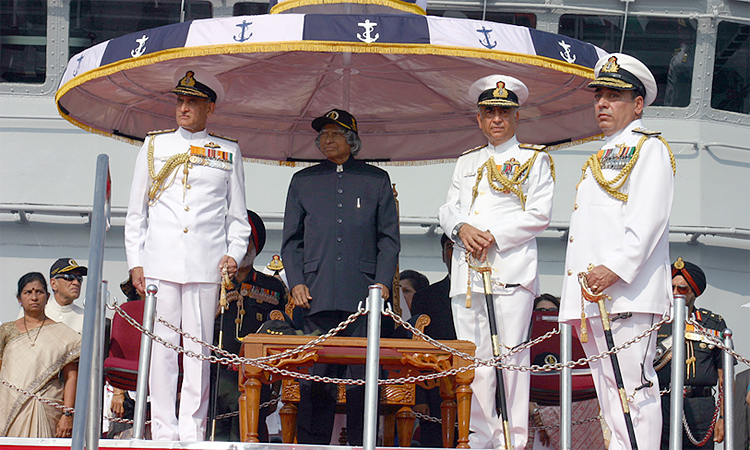
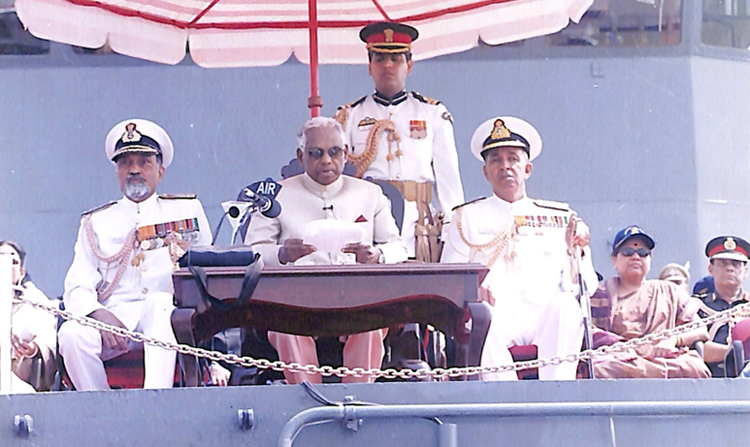
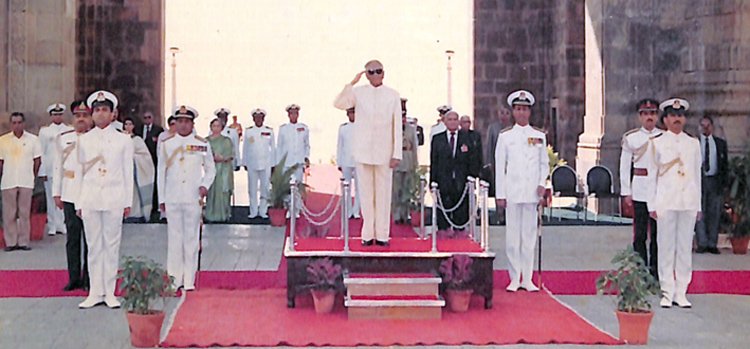
Each subsequent review echoed the Navy's growth:
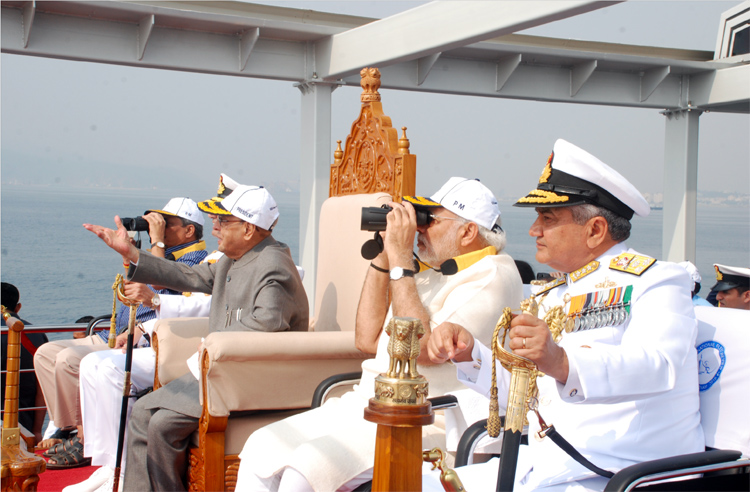
India's maritime outreach expanded with its first International Fleet Review in 2001 at Mumbai. The event drew visiting warships from around 19 nations and marked a significant step in India's naval diplomacy.
By 2016, IFR had grown into a major strategic gathering. Held in Visakhapatnam, headquarters of the Eastern Naval Command and India's gateway to the Bay of Bengal and the Indo-Pacific - IFR 2016 saw participation from nearly 50 foreign navies and around 100 ships. It deepened professional engagement, with structured dialogues, officer exchanges and maritime security discussions that went beyond routine port calls.
Visakhapatnam's selection underscored India's strategic shift toward the eastern seaboard and the Indo-Pacific - an orientation that has only sharpened since.
If IFR represents diplomacy at anchor, Exercise MILAN represents diplomacy in motion.
Launched in 1995 at Port Blair with just four participating navies, MILAN was conceived as a platform for trust-building through joint seamanship and professional exchange. The 2004 Indian Ocean tsunami reshaped MILAN's emphasis toward humanitarian assistance and disaster relief (HADR), broadening its operational scope.
"If IFR is diplomacy at anchor, MILAN is diplomacy underway — building cooperation through shared practice and professional trust."
By 2024, MILAN had expanded to include over 40 Indo-Pacific navies, combining strategic seminars, cultural exchanges and demanding maritime drills aimed at improving coordination and interoperability. Its strength lies in fostering partnership without confrontation — positioning India as a collaborative maritime leader.
Large naval gatherings inevitably attract scrutiny for being costly and resource-intensive. Yet major maritime powers invest in them because they yield strategic value that extends beyond spectacle.
The pattern is consistent: Fleet Reviews act as strategic milestones, not routine drills.
India's experience follows this logic.
At their core, IFR and MILAN are tools of maritime statecraft. They integrate hard power — warships, aircraft and sailors — with soft power — professionalism, transparency and reliability.
These gatherings align with India's broader maritime vision, including:
IFR symbolically projects these principles; MILAN operationalises them at sea — one reassuring partners, the other building collective capability.
As India prepares for International Fleet Review 2026 — scheduled for 15–25 February 2026 in Visakhapatnam — alongside Exercise MILAN 2026 and the Indian Ocean Naval Symposium conclave of Chiefs of Navy, the strategic environment is more complex and contested than ever.
"Oceans connect rather than divide. Those who blend tradition with strategy will set the course ahead."
The Indo-Pacific is crowded with competition and geopolitical friction. In such waters, the ability to convene, cooperate and reassure is as critical as deterrence.
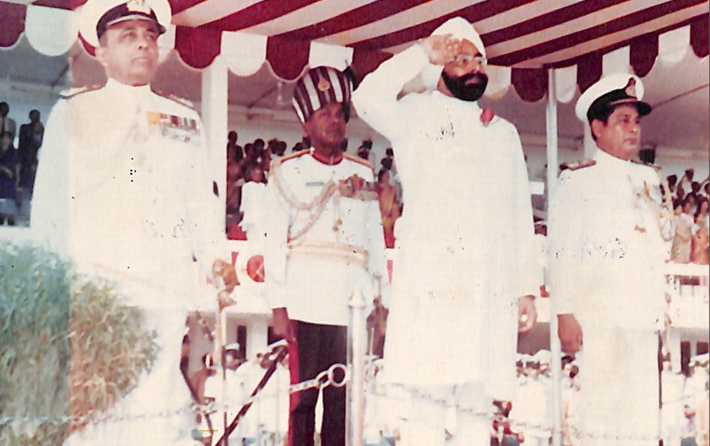
India's naval diplomacy has evolved from ad-hoc outreach to institutional strategy. From ancient trade routes to modern task forces, from ceremonial reviews to sophisticated multilateral exercises, the trajectory is clear: India is no longer merely securing its maritime periphery — it is shaping the cooperative architecture of the Indo-Pacific.
TIMELINE – INDIA'S FLEET REVIEWS & MILAN
| Year | Event | Key Notes |
|---|---|---|
| 1953 | Presidential Fleet Review | 33 Ships off Bombay; India’s first post-Independence fleet review. |
| 1995 | Exercise MILAN Inaugural | Four navies at Port Blair; confidence-building focus. |
| 2001 | First International Fleet Review | Mumbai; visiting warships from ~19 navies. |
| 2016 | International Fleet Review | Visakhapatnam; ~50 foreign navies, ~100 ships. |
| 2026 | IFR, MILAN & IONS | Visakhapatnam to host all three events together. |
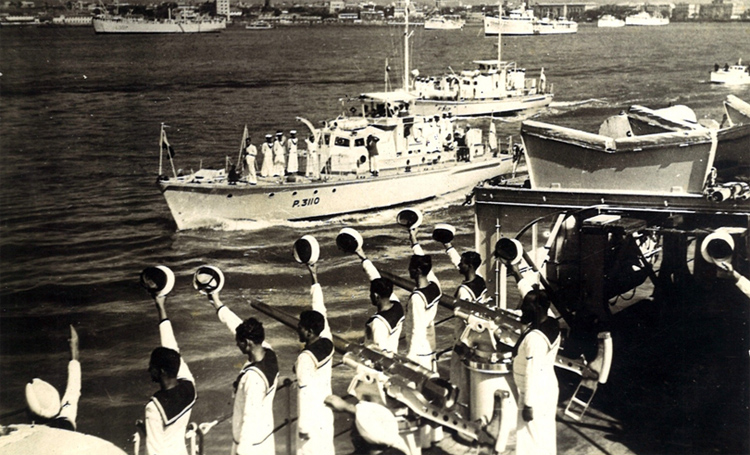
Host City: Visakhapatnam, Andhra Pradesh
Host Command: Eastern Naval Command (ENC)
Dates: 15–25 February 2026
Primary Theatre: Bay of Bengal & Eastern Indian Ocean
Key Components
Parallel Engagements
Expected Participation
Strategic Rationale for Visakhapatnam