




The insightful articles, inspiring narrations and analytical perspectives presented by the Editorial Team, establish an alluring connect with the reader. My compliments and best wishes to SP Guide Publications.

"Over the past 60 years, the growth of SP Guide Publications has mirrored the rising stature of Indian Navy. Its well-researched and informative magazines on Defence and Aerospace sector have served to shape an educated opinion of our military personnel, policy makers and the public alike. I wish SP's Publication team continued success, fair winds and following seas in all future endeavour!"

Since, its inception in 1964, SP Guide Publications has consistently demonstrated commitment to high-quality journalism in the aerospace and defence sectors, earning a well-deserved reputation as Asia's largest media house in this domain. I wish SP Guide Publications continued success in its pursuit of excellence.
India and the United States are nearing agreement on six additional Boeing P-8I maritime patrol aircraft, a move that will substantially strengthen the Indian Navy's ISR and anti-submarine warfare capabilities as New Delhi responds to growing strategic competition and heightened Chinese naval activity in the Indian Ocean
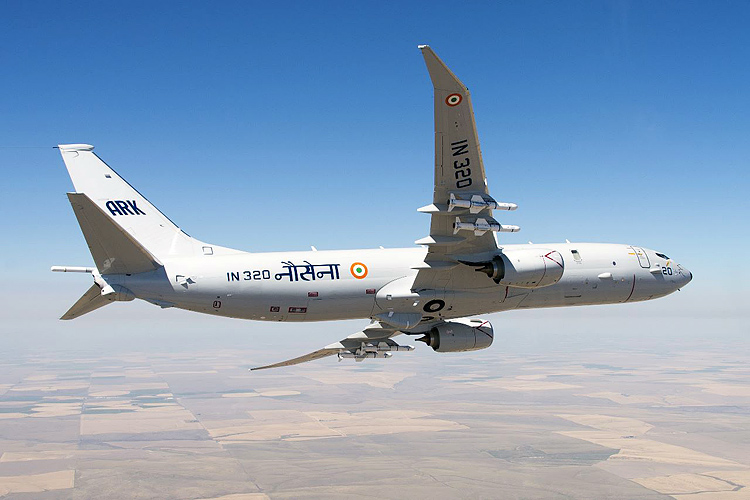
New Delhi and Washington are advancing long-pending defence cooperation agreements, with a significant spotlight on the acquisition of six additional P-8I maritime patrol aircraft from the United States, built by American defence firm Boeing.
After protracted negotiations over pricing and broader bilateral ties, the two governments are now reportedly close to working out a deal worth $3 billion, which will strengthen the Indian Navy's aerial anti-submarine warfare (ASW) and maritime surveillance capabilities.
After protracted negotiations over pricing and broader bilateral ties, the two governments are now reportedly close to working out a deal worth $3 billion, which will strengthen the Indian Navy's aerial anti-submarine warfare (ASW) and maritime surveillance capabilities.
The Indian Navy currently operates a fleet of P-8I aircraft, its first international order of this platform, with deployment at bases such as Arakonam and Goa to monitor vast stretches of the Indian Ocean on both the western and eastern seaboards. The additional six aircraft will significantly bolster this aerial ISR and ASW capacity once approved by India's Defence Ministry and thereafter cleared by the Cabinet Committee on Security.
The P-8I Poseidon-a customised variant of Boeing's P-8 Poseidon-is a multi-mission maritime patrol and reconnaissance aircraft designed for long-range operations over oceans and littoral waters. It is the key element of Anti-Submarine Warfare (ASW) for detecting, localising, tracking and, if necessary, engaging submarines. Along with, P-8I works for Anti-Surface Warfare (ASuW) in terms of identifying and targeting surface combatants and potential hostile shipping.
However, the primary role remains for Intelligence, Surveillance and Reconnaissance (ISR), collecting and disseminating real-time maritime domain information. Maritime Domain Awareness (MDA) is maintaining a comprehensive picture of activities across the Indian Ocean region.
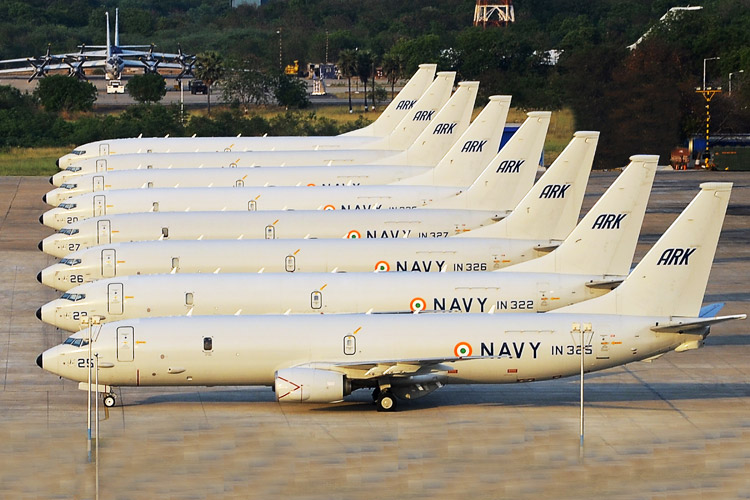
The P-8I's strength lies in its integrated sensor suite and communication systems that enable persistent maritime surveillance and target tracking across large expanses, like Multi-mode Radar (AN/APY-10). It provides high-resolution surface and littoral surveillance, including synthetic aperture radar (SAR) and inverse synthetic aperture radar (ISAR) modes for detailed imaging. This radar can track vessels over long distances and even detect periscopes or snorkels from submarines.
The P-8I deploys networks of expendable sonobuoys, which transmit underwater sound data back to the aircraft for detecting and tracking submarines beneath the waves. Another key element is the Magnetic Anomaly Detector (MAD), which is a specialised sensor in the P-8I (included at India's request) that detects minute changes in Earth's magnetic field caused by large metal objects-such as submarine hulls. Additionally, P-8I is equipped with Electro-Optical/Infrared (EO/IR) Systems, which provide day and night imaging and target identification, enhancing ship and surface monitoring.
In recent years, the region has witnessed increased Chinese naval presence-including surface vessels, submarines, and purported research ships-raising strategic concerns in New Delhi, particularly about surveillance and monitoring.
What is the most potent is the Electronic Support Measures (ESM) and Secure Data Links (Link-16, BEL Data Link II), which allows the aircraft to intercept and classify radar and communication emissions, and share tactical information in real time with Indian naval forces and allied partners, strengthening networked maritime awareness.
The Indian Ocean stands as a critical geopolitical corridor for global trade and energy routes. Its sea lanes of communication carry an estimated 80 per cent of global merchandise trade by volume and a majority of tanker traffic from the Middle East. In recent years, the region has witnessed increased Chinese naval presence-including surface vessels, submarines, and purported research ships-raising strategic concerns in New Delhi, particularly about surveillance and monitoring.
China's People's Liberation Army Navy (PLAN) and associated survey ships have regularly operated in the Indian Ocean under the guise of scientific research or anti-piracy missions, prompting constant monitoring by Indian maritime assets. While not overtly hostile, this surge in activity underscores China's expanding operational footprint and Beijing's broader strategic interests in the Indian Ocean.
To address this, India has been enhancing its maritime ISR network-combining the P-8I fleet with long-endurance UAVs (like the MQ-9B) and space-based sensors-to build a resilient and layered situational awareness architecture. These assets help track naval movements, suspicious activity, and submarine deployments across key chokepoints such as the Strait of Malacca and the Arabian Sea, providing vital early warning and response capabilities.
The possible P-8I aircraft deal is part of wider India–US defence cooperation, which includes interoperability agreements and deeper maritime security ties. With both nations facing shared maritime challenges-not least the growing Chinese naval footprint-the pending pact reflects a strategic pivot toward more integrated defence collaboration, particularly in ISR and maritime domain awareness missions across the Indian Ocean.
As India and the United States edge toward concluding a major defence pact for six additional Boeing P-8I aircraft, the move represents a commitment to enhancing maritime surveillance and anti-submarine capabilities in the Indian Ocean.
Manish Kumar Jha is a Consulting & Contributing Editor for SP's Aviation, SP's Land Forces and SP's Naval Forces and a security expert. He writes on national security, military technology, strategic affairs & policies.