




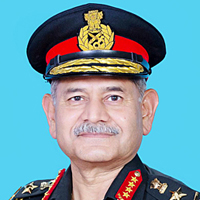
The insightful articles, inspiring narrations and analytical perspectives presented by the Editorial Team, establish an alluring connect with the reader. My compliments and best wishes to SP Guide Publications.
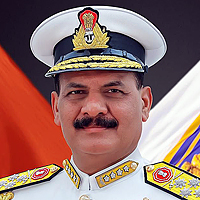
"Over the past 60 years, the growth of SP Guide Publications has mirrored the rising stature of Indian Navy. Its well-researched and informative magazines on Defence and Aerospace sector have served to shape an educated opinion of our military personnel, policy makers and the public alike. I wish SP's Publication team continued success, fair winds and following seas in all future endeavour!"

Since, its inception in 1964, SP Guide Publications has consistently demonstrated commitment to high-quality journalism in the aerospace and defence sectors, earning a well-deserved reputation as Asia's largest media house in this domain. I wish SP Guide Publications continued success in its pursuit of excellence.
Recent high-level diplomatic engagements, including the US State Secretary Rubio and External Affairs Minister Jaishankar and defence dialogue with the joint technical group-DRDO, underscore the momentum in the bilateral defence technology relationship
India and the United States are steadily expanding cooperation in critical and emerging defence technologies, signalling a deeper strategic convergence between the two partners amid evolving global security challenges.
Recent high-level diplomatic engagements, institutional dialogues, and growing academic collaboration underscore the momentum in the bilateral defence technology relationship.
External Affairs Minister S. Jaishankar recently held discussions in Washington with US Secretary of State Marco Rubio, focusing on regional security, defence innovation, and technology partnerships. The talks reflected a shared recognition that advanced technologies–ranging from artificial intelligence and cyber capabilities to space and semiconductor systems–are becoming central to national security and strategic stability.
The talks reflected a shared recognition that advanced technologies–ranging from artificial intelligence and cyber capabilities to space and semiconductor systems–are becoming central to national security and strategic stability.
Rubio has recently described India as "one of the top relationships that the United States has in the world today", highlighting its growing role in US foreign policy and the Indo-Pacific region. He emphasised that the bilateral relationship is evolving to address shared challenges and opportunities, such as trade, defence, energy, critical minerals, and broader regional security issues.
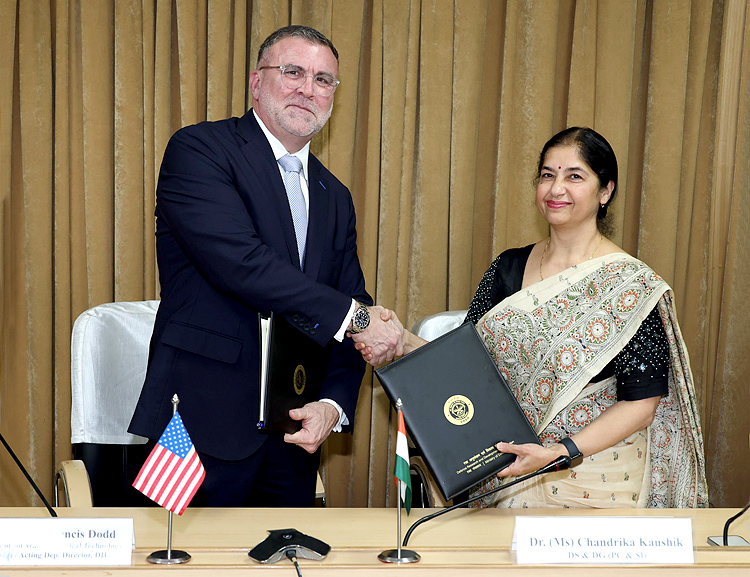
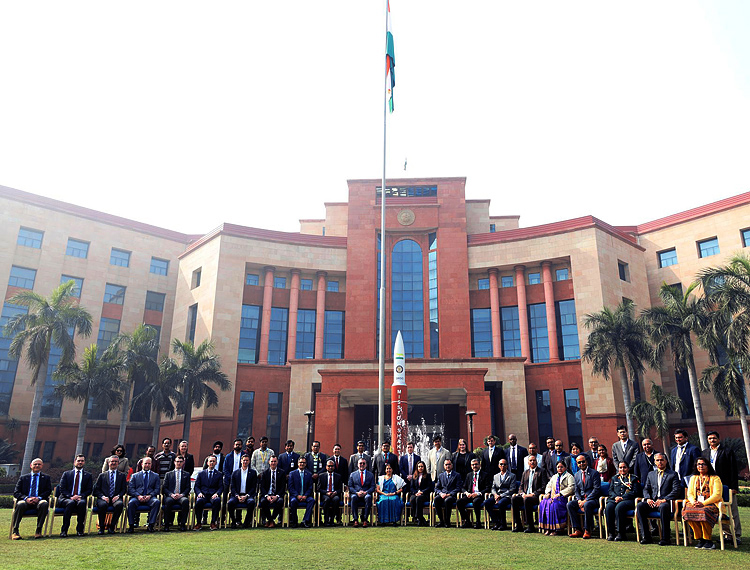
The dialogue in Washington coincides with growing institutional cooperation on the ground. In New Delhi, the Defence Research and Development Organisation (DRDO) hosted a meeting of the Indo-US Joint Technical Group, bringing together defence scientists, policymakers, and industry representatives from both sides.
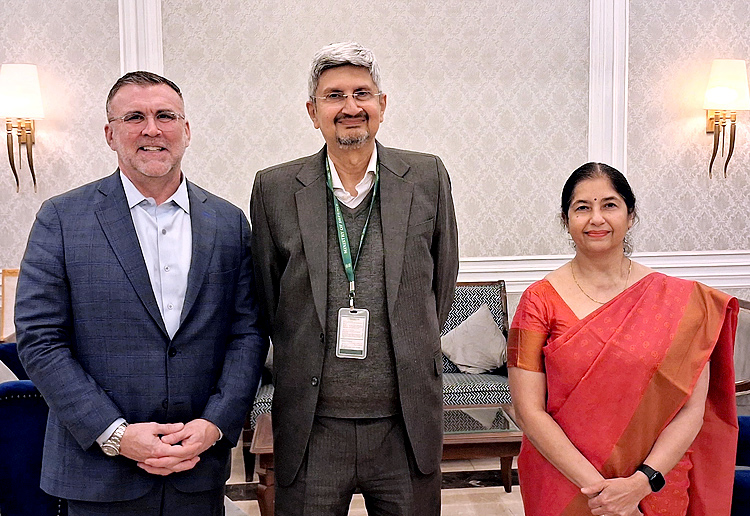
The plenary was co-chaired by Chandrika Kaushik, Director General (Production Coordination & Services Interaction) at DRDO, and Michael Francis Dodd, Assistant Secretary of War for Critical Technologies in the US Department of War's Office of the Under Secretary of War for Research & Engineering.
Under her leadership, the Indian delegation reviewed ongoing cooperation in defence science and technology, discussed challenges, and examined proposals to deepen collaboration in critical and emerging defence technologies.
Officials familiar with the discussions highlighted that the focus is shifting from buyer–seller dynamics to deeper technology sharing and joint innovation. Areas such as autonomous platforms, secure communications, electronic warfare, and next-generation materials are emerging as priorities for collaboration.
Officials familiar with the discussions highlighted that the focus is shifting from buyer–seller dynamics to deeper technology sharing and joint innovation.
The Joint Technical Group is expected to play a key role in aligning research goals and reducing procedural barriers to cooperation.
A notable element of the evolving partnership is the increasing involvement of universities and research institutions. India and the US are expanding defence-linked university research programmes aimed at fostering talent, encouraging joint research projects, and building long-term innovation ecosystems. Academic partnerships are seen as critical to developing cutting-edge technologies and ensuring a steady pipeline of skilled researchers and engineers.
Experts note that closer ties between universities, start-ups, and defence establishments can accelerate the translation of research into deployable technologies. Such collaboration also aligns with India's broader push for self-reliance in defence manufacturing while remaining integrated with global innovation networks.
While trade and economic policy are expected to play a catalytic role, Secretary Rubio and Minister Jaishankar also concluded their meeting by expressing their commitment to expanding bilateral and multilateral cooperation through the Quad. The QUAD brings back the synergy and strategic depth which has been under the surface for some time.
A potential Indo-US trade deal, currently under discussion, could significantly boost technology cooperation by easing export controls, strengthening intellectual property protections, and encouraging private sector investment. Greater regulatory clarity and market access would incentivise US companies to collaborate with Indian partners on high-end technologies, including those with dual-use defence applications.
Strategic analysts argue that technology cooperation is becoming the backbone of the India-US partnership. As geopolitical competition intensifies, both countries see value in pooling resources, aligning standards, and building resilient supply chains for critical technologies.
India and the United States appear poised to take their defence technology partnership to a new level–one that not only enhances military capabilities but also aims to bring back the long-term strategic trust.
What is important here is collaboration and the adoption of hi-tech applications in the US. A leading tech analyst from Columbia University, Uma Vatsa, points out, "The US has the base of the world's most tech development ecosystems, an academic abundance of cutting-edge R&D and applications from AI to aerospace that will be fundamental to India-US trade and tariffs deal going forward."
Here, Uma also adds the greater cooperation in data and AI with the US, said "The US has great data technologies and knowledge extraction mechanisms. In the era of AI, collaboration between the Indian knowledge system and US data technologies will be a marriage made in heaven."
Post tariffs issue, there is already a visible momentum and sustained political engagement, expanding institutional mechanisms, and growing academic and industrial collaboration, India and the United States appear poised to take their defence technology partnership to a new level–one that not only enhances military capabilities but also aims to bring back the long-term strategic trust.
Manish Kumar Jha is a Consulting & Contributing Editor for SP's Aviation, SP's Land Forces and SP's Naval Forces and a security expert. He writes on national security, military technology, strategic affairs & policies.