


The insightful articles, inspiring narrations and analytical perspectives presented by the Editorial Team, establish an alluring connect with the reader. My compliments and best wishes to SP Guide Publications.
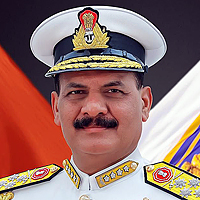
"Over the past 60 years, the growth of SP Guide Publications has mirrored the rising stature of Indian Navy. Its well-researched and informative magazines on Defence and Aerospace sector have served to shape an educated opinion of our military personnel, policy makers and the public alike. I wish SP's Publication team continued success, fair winds and following seas in all future endeavour!"

Since, its inception in 1964, SP Guide Publications has consistently demonstrated commitment to high-quality journalism in the aerospace and defence sectors, earning a well-deserved reputation as Asia's largest media house in this domain. I wish SP Guide Publications continued success in its pursuit of excellence.
With the localisation targets, engine co-development, and expanded MRO capabilities, the latest round of talks signals a shift from buyer-seller dynamics toward long-term industrial collaboration and joint capability building
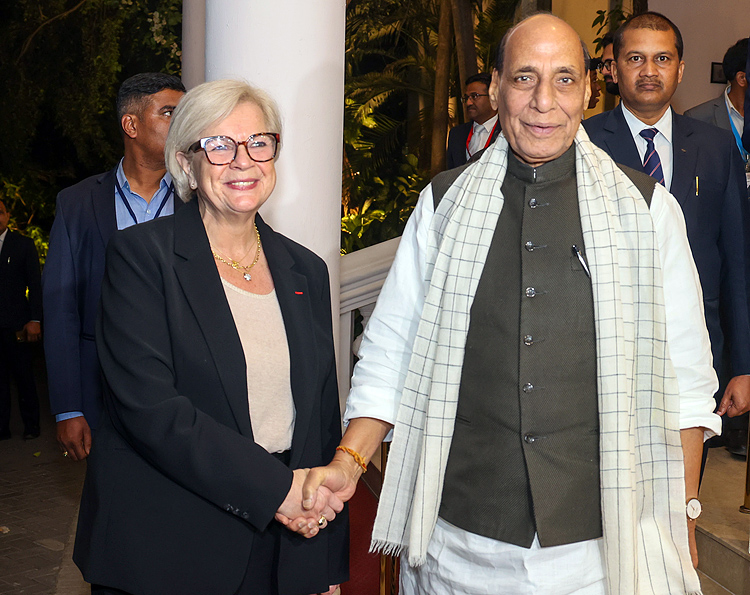
The 6th India–France Annual Defence Dialogue (ADD) concluded in Bangaluru with a decisive push towards deeper industrial cooperation, as both sides underscored the need to significantly enhance indigenous manufacturing in major defence platforms and expand long-term aerospace partnerships.
Defence Minister Rajnath Singh and French Defence Minister Catherine Vautrin led the Dialogue, which resulted in multiple MoUs. During the Dialogue, both signed agreements to renew Industrial Collaboration and Co-production for the next ten years. At the heart of the discussions was a proposal to increase indigenous content in the Dassault Rafale fighter aircraft to 50 per cent for units to be manufactured in India.
During the Dialogue, both sides signed agreements to renew Industrial Collaboration and Co-production for the next ten years.
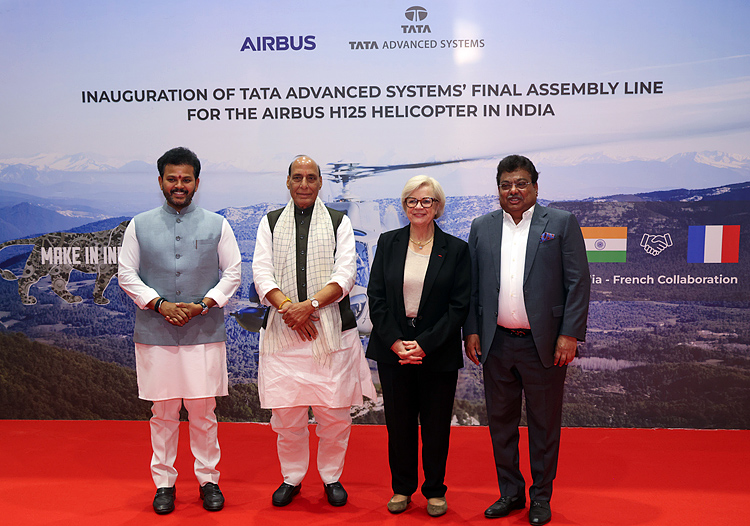
Earlier, Prime Minister Modi and the French President also inaugurated a H125 Tata-Airbus helicopter assembly in India. "We are proud that India and France will jointly manufacture the world's only helicopter capable of flying to the heights of Mount Everest. And we will also export it to the entire world," PM Modi said.
According to the official, the H125 programme will attract investment worth Rs 1,000 crore. The H125 is the only helicopter to have landed on the summit of Mount Everest, labelling it a very high-performance utility helicopter. Officials described the move as a critical step toward strengthening India's defence self-reliance goals while simultaneously reinforcing strategic ties with France.
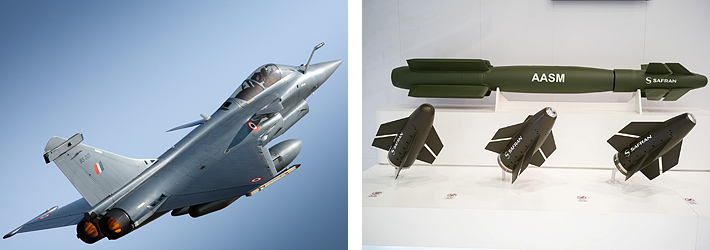
The dialogue placed emphasis on expanding local sourcing of components, avionics, and systems integration for future Rafale production in India. Currently operated by the Indian Air Force (IAF), the Rafale fleet has become a pillar of India's air combat capability.
In an MoU, Bharat Electronics Limited and Safran Electronics and Defence intended to achieve manufacturing of Hammer missiles in India through a JV
Officials indicated that increasing domestic participation would not only reduce costs and strengthen supply chains but also enable technology transfer and skill development within India's aerospace ecosystem. The proposed 50 per cent indigenous content benchmark marks the localisation targets in Indo-French defence collaboration.
The defence dialogue also focused on the manufacturing of Hammer missiles in India. In an MoU, Bharat Electronics Limited and Safran Electronics and Defence intended to achieve this through the JV.
Another outcome of the dialogue was the push to establish Maintenance, Repair and Overhaul (MRO) facilities in India for various French-origin aero engines. The facilities would service both military and potentially civilian platforms, ensuring faster turnaround times and reducing dependence on overseas maintenance hubs.
At the heart of the discussions was a proposal to increase indigenous content in the Dassault Rafale fighter aircraft to 50 per cent for units to be manufactured in India.
French aerospace major Safran emerged as a central partner in this initiative. Officials said India is seeking long-term engine support infrastructure that aligns with its broader objective of becoming a regional MRO hub.
In a significant technological milestone, the Defence Research and Development Organisation (DRDO) has finalised Safran to jointly manufacture a jet engine in India. The project will be undertaken in collaboration with the Gas Turbine Research Establishment (GTRE), a DRDO entity based in Bengaluru.
The engine is intended to power India's indigenous fifth-generation stealth platform -- AMCA. Officials described the partnership as transformative, noting that engine development remains one of the most complex and strategically sensitive aspects of fighter aircraft production.
In a significant technological milestone, the Defence Research and Development Organisation (DRDO) has finalised Safran to jointly manufacture a jet engine in India.
The collaboration is expected to involve substantial technology transfer, joint research, and phased manufacturing in India — a long-standing ambition in India's aerospace sector.
The dialogue also highlighted progress on a new-generation high-power engine named 'Aravalli', designed to power two upcoming indigenous rotorcraft platforms: the 13-tonne medium-lift class Indian Multi-Role Helicopter (IMRH) and the Deck-Based Multi Role Helicopter (DBMRH).
The IMRH is planned as a versatile transport and utility helicopter for the armed forces, while the DBMRH is marked for naval operations, including deployment from aircraft carriers and other naval vessels.
Officials stated that the Aravalli engine project aims to enhance India's self-reliance in helicopter propulsion systems and reduce dependence on foreign suppliers in critical segments.
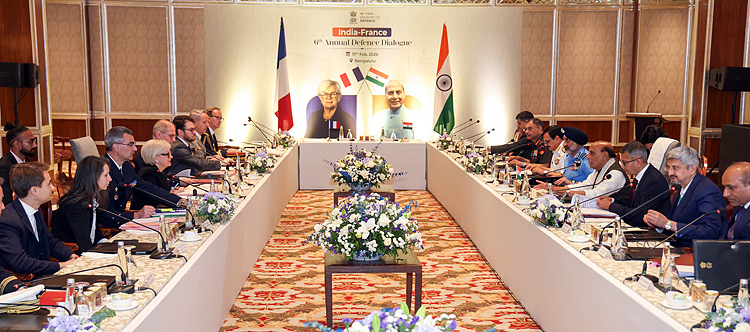
The 6th Dialogue reaffirmed the deepening strategic partnership between New Delhi and Paris, particularly in high-technology defence domains such as jet engines, advanced fighter aircraft, and helicopter propulsion systems.
With the localisation targets, engine co-development, and expanded MRO capabilities, the latest round of talks signals a shift from buyer-seller dynamics toward long-term industrial collaboration and joint capability building — a move that could add value to India's aerospace and defence manufacturing landscape in the years ahead.
Manish Kumar Jha is a Consulting & Contributing Editor for SP's Aviation, SP's Land Forces and SP's Naval Forces and a security expert. He writes on national security, military technology, strategic affairs & policies.