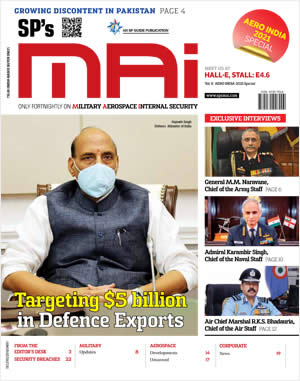





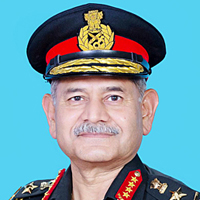
The insightful articles, inspiring narrations and analytical perspectives presented by the Editorial Team, establish an alluring connect with the reader. My compliments and best wishes to SP Guide Publications.
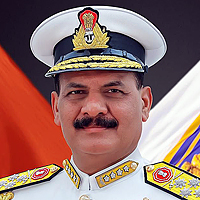
"Over the past 60 years, the growth of SP Guide Publications has mirrored the rising stature of Indian Navy. Its well-researched and informative magazines on Defence and Aerospace sector have served to shape an educated opinion of our military personnel, policy makers and the public alike. I wish SP's Publication team continued success, fair winds and following seas in all future endeavour!"

Since, its inception in 1964, SP Guide Publications has consistently demonstrated commitment to high-quality journalism in the aerospace and defence sectors, earning a well-deserved reputation as Asia's largest media house in this domain. I wish SP Guide Publications continued success in its pursuit of excellence.
The US–Israeli strike inside Iran that killed Supreme Leader Ayatollah Ali Khamenei and senior commanders has triggered a rapidly expanding conflict that now threatens regional stability, global energy routes, and risks a broader Middle East war

A large-scale joint attack by the United States and Israel struck multiple sites across Iran, including strategic military bases, missile systems, air defences, and command centres. The operation was planned for weeks and aimed at degrading Iran's war-fighting capability and leadership.
A large-scale joint attack by the United States and Israel struck multiple sites across Iran, including strategic military bases, missile systems, air defences, and command centres
Iran's Supreme Leader Ayatollah Ali Khamenei has been confirmed killed in these strikes, as reported by multiple state and international sources — a historic and unprecedented event with deep strategic implications.
Dozens of top Iranian military and security officials were reportedly killed alongside Khamenei in the initial assault, further destabilising Iran's political-military hierarchy.

American and Israeli leaders have assessed that the Iranian regime is particularly exposed at this moment — weakened by a deepening economic crisis, the political fallout from a harsh crackdown on nationwide protests, and the lingering effects of major military losses over the past year. Based on this assessment, they looked at this moment as the confluence of vulnerabilities which present a rare strategic opening that should not be missed.
Iran's Supreme Leader Ayatollah Ali Khamenei has been confirmed killed in these strikes, as reported by multiple state and international sources — a historic and unprecedented event with deep strategic implications
In response to the attacks and Khamenei's death, Iran launched extensive missile and drone strikes against targets in Israel, and against US military bases and assets in the Gulf region, including in Bahrain, Kuwait, Qatar, Iraq, and UAE airspace.
Explosions have been reported in major cities across the region, including Dubai, Doha and Manama, as Iranian forces target what they describe as strategic and military sites.
The latest report is that the US Embassy in Kuwait City is under attack, as heavy smoke is seen rising. Kuwait is seen as the priority target by the Iranian Guards. According to another report, a US F-15 fighter jet was reportedly shot down in the skies above Kuwait early Monday morning, according to Iran's state media IRNA. There has been no immediate official confirmation from the US or Kuwaiti authorities on such an incident.

Iran's leadership — including President Masoud Pezeshkian and other top officials — have vowed revenge and referred to future operations that will be "more intense than any before," though exact military plans remain fluid.
While there is literally no comparison as far as the military capabilities are concerned between Iran and the US, that does not mean Iran is an empty state. That means the conflict might escalate until a negotiator comes in.
In response to the attacks and Khamenei's death, Iran launched extensive missile and drone strikes against targets in Israel, and against US military bases and assets in the Gulf region, including in Bahrain, Kuwait, Qatar, Iraq, and UAE airspace
Hezbollah, the Iran-aligned militia based in Lebanon, has actively joined the conflict, firing rockets into northern Israel — marking a significant escalation in its involvement since the 2024 ceasefire.
In response, the Israeli military has carried out air strikes across Lebanon, especially near Beirut and Hezbollah strongholds, in an effort to blunt cross-border fire and degrade threats.
Thousands of civilians in southern Lebanon and Beirut are reported to be fleeing conflict zones amid intense shelling and aerial bombardment.

The US has been directly involved in the strikes on IRGC (Islamic Revolutionary Guard Corps) facilities and senior leadership targets within Iran, including the destruction of their headquarters — a move Washington says was necessary to deter further aggression.
US forces in the Gulf have faced continued missile and drone attacks from Iranian forces; some allied civilian infrastructure has been hit. Casualties among coalition forces have been reported, though official tallies vary.
This conflict has rapidly escalated beyond Iranian borders. Broader regional tensions have heightened as Iran retaliates against the US with missiles and drones crossing multiple Middle Eastern airspaces
The conflict has extended to other Middle Eastern states with missile alerts and explosions reported in Israel, Gulf countries and Iraq, triggering fears of a wider regional conflagration.
Oil markets and trade routes, especially through the Strait of Hormuz, are under strain as heightened risk and energy supply concerns drive price volatility.
International diplomatic efforts — including calls for restraint by the United Nations and world capitals — are growing, but so far have not halted the escalation.
Meanwhile, Iran's National Security Council Secretary Ali Larijani has publicly rejected reports that Tehran is seeking renewed nuclear negotiations with the United States, dismissing claims of any outreach or dialogue while hostilities continue.
This conflict — sparked by unprecedented US–Israeli strikes that killed Iran's Supreme Leader and senior commanders — has rapidly escalated beyond Iranian borders. Combat now involves confrontation between Iran, Israel, and the US. Broader regional tensions have heightened as Iran retaliates against the US with missiles and drones crossing multiple Middle Eastern airspaces.
This remains one of the most severe Middle East crisis in decades, with a high risk of further escalation and deep regional repercussions.
Manish Kumar Jha is a Consulting & Contributing Editor for SP's Aviation, SP's Land Forces and SP's Naval Forces and a security expert. He writes on national security, military technology, strategic affairs & policies.