




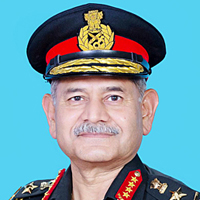
The insightful articles, inspiring narrations and analytical perspectives presented by the Editorial Team, establish an alluring connect with the reader. My compliments and best wishes to SP Guide Publications.
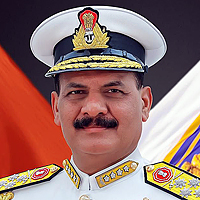
"Over the past 60 years, the growth of SP Guide Publications has mirrored the rising stature of Indian Navy. Its well-researched and informative magazines on Defence and Aerospace sector have served to shape an educated opinion of our military personnel, policy makers and the public alike. I wish SP's Publication team continued success, fair winds and following seas in all future endeavour!"

Since, its inception in 1964, SP Guide Publications has consistently demonstrated commitment to high-quality journalism in the aerospace and defence sectors, earning a well-deserved reputation as Asia's largest media house in this domain. I wish SP Guide Publications continued success in its pursuit of excellence.
The scale of acquisitions signals a shift from incremental upgrades to preparing for high-intensity, technology-led warfare. If executed well, they could rebuild IAF squadron strength, boost readiness, and strengthen deterrence.
India's defence modernisation has often moved in cautious, incremental steps. The latest disclosure to the parliamentary standing committee on defence, however, signals something markedly different: a decisive, high-stakes push to rebuild the Indian Air Force's (IAF) eroding combat and support capabilities.
The proposed conclusion of mega deals—114 Rafale fighters, up to 60 Medium Transport Aircraft (MTA), and advanced AEW&C systems—between 2026 and 2027 reflects both urgency and strategic clarity
The proposed conclusion of mega deals—114 Rafale fighters, up to 60 Medium Transport Aircraft (MTA), and advanced AEW&C systems—between 2026 and 2027 reflects both urgency and strategic clarity.
At the heart of this shift is money—serious money. A 37.03 per cent increase in the IAF's capital budget over the 2025–26 estimates is strategic. The government appears willing to back long-pending modernisation plans with real financial muscle, a departure from years of constrained procurement cycles and delayed decisions.
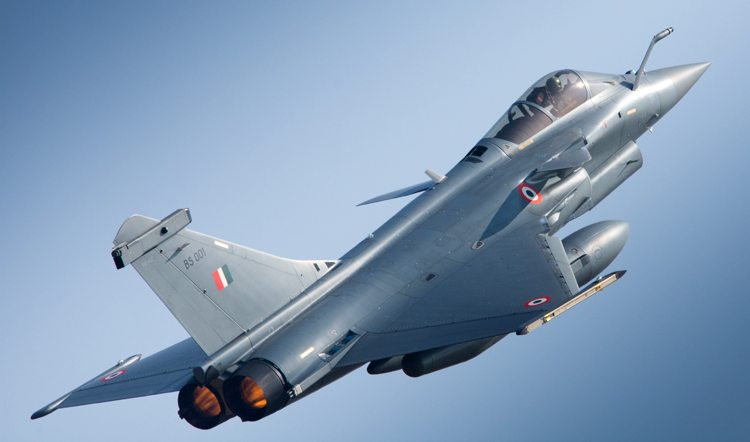
The headline acquisition—the 114 Rafale jets under the MRFA programme—indicated urgency to resolve the IAF's squadron strength
The headline acquisition-the 114 Rafale jets under the MRFA programme—indicated urgency to resolve the IAF's squadron strength. The Rafale has already proven its value in the IAF's fleet, offering advanced avionics, multi-role flexibility, and strong deterrence capability. The MRFA programme will cost around ₹3.25 lakh crore. The proposed aircraft under the MRFA will be manufactured in India through a partnership between French entity Dassault Aviation and an Indian defence firm.
The proposed aircraft under the MRFA will be manufactured in India through a partnership between French entity Dassault Aviation and an Indian defence firm
India already operates a fleet of 36 Rafales, which pushes for the operational and logistics benefits. Expanding this fleet could provide operational uniformity and reduce logistical complexity. But it also raises questions. Will India double down on a proven but expensive platform at the cost of indigenous alternatives? Or can this deal be structured to meaningfully boost domestic manufacturing under 'Make in India,' avoiding the pitfalls of past import-heavy acquisitions?
Equally critical, though less headline-grabbing, is the Medium Transport Aircraft (MTA) programme. India's military logistics backbone is ageing, and recent experiences—from border standoffs to humanitarian missions—have underscored the importance of rapid airlift capability.

The Defence Acquisition Board's nod to a ₹1 lakh crore (MTA) programme is a timely, if overdue, step toward fixing a critical gap in the Indian Air Force's logistics chain. The ageing Antonov An-32 fleet has long stretched beyond its intended lifespan, and replacing it is essential for maintaining operational readiness across diverse and demanding terrains.
The Defence Acquisition Board's nod to a ₹1 lakh crore (MTA) programme is a timely, if overdue, step toward fixing a critical gap in the Indian Air Force's logistics chain
The real significance of the programme lies not just in numbers—60 aircraft—but in its structure. With only 12 to be imported and 48 to be built domestically, the project offers a good opportunity to strengthen India's aerospace manufacturing base. The choice between platforms like the Embraer C-390 Millennium, Lockheed Martin C-130J Super Hercules, and Airbus A400M Atlas must therefore go beyond performance metrics to include technology transfer and long-term industrial gains.
A fleet of 60 MTAs would significantly enhance mobility, allowing the armed forces to respond swiftly across diverse terrains, from the Himalayas to island territories. In modern warfare, logistics is not a support function; it is a decisive advantage.
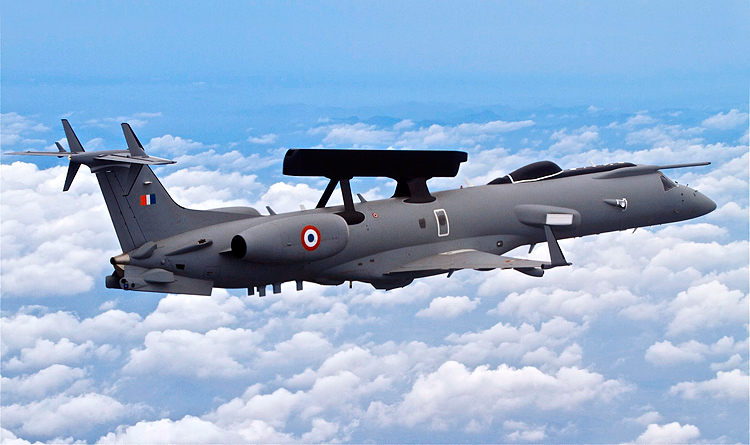
The inclusion of advanced AEW&C systems is another strategically sound move. Air superiority today depends as much on information dominance as on firepower
The inclusion of advanced AEW&C systems is another strategically sound move. Air superiority today depends as much on information dominance as on firepower. These airborne surveillance platforms act as force multipliers, extending radar coverage, coordinating assets, and providing real-time battle management. In a region marked by increasingly sophisticated aerial threats, strengthening this capability is not optional—it is essential.
However, ambition must be matched by execution. India's defence procurement history is littered with delays, cost overruns, and shifting requirements. The MRFA programme itself has been in discussion for years. If these deals are to be concluded within the 2026–27 timeframe, the Ministry of Defence (MoD) will need to streamline procedures, ensure transparency, and maintain consistency in decision-making. Bureaucratic inertia cannot be allowed to dilute strategic intent.
There is also the broader question of balance. While imports can plug immediate capability gaps, long-term security depends on domestic industrial strength. The simultaneous allocation for Tejas MK1A jets and drones suggests an awareness of this dual need. The challenge will be to ensure that big-ticket foreign acquisitions do not overshadow or undercut indigenous programmes.
If these deals are to be concluded within the 2026–27 timeframe, the Ministry of Defence (MoD) will need to streamline procedures, ensure transparency, and maintain consistency in decision-making
Ultimately, this moment represents an inflection point. The scale of planned acquisitions indicates that India is no longer content with incremental upgrades; it is preparing for a future defined by high-intensity, technology-driven conflict. If executed well, these deals could restore the IAF's squadron strength, enhance operational readiness, and reinforce deterrence.
The intent is clear. The resources are being mobilised. What is expected that India must translate into timely, effective capability on the ground—and in the air.
Manish Kumar Jha is a Consulting & Contributing Editor for SP's Aviation, SP's Land Forces and SP's Naval Forces and a security expert. He writes on national security, military technology, strategic affairs & policies.