




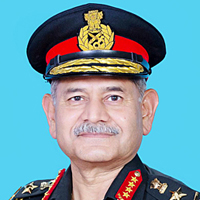
The insightful articles, inspiring narrations and analytical perspectives presented by the Editorial Team, establish an alluring connect with the reader. My compliments and best wishes to SP Guide Publications.
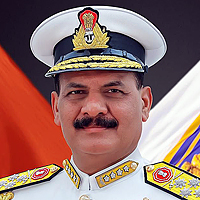
"Over the past 60 years, the growth of SP Guide Publications has mirrored the rising stature of Indian Navy. Its well-researched and informative magazines on Defence and Aerospace sector have served to shape an educated opinion of our military personnel, policy makers and the public alike. I wish SP's Publication team continued success, fair winds and following seas in all future endeavour!"

Since, its inception in 1964, SP Guide Publications has consistently demonstrated commitment to high-quality journalism in the aerospace and defence sectors, earning a well-deserved reputation as Asia's largest media house in this domain. I wish SP Guide Publications continued success in its pursuit of excellence.
The proposed Long Range Business Jets will primarily serve senior government functionaries, including the Defence, Finance, Home, and External Affairs Ministers, alongside the Chiefs of the Army, Navy and Air Force
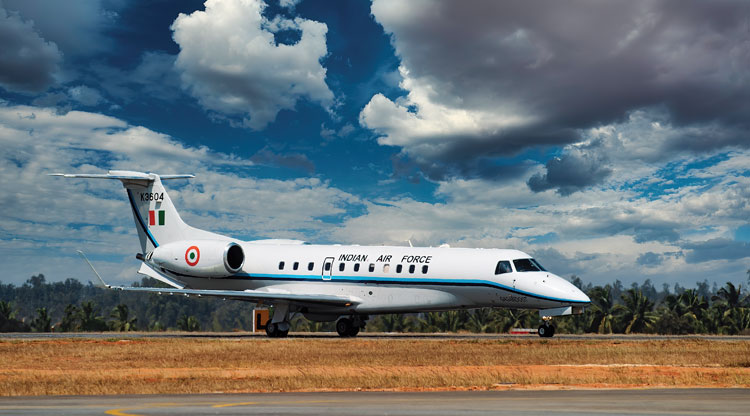
For more than two decades, the Indian Air Force's trusted fleet of Embraer Legacy 600 jets -Meghdoot, Vayudoot, Nabhdoot and Gagandoot — had carried India's most powerful decision-makers across continents, through crises, diplomacy and war-room moments in the skies.
Now, the Indian Air Force has formally initiated the process to replace the ageing VIP transport fleet, issuing a Request for Information (RFI) for the procurement of four to six Long Range Business Jets (LRBJs), modernising India's strategic air mobility architecture.
The RFI is the beginning of the long acquisition process, which is about finding the potential vendors. The process involves various stages and trials after customisation for evaluating and assessing the required technology. Thereafter, it leads to final procurement.
Indian Air Force has formally initiated the process to replace the ageing VIP transport fleet
Inducted on September 21, 2005, the four Embraer aircraft served as reliable airborne offices for senior government officials and military commanders. Over the years, they became familiar symbols of India's expanding diplomatic and strategic footprint. Whether ferrying defence ministers to urgent security meetings abroad, transporting military chiefs during operational reviews, or enabling high-level diplomatic outreach, the aircraft quietly became instruments of statecraft.
After over twenty years of service, the aircraft are approaching the stage where maintenance cycles become more demanding, operational availability declines, and technological limitations begin to surface.
Inducted on September 21, 2005, the four Embraer aircraft served as reliable airborne offices for senior government officials and military commanders. Over the years, they became familiar symbols of India's expanding diplomatic and strategic footprint
Aviation experts note that modern VIP transport aircraft are expected to provide not just comfort, but also extended range, secure communication suites, survivability systems and the ability to operate seamlessly across global routes without frequent stopovers.
That requirement has become even more pressing as India's geopolitical responsibilities grow.
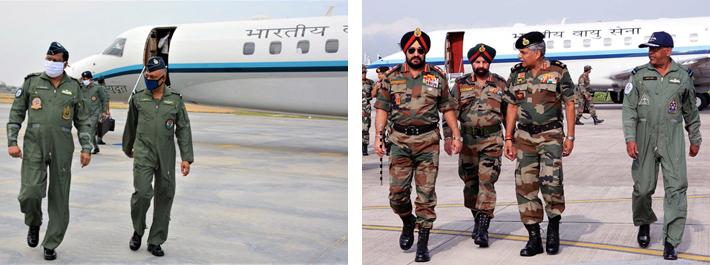
The proposed Long Range Business Jets will primarily serve senior government functionaries, including the Defence, Finance, Home and External Affairs Ministers, alongside the Chiefs of the Army, Navy and Air Force. In practical terms, these aircraft are flying command centres — platforms that must ensure uninterrupted communication, strategic security and rapid deployment capability for national leadership.
Modern VIP transport aircraft are expected to provide not just comfort, but also extended range, secure communication suites, survivability systems and the ability to operate seamlessly across global routes
The replacement programme also reflects the changing character of India's diplomacy and defence posture. Indian ministers and military leaders today travel far more frequently across Europe, the Indo-Pacific, West Asia and Africa as India deepens defence partnerships, economic engagement and strategic outreach.
Globally, modern business jets used for VIP and military roles increasingly resemble compact strategic assets. Aircraft such as the Gulfstream G700, Bombardier Global 7500 and Dassault Falcon series are capable of flying intercontinental missions with sophisticated avionics, encrypted communication systems and reduced operational turnaround times.
The cost of the programme is likely to be substantial, though official estimates are yet to emerge
The cost of the programme is likely to be substantial, though official estimates are yet to emerge. Yet defence analysts argue that such investments are not about prestige aviation; they are about continuity of governance and national security responsiveness.
Interestingly, the replacement effort also highlights the broader transformation underway within the Indian Air Force. While fighter acquisitions and combat capability often dominate headlines, transport and support aviation remain equally critical pillars of military preparedness. From heavy-lift aircraft and airborne warning systems to aerial refuellers and VIP fleets, the IAF's modernisation is increasingly becoming comprehensive.
For the four Embraer aircraft that served the nation for twenty years, retirement may soon be approaching. Yet their legacy will endure in countless untold missions carried out quietly above the clouds — missions where diplomacy, defence and governance travelled together at 40,000 feet.
Manish Kumar Jha is a Consulting & Contributing Editor for SP's Aviation, SP's Land Forces and SP's Naval Forces and a security expert. He writes on national security, military technology, strategic affairs & policies.