






The insightful articles, inspiring narrations and analytical perspectives presented by the Editorial Team, establish an alluring connect with the reader. My compliments and best wishes to SP Guide Publications.

"Over the past 60 years, the growth of SP Guide Publications has mirrored the rising stature of Indian Navy. Its well-researched and informative magazines on Defence and Aerospace sector have served to shape an educated opinion of our military personnel, policy makers and the public alike. I wish SP's Publication team continued success, fair winds and following seas in all future endeavour!"

Since, its inception in 1964, SP Guide Publications has consistently demonstrated commitment to high-quality journalism in the aerospace and defence sectors, earning a well-deserved reputation as Asia's largest media house in this domain. I wish SP Guide Publications continued success in its pursuit of excellence.
China and the UK are rapidly advancing AI-enabled and autonomous airpower capabilities, highlighting the growing military role of drones and the need for India to reassess its future air combat strategy
 |
The Author is Former Director General of Information Systems and A Special Forces Veteran, Indian Army |
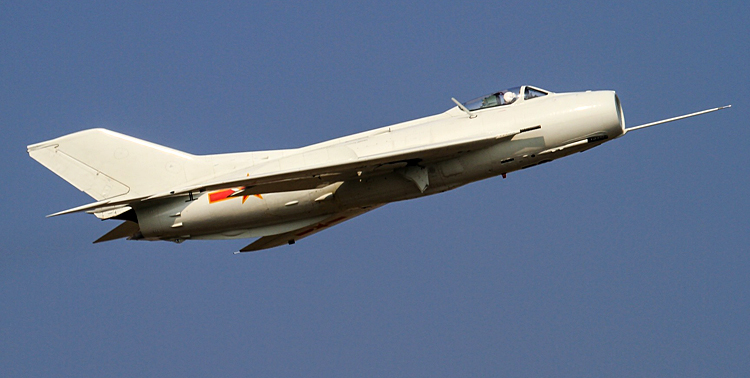
According to a recent report by the Arlington, Virginia based Mitchell Institute for Aerospace Studies, China has repurposed hundreds of obsolete, 1960s-era J-6 supersonic fighters into a massive fleet of "strike drones" (200 or more) stationed at six airbases near the Taiwan Strait; five bases in Fujian Province and one in Guangdong Province. These jets-turned-drones would fly into targets in the opening phase of an assault on Taiwan, US or allied targets overwhelming air defences. J-6 fighters (first flown in the 1960s) have supersonic speed (Mach 1.3) with a 250 kg payload. China has also converted the J-7, into unmanned combat aerial vehicles (UCAVs). These strike drones are part of Beijing's expanding mix of airpower weapons, including bombers with stand-off missiles, modern fighters, ballistic missiles, cruise missiles and swarms of modern UAVs.
China has repurposed hundreds of obsolete, 1960s-era J-6 supersonic fighters into a massive fleet of "strike drones" (200 or more) stationed at six airbases near the Taiwan Strait, five bases in Fujian Province and one in Guangdong Province
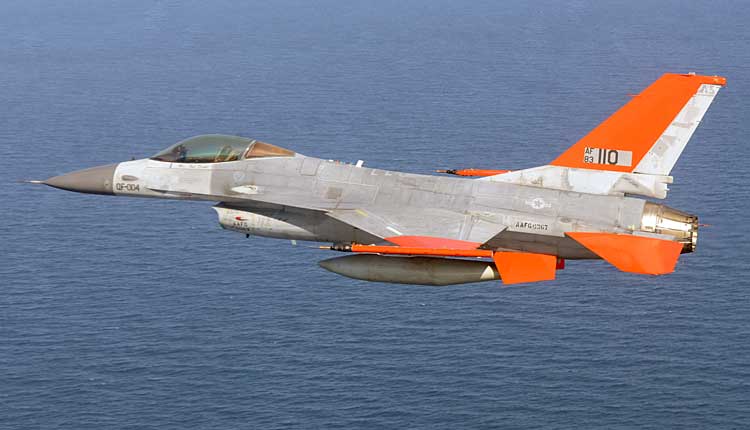
The US has a long history of converting aging jets into drones, primarily for use as high-fidelity aerial targets, although they have potential for reconnaissance roles. The US Air Force (USAF) has utilised modified F-16 Fighting Falcons (designated QF-16) for target practice. Earlier, the US converted F-100s, F-106s, and F-4 Phantoms for similar purposes. Vietnam has explored converting its retired Soviet-origin MiG-21 fighters into unmanned combat drones. Iran has developed numerous drones, some of which utilise design principles from older, conventional aircraft. India has been displaying its retired jets as showpieces, not taking any steps yet to repurpose them as strike or kamikaze drones, although this was suggested in these columns earlier.
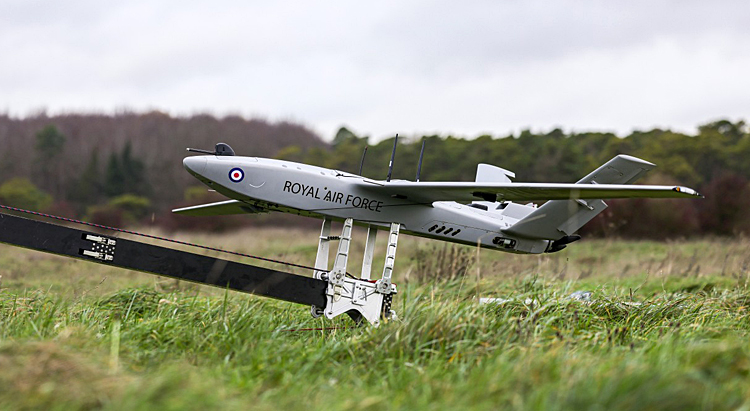
But technology is moving ahead at a fast pace. According to news reports of May 5, 2026, Britain is accelerating plans to establish an AI (Artificial Intelligence) Air Force in the backdrop of the US-Israel war on Iran. AI has regularly been used during the Iran war for selecting military targets and large-scale attacks from uncrewed aerial systems or drones. AI can also be used in air and missile defence systems, helping to digest warning signs picked up by radars and sensors and allocate different ground-based capabilities to incoming aerial threats, as seen in the war in Ukraine.
Britain is accelerating plans to establish an AI (Artificial Intelligence) Air Force in the backdrop of the US-Israel war on Iran
It may be recalled that Elon Musk has repeatedly stated that the era of manned fighter jets is over, arguing that autonomous and remotely controlled drones are the future of air combat. He explicitly targeted the F-35 stealth fighter programme, calling it obsolete, "broken" at the design level, and destined to lose against drone competitors.
According to Royal Air Force (RAF) Chief, Air Chief Marshal Harv Smyth the shift towards uncrewed air systems is one of the most interesting and exciting changes for RAF, which is happening much more quickly than military planners had expected. A week earlier, the RAF launched a review of its Combat Air Strategy, first released in 2018, to significantly expand its AI and autonomous capabilities by the end of the decade. This includes the development of "robot fighter jets", according to him.
The shift towards uncrewed air systems is one of the most interesting and exciting changes for RAF, which is happening much more quickly than military planners had expected
In an interview with media, Smyth said that the Air Force has commissioned work to "re-look at our Combat Air Strategy and where those types of capabilities might and could play into that much sooner than we had thought". "What we're now looking at is, how do we pull that all together into a single programme, and what could that mean for an Air Force that might become more of an AI Air Force in the future?" he added. He said that two years ago, the RAF was planning to integrate automated systems by 2035, but it is now aiming to master the technology by 2030, one element of which is "collaborative combat aircrafts (CCAs) or robot fighter jets.
The UK's Strategic Defence Review (SDR) – a blueprint for the future of the Armed Forces released in 2025 said that the RAF needed to improve its crewed systems with "autonomous collaborative platforms", to provide "mass and capability across a range of tasks, including air defence, strike, and electromagnetic attack". It added that crewed combat air platforms "will remain at the heart of a system of systems approach, particularly in airborne air defence to counter peer adversaries' aircraft, until artificial intelligence and autonomy reach the necessary levels of capability and trust".
AI can also be used in air and missile defence systems, helping to digest warning signs picked up by radars and sensors and allocate different ground-based capabilities to incoming aerial threats
Asked in the media interview, if the UK was speeding up its plans to introduce automated tech in part due to lessons from the US-Israeli conflict with Iran, Smyth said: "Absolutely." But he said that integrating robotic systems would not only help the UK expand its military capabilities, it would also generate domestic economic growth. He added that British defence companies have "world-class skills" in the area and could benefit from new investment.
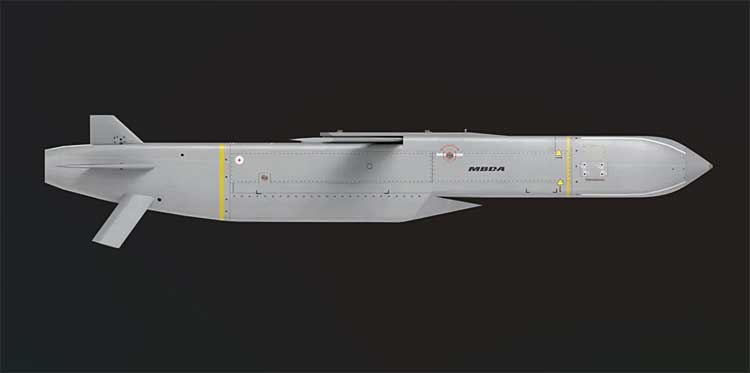
Justin Bronk, a senior research fellow at the Royal United Services Institute (Rusi), said the RAF was developing some "very promising" uncrewed systems, which includes the StormShroud – uncrewed aircraft designed to blind enemy radars – and a range of cheap decoy and one-way attack drone systems. However, Bronk said the systems would mostly be useful in overwhelming air defence systems to improve the odds of high-end weapons like UK-made Storm Shadow missiles hitting targets, rather than as replacements for existing missiles and jets, adding that "while future systems for service in the mid-late 2030s are important to develop, the main focus should be enhancing the lethality and survivability of the aircraft and aircrews we already have. In the near term, that means bolstering air-launched weapon stocks, improving airbase defences and investing in electronic attack options like StormShroud."
Indian policy makers and the military hierarchy need to take note of these developments.