


The insightful articles, inspiring narrations and analytical perspectives presented by the Editorial Team, establish an alluring connect with the reader. My compliments and best wishes to SP Guide Publications.
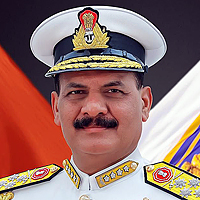
"Over the past 60 years, the growth of SP Guide Publications has mirrored the rising stature of Indian Navy. Its well-researched and informative magazines on Defence and Aerospace sector have served to shape an educated opinion of our military personnel, policy makers and the public alike. I wish SP's Publication team continued success, fair winds and following seas in all future endeavour!"

Since, its inception in 1964, SP Guide Publications has consistently demonstrated commitment to high-quality journalism in the aerospace and defence sectors, earning a well-deserved reputation as Asia's largest media house in this domain. I wish SP Guide Publications continued success in its pursuit of excellence.
The visit comes at a crucial juncture when the Defence Acquisition Council (DAC) has already approved, and LoR is issued for 114 Rafale fighter jets for the IAF under a massive multi-billion-dollar programme aimed at reversing the Air Force's declining squadron strength and boosting indigenous aerospace manufacturing
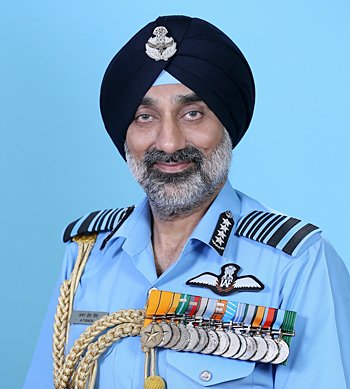
India's ambitious plan to significantly expand its Rafale fighter fleet has gathered momentum with Indian Air Force (IAF) Chief Air Chief Marshal A.P. Singh visiting France for high-level military and industrial engagements, even as New Delhi prepares to formally launch negotiations for one of its largest-ever combat aircraft acquisitions.
The visit comes days after the Union Ministry of Defence issued a Letter of Request (LoR) to the French government, formally initiating the acquisition process
The visit comes at a crucial juncture when the Defence Acquisition Council (DAC) has already approved the initial phase of 114 Rafale fighter jets for the IAF under a massive multi-billion-dollar programme aimed at reversing the Air Force's declining squadron strength and boosting indigenous aerospace manufacturing.
It is learnt that the visit comes days after the Union Ministry of Defence issued a Letter of Request (LoR) to the French government, formally initiating the acquisition process, in one of the Indian Air Force's (IAF) largest-ever fighter aircraft procurement programmes.
The IAF is expected to procure 88 single-seat and 26 twin-seat Rafale fighters. Of these, only 18 aircraft are likely to arrive in fly-away condition, while the remaining jets would be manufactured in India
Once Paris responds with details relating to pricing, delivery schedules, logistics and support packages, New Delhi will proceed towards issuing a formal Request for Proposal (RFP), paving the way for commercial negotiations. France is expected to respond within the next two to three months.
The proposed acquisition marks the biggest expansion of the Rafale fleet since India signed the landmark 36-aircraft deal with France in 2016.
Under the new plan, the IAF is expected to procure 88 single-seat and 26 twin-seat Rafale fighters. Of these, only 18 aircraft are likely to arrive in fly-away condition, while the remaining jets would be manufactured in India through a production partnership between France's Dassault Aviation and an Indian defence company.
India is not seeking access to the Rafale's sensitive source codes – something no original equipment manufacturer (OEM) shares for frontline combat platforms
The programme looks at progressively increasing indigenous content to nearly 40-50 per cent over the life of production, aligning with the government's broader push for defence indigenisation and domestic aerospace capability building.
The IAF chief's visit is expected to focus not only on operational aspects of the Rafale ecosystem but also on the future roadmap for military industrial cooperation and weapons integration. During his stay, as reported, Air Chief Marshal Singh will hold talks with senior French military officials and visit Dassault Aviation facilities as well as European missile manufacturer MBDA.
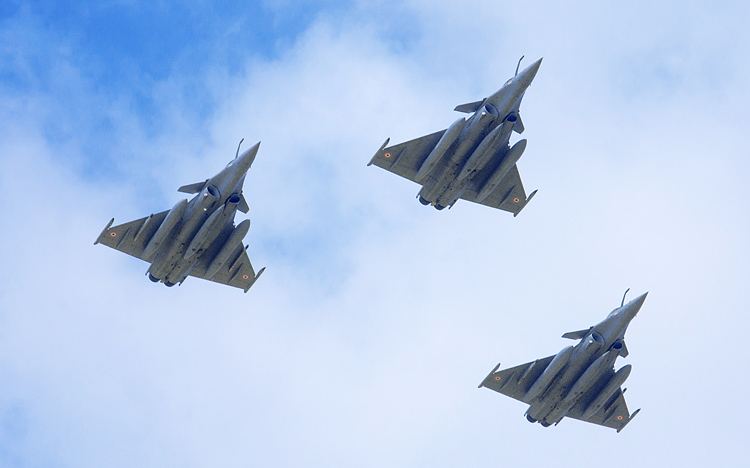
MBDA currently supplies some of the Rafale's most critical weapon systems to India, including the Meteor beyond-visual-range air-to-air missile (BVRAAM), the MICA air-to-air missile and the SCALP deep-strike cruise missile. These systems are considered among the key force multipliers that give the Rafale a decisive edge in long-range aerial combat and precision strike operations.
Sources clarified that India is not seeking access to the Rafale's sensitive source codes – something no original equipment manufacturer (OEM) shares for frontline combat platforms. Instead, New Delhi is expected to push for extensive Interface Control Documents (ICDs) and technical arrangements during the Contract Negotiation Committee (CNC) stage.
Such provisions would allow India to integrate indigenous weapons and systems onto the Rafale platform
Such provisions would allow India to integrate indigenous weapons and systems onto the Rafale platform over time, including the Astra BVRAAM, future variants of the BrahMos-NG missile and other domestically developed systems.
The issue of weapons integration is strategically significant as India increasingly seeks operational autonomy and reduced dependence on foreign suppliers during future conflicts.
The Rafale expansion programme is being viewed within the larger context of the IAF's mounting concerns over its dwindling fighter squadron numbers. Against an authorised strength of 42 squadrons, the Air Force currently operates around 30-31 squadrons, with several ageing MiG-series aircraft nearing retirement.
The large-scale Rafale induction, combined with the indigenous Tejas programme and future Advanced Medium Combat Aircraft (AMCA) project, will form the backbone of India's combat airpower strategy
Military planners believe the large-scale Rafale induction, combined with the indigenous Tejas programme and future Advanced Medium Combat Aircraft (AMCA) project, will form the backbone of India's combat airpower strategy over the next two decades.
The visit also underlines the growing depth of India-France strategic ties, particularly in defence and aerospace cooperation.
France has emerged as one of India's most reliable defence partners, willing to support technology collaboration and long-term industrial participation at a time when geopolitical uncertainties continue to reshape global military supply chains.
Air Chief Marshal Singh is expected to return to India on June 5 after concluding discussions that could shape the future trajectory of India's combat aviation modernisation.
Manish Kumar Jha is a Consulting & Contributing Editor for SP's Aviation, SP's Land Forces and SP's Naval Forces and a security expert. He writes on national security, military technology, strategic affairs & policies.