






The insightful articles, inspiring narrations and analytical perspectives presented by the Editorial Team, establish an alluring connect with the reader. My compliments and best wishes to SP Guide Publications.

"Over the past 60 years, the growth of SP Guide Publications has mirrored the rising stature of Indian Navy. Its well-researched and informative magazines on Defence and Aerospace sector have served to shape an educated opinion of our military personnel, policy makers and the public alike. I wish SP's Publication team continued success, fair winds and following seas in all future endeavour!"

Since, its inception in 1964, SP Guide Publications has consistently demonstrated commitment to high-quality journalism in the aerospace and defence sectors, earning a well-deserved reputation as Asia's largest media house in this domain. I wish SP Guide Publications continued success in its pursuit of excellence.
These new technologies represent India's growing push towards self-reliance in cutting-edge defence technology
 |
The Author is Former Director General of Information Systems and A Special Forces Veteran, Indian Army |
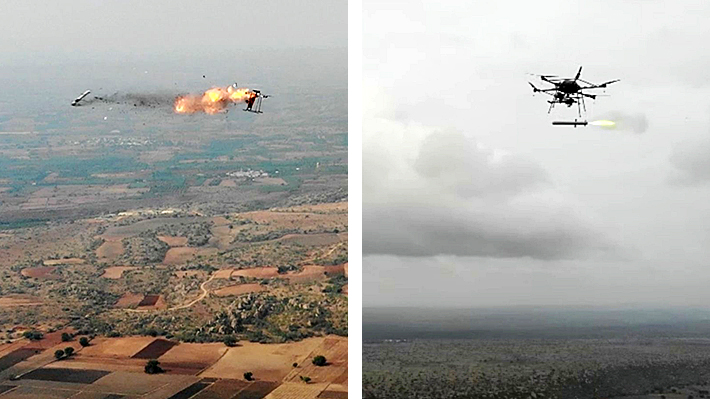
In a significant development, the Defence Research and Development Organisation (DRDO) successfully completed final development trials of the indigenous UAV-Launched Precision Guided Missile (ULPGM)-V3. Tested near Kurnool, Andhra Pradesh, the "fire-and-forget" smart missile showcased its dual-combat versatility by successfully engaging both ground targets (like tanks) and airborne threats (like drones and helicopters). Developed by DRDO's Research Centre Imarat (RCI) in Hyderabad, with production led by Bharat Dynamics Limited and Adani Defence Systems & Technologies, the successful test validated in, both air-to-ground (anti-tank) and air-to-air operational modes. The missile was integrated into UAVs developed by the Bengaluru-based firm Newspace Research and Technologies.
The government said the 'Smart' missile was produced entirely through the Indian defence ecosystem involving MSMEs and other domestic industries. The trials confirmed a "fully mature domestic supply chain" capable of immediate serial mass production
The government said the missile was produced entirely through the Indian defence ecosystem involving MSMEs and other domestic industries. It added that the trials confirmed a "fully mature domestic supply chain" capable of immediate serial mass production. Defence Minister Rajnath Singh congratulated DRDO, public sector units, defence production partners and the industry for the successful trials. "He termed it a strategic milestone achieved towards self-sufficiency in Defence," the statement said. The Ministry of Defence (MoD) said that the Air-to-Ground mode is designed for anti-tank operations, while the Air-to-Air mode can engage drones, helicopters and other airborne targets.
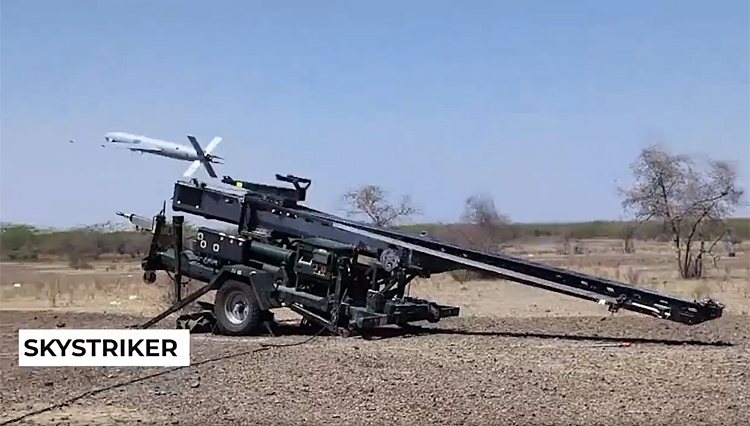
Concurrently, Pune-based 'Nibe Limited' has successfully tested its 100-km strike loitering munition 'Vayu Astra-1', which is based on Israel's SkyStriker tactical loitering munitions as reported on May 22, 2026. Designed for precision strikes and modern battlefield operations, the trial conducted at Pokhran in Rajasthan and Joshimath in Uttarakhand, demonstrated a 100-km strike range, high-precision targeting, night strike capability, control transfer functions and high-altitude endurance flying over 14,000 feet. According to the company, the system also showcased abort and re-attack functions along with reusable recovery capability.
The company also said during anti-tank night trials, the system successfully engaged targets using infrared (IR) camera, hitting within 2-metre CEP in a single attempt, and the capability of handing over control from the ground control station (GCS) to a forward control segment at a distance of 70-km was successfully demonstrated. SkyStriker is a fully autonomous loitering munition that can locate, acquire and strike operator designated targets with 5 to 10-kg warhead installed inside the fuselage, enabling high-precision performance.
This marks a major milestone in India's directed-energy weapons (DEWs) programme, with Tonbo Imaging emerging as one of the few private firms globally to possess in-house HPM technology
In another significant development, India has developed an indigenous laser weapon, named 'RayStrike-9' (3kW–9kW), developed by Paras Defence and DRDO-CHESS, according to news reports of May 21. 2026.. The weapon fires at the speed of light to neutralise drone swarms and missiles within a 1.2–2.5 km range. Using AI targeting and electro-optics, its infinite magazine cuts the cost of modern anti-drone warfare. RayStrike-9 has a speed-of-light engagement capability, which makes it quite effective against swarming drones and fast-moving aerial targets.
RayStrike-9 eliminates the need for traditional ammunition logistical and significantly lowers long-term operational costs as compared to standard interceptors. Its role is vital in counter-drone warfare, where low-cost UAVs and loitering munitions with high-cost traditional weapons have become a defining challenge in modern conflicts. The laser weapon represents India's growing push towards self-reliance in cutting-edge defence technology.
The induction of HPM systems will provide the Indian Navy with a cutting-edge tool to counter emerging aerial threats, particularly drone swarms, while reinforcing India's indigenous capability in DEWs
Integrating indigenous optics, power systems and precision-targeting capabilities, Paras Defence and Space Technologies has emerged as an important contributor to the government's Atmanirbhar Bharat initiative. The project highlights India's efforts to compete with major global powers in directed energy weapons while reinforcing its multi-layered defence capabilities against emerging threats. Offered in variants ranging from 3kW to 9kW, the RayStrike-9 employs a "Track, Locate and Kill" system that neutralises targets using concentrated laser beams.
The modular platform integrates AI-enabled targeting, high-resolution electro-optical sensors for both day and night operations, and engagement ranges between 1.2 km and 2.5 km depending on the target and power configuration. It can function as either a vehicle-mounted or portable system and is designed to operate in demanding environmental conditions. The system uses advanced AI-driven algorithms to automatically identify and prioritise targets based on factors such as speed and trajectory, enhancing its effectiveness against erratic aerial manoeuvres. It is also fitted with a sophisticated day-and-night electro-optical sensor suite, enabling reliable performance during nighttime missions, low-visibility conditions and smoke-filled combat environments.
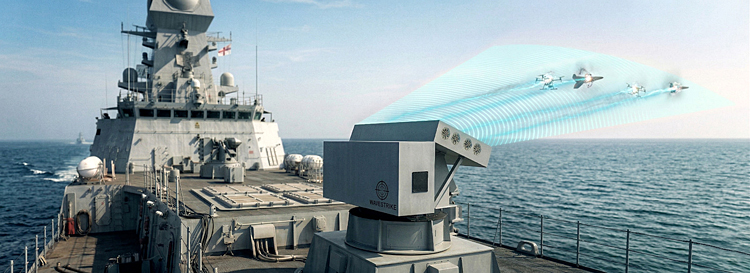
According to another news report of May 19, 2026, Bengaluru-based defence technology company Tonbo Imaging, the has secured a contract from the Indian Navy to develop and deploy a high-power microwave (HPM) system under the ADITI 3.0 innovation scheme. The contract is supported by iDEX (Innovations for Defence Excellence) and the Defence Innovation Organisation (DIO), both operating under the Ministry of Defence (MoD). This marks a major milestone in India's directed-energy weapons (DEWs) programme, with Tonbo Imaging emerging as one of the few private firms globally to possess in-house HPM technology. Under the agreement, Tonbo Imaging will be responsible for system integration and commissioning, with multiple production units expected to follow once the system successfully clears development, validation, and acceptance trials.
The technology is strategically sensitive and technically demanding, but it offers a low cost-per-shot alternative to conventional air defence systems, which are often ill-suited to countering large numbers of inexpensive, coordinated drones
DEWs concentrate electromagnetic energy rather than conventional munitions to disable or degrade targets. These systems are capable of incapacitating the electronics of UAVs, sensors, and communications equipment without causing physical destruction, making them particularly effective against drone swarms. Only a handful of countries, including the US, China, Russia, and the UK are known to operate advanced HPM systems. The technology is strategically sensitive and technically demanding, but it offers a low cost-per-shot alternative to conventional air defence systems, which are often ill-suited to countering large numbers of inexpensive, coordinated drones.
The induction of HPM systems will provide the Indian Navy with a cutting-edge tool to counter emerging aerial threats, particularly drone swarms, while reinforcing India's indigenous capability in DEWs.
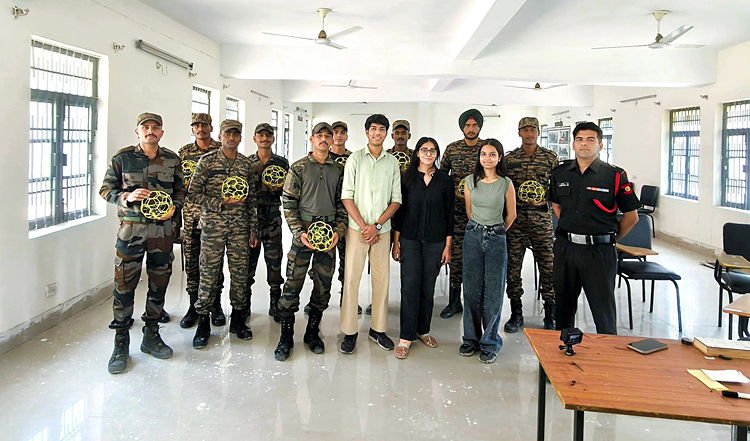
Delhi-based 'Vayumandal Innovations' has successfully supplied custom-built training drones to the Indian Army, marking a significant step in strengthening simulation-based learning and tactical skill development within the armed forces. These drones are designed specifically for military training programmes, offering mission-oriented FPV systems that enhance operational preparedness and reduce reliance on imports.
The company recently conducted drone training support for an Army programme in Jalandhar, where the company delivered its indigenously developed training drones tailored to meet the Army's requirements. The drones are engineered to provide realistic battlefield simulation, enabling soldiers to practise manoeuvres, reconnaissance, and tactical operations in controlled environments.