




The insightful articles, inspiring narrations and analytical perspectives presented by the Editorial Team, establish an alluring connect with the reader. My compliments and best wishes to SP Guide Publications.
"Over the past 60 years, the growth of SP Guide Publications has mirrored the rising stature of Indian Navy. Its well-researched and informative magazines on Defence and Aerospace sector have served to shape an educated opinion of our military personnel, policy makers and the public alike. I wish SP's Publication team continued success, fair winds and following seas in all future endeavour!"

Since, its inception in 1964, SP Guide Publications has consistently demonstrated commitment to high-quality journalism in the aerospace and defence sectors, earning a well-deserved reputation as Asia's largest media house in this domain. I wish SP Guide Publications continued success in its pursuit of excellence.
While India has made significant progress in indigenous unmanned underwater systems, the long-delayed acquisition of midget submarines continues to raise questions about maritime preparedness
 |
The Author is Former Director General of Information Systems and A Special Forces Veteran, Indian Army |
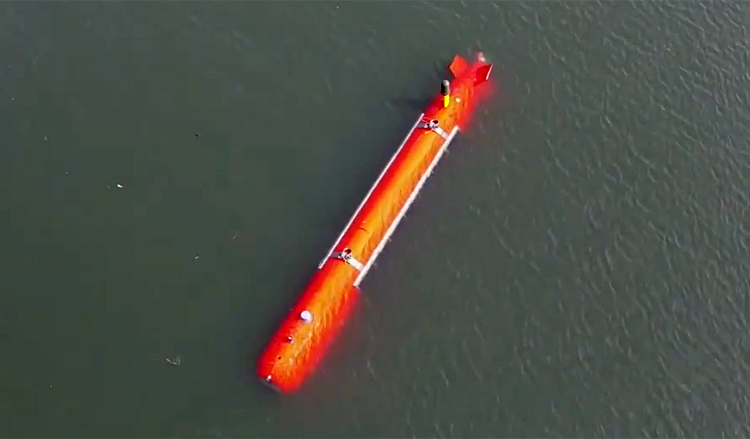
On May 30, 2026, AUKUS partners Australia, the UK and the US published a new statement on the side-lines of the Shangri-La Dialogue in Singapore, changing the acquisition of Virginia-class nuclear-powered submarines by Australia under AUKUS Pillar I. Instead, AUKUS partners will collaborate in developing payloads for uncrewed underwater vehicles (UUVs) under AUKUS Pillar II, with delivery starting in 2027. The project aims to: enhance protection of critical seabed infrastructure; deploy cutting-edge surveillance, reconnaissance and strike capabilities; conduct logistics operations; and bolster superiority in anti-submarine and anti-surface warfare, mine countermeasures, electronic warfare, and contested littoral manoeuvre.
These indigenous systems are designed to operate as a coordinated, uncrewed swarm, enhancing the Indian Navy's underwater situational awareness and strategic deterrence in the Indo-Pacific region
However, another reason for scrapping Australia's acquisition of submarines under AUKUS Pillar I is being attributed to the independent inquiry initiated into the Australian $368 billion ($239 billion) deal where Australia was to buy second-hand US submarines.
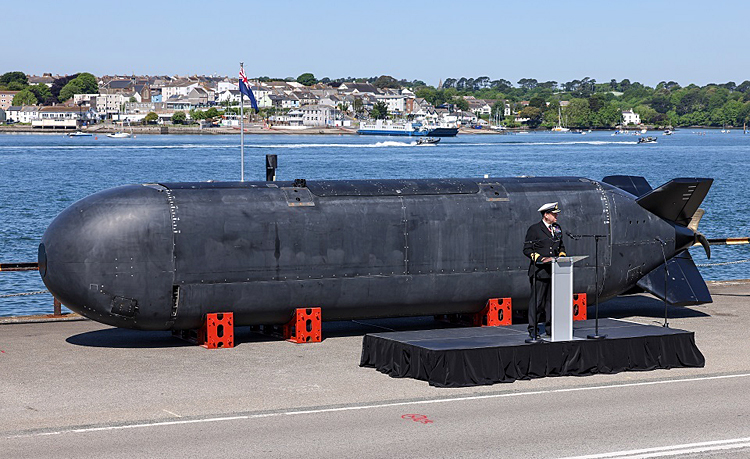
In December 2025, the UK Submarine Delivery Agency (SDA) announced that it had handed over the autonomous submarine 'XV Excalibur' to the Royal Navy. Officially classified as an Extra-Large Uncrewed Underwater Vehicle (XLUUV), Excalibur is a 12-metre experimental vessel. At a displacement of 19 tonnes, it is the largest uncrewed underwater vessel ever trialled by the Royal Navy. This XLUUV was developed in under three years by the SDA in partnership with MSubs Ltd.
Midget submarines are highly specialised, compact vessels built for coastal defence, covert special operations, and harbour penetration
India is also actively developing autonomous submarines and unmanned underwater vehicles (UUVs). These indigenous systems are designed to operate as a coordinated, uncrewed swarm, enhancing the Indian Navy's underwater situational awareness and strategic deterrence in the Indo-Pacific region. Projects range from compact, man-portable autonomous vehicles to large-scale unmanned submersibles. Key autonomous and unmanned submarine programmes include:
Concurrently, India has revived its long-dormant plan to acquire small submarines, according to news reports dated June 1, 2026, with the Indian Navy now actively weighing indigenous designs from Mazagon Dock Shipbuilders Limited (MDL) and Larsen & Toubro (L&T) against foreign offerings from Italian firms such as Fincantieri and Drass.
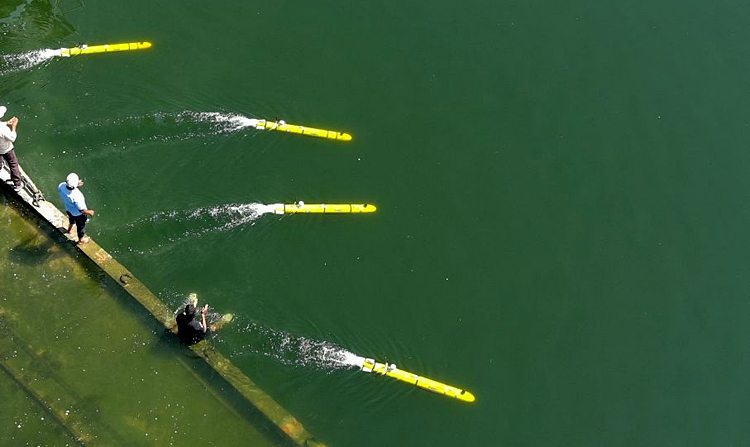
Midget submarines are highly specialised, compact vessels (typically under 150 tonnes) built for coastal defence, covert special operations and harbour penetration. Advantages of midget submarines include:
Countries operating midget submarines include Iran, North Korea, Russia and China. Pakistan and Colombia also deploy them for naval and illicit missions. Iran relies heavily on fleets such as the Ghadir-class to patrol the shallow waters of the Persian Gulf and the Strait of Hormuz. North Korea operates a large fleet of mini-subs, including the Yono-class, to defend its coasts and stage asymmetric threats against adversaries. Russia maintains a fleet of specialised mini-subs, many of which are designed for deep-sea intelligence gathering, special forces operations, and underwater search-and-rescue missions.
The Indian Navy is seeking at least two Midget Submarines, Special Operations Vessels (SOVs) along with Swimmer Delivery Vehicles (SDVs) to support clandestine littoral operations by the Marine Commandos (MARCOS)
China has been using midget/mini-submarines for the past several years. Recent developments include compact vessels designed to function as "swimmer delivery vehicles" to insert commandos into restricted waters. Chinese shipbuilders such as CSIC export mini-subs, including the AIP-equipped MS200.
Italian firm Drass provided Pakistan with original designs and proprietary rights for the Cosmos-class MG110 midget submarines under a 1988 contract. Three of these midget submarines were built as a joint venture in Pakistan and commissioned into the Pakistan Navy in 1993, 1994–95, and 1996. These are primarily used by the Naval SSG for covert coastal operations, laying mines, and delivering combat swimmers.
The Indian Navy is seeking at least two midget submarines, Special Operations Vessels (SOVs), along with Swimmer Delivery Vehicles (SDVs), to support clandestine littoral operations by the Marine Commandos (MARCOS). Their acquisition will depend on whether the Government decides to opt for a home-grown solution under the Buy India (IDDM) category or pursue a direct foreign purchase. Discussions are presently ongoing with MDL and L&T, both of which have developed concepts for such submarines, as well as with European manufacturers.
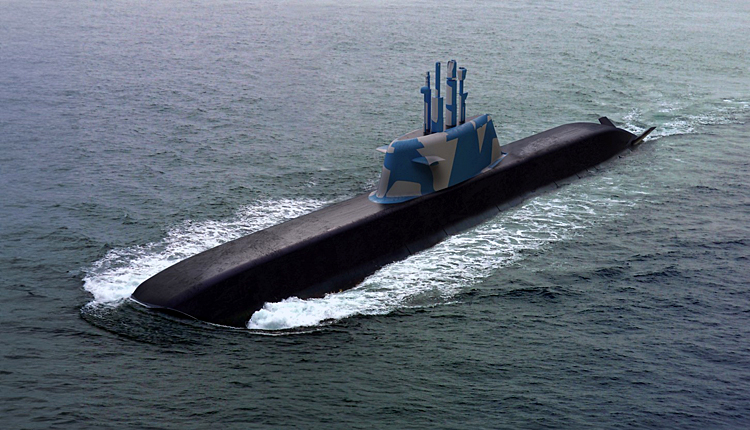
Italy's Fincantieri and Drass are among the foreign firms discussing midget submarines for the Indian Navy. Drass has supplied midget submarines to Pakistan and West Asian navies in the past and, in early 2026, signed a framework agreement with Indonesia for its DGK-class submarines and SDVs. The DGK class is of modular design and road-transportable, but has reportedly not been tested in operations. Fincantieri's S800A is another option under consideration, but like Drass' DGK, it remains untested in operations.
India's midget submarine project was first launched in 2006, with a tender issued in 2009. L&T partnered with Russia's Rubin Design Bureau, while MDL and Hindustan Shipyard Limited (HSL) tied up with Fincantieri. Other shipyards, including ABG and Pipavav, submitted bids in collaboration with Italian and British firms. However, the programme was scrapped. In 2016–17, HSL was nominated to lead the effort, but the project stalled again, with HSL struggling to secure a foreign partner, and South Korea's Hyundai Heavy Industries' all-electric proposal being deemed unsuitable.
The Navy is now reportedly seeking submarines of around 500-tonne displacement, capable of carrying about 20 personnel
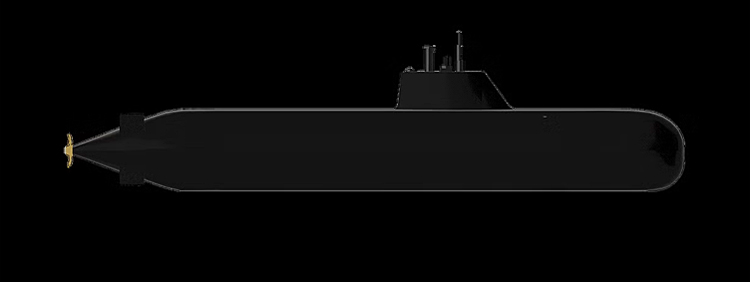
The Navy issued a fresh Request for Information (RFI) in 2022, receiving responses from MDL, L&T and HSL. In May 2024, MDL unveiled a scaled model of its 'Arowana' midget submarine, which remains under development. The Navy is now reportedly seeking submarines of around 500 tonnes displacement, capable of carrying about 20 personnel. L&T, which has showcased its mini-submarine design at defence expos, claims its design has reached maturity and is pitching it as a fully indigenous solution under the Buy India (IDDM) category.
Capital acquisitions in India are a politico-bureaucratic decision, even the Chief of Defence Staff (CDS) has little say in the matter since capital acquisitions fall under the purview of the Defence Secretary. The Armed Forces are always blamed in the media for imports, but the machinations of how delays are orchestrated, to force imports, is never acknowledged. The deliberate criticality created in the fighter strength of the Indian Air Force, reducing its authorised strength from 42 to 29 squadrons, resulting in the planned procurement of 114 additional Rafales, is just one example amid scores of similar examples. With Pakistan fielding midget submarines since the early 1990s, we are still debating how to procure them?