






The insightful articles, inspiring narrations and analytical perspectives presented by the Editorial Team, establish an alluring connect with the reader. My compliments and best wishes to SP Guide Publications.

"Over the past 60 years, the growth of SP Guide Publications has mirrored the rising stature of Indian Navy. Its well-researched and informative magazines on Defence and Aerospace sector have served to shape an educated opinion of our military personnel, policy makers and the public alike. I wish SP's Publication team continued success, fair winds and following seas in all future endeavour!"

Since, its inception in 1964, SP Guide Publications has consistently demonstrated commitment to high-quality journalism in the aerospace and defence sectors, earning a well-deserved reputation as Asia's largest media house in this domain. I wish SP Guide Publications continued success in its pursuit of excellence.
The renewed global push towards establishing a permanent human presence on the Moon is rapidly gathering pace, driven by strategic rivalry, technological advances and long-term ambitions for space exploration
 |
The Author is Former Director General of Information Systems and A Special Forces Veteran, Indian Army |
America's Donald Trump administration has released the first two tranches of declassified military and intelligence documents regarding Unidentified Anomalous Phenomena (UAPs) and UFOs. In addition, the White House has launched a space-themed website for immigration enforcement that uses the word "aliens" to refer to undocumented human immigrants.
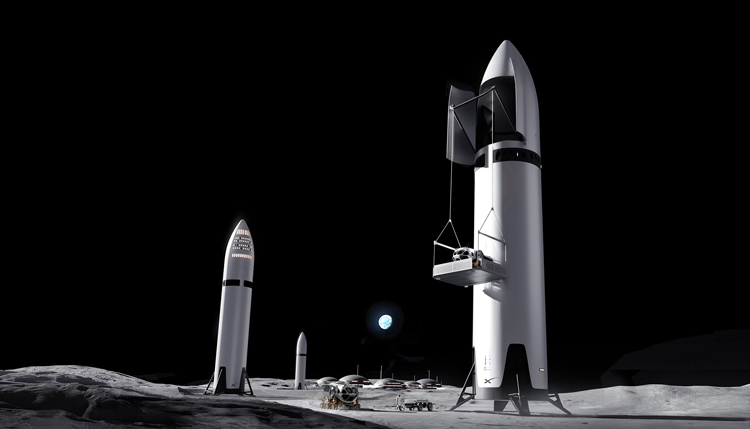
Musk announced in February 2026 that building a self-growing lunar colony is the company's overriding priority
As regards the UAPs and UFOs, the Trump Administration issued an order for "unprecedented transparency", following which the US Department of Defense (DoD) and intelligence agencies have begun publishing declassified files spanning decades. The documents feature nearly 400 reports, including decades-old military memoranda, Apollo Moon-mission transcripts, and recent infrared footage captured by US platforms.
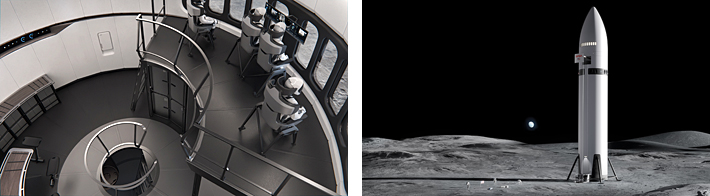
Interestingly, Elon Musk had announced plans to build a self-sustaining city of 1 million people on Mars by 2050, utilising a massive fleet of 1,000 SpaceX Starship rockets. But in early 2026, Musk officially shifted SpaceX's immediate priorities towards building a 'Moon City', delaying the timeline for Mars to focus on a faster lunar infrastructure project. Musk announced in February 2026 that building a self-growing lunar colony is the company's overriding priority. Because the Moon can be reached every 10 days (versus Mars' 26-month orbital alignment window), it allows for much faster engineering iterations.
The Indian Space Research Organisation (ISRO) has formulated a long-term roadmap that officially targets landing Indian astronauts on the Moon by 2040
Concurrently, NASA has recently unveiled plans for a $20 billion Moon Base by 2032, marking a major step towards permanent human presence on the Moon. Simeon Barber, Senior Research Fellow at The Open University, has pointed to an incremental construction strategy, starting with robotic missions, and detailed the need for sealed structures, radiation protection, and utilising lunar resources to minimise costs for this long-term human exploration endeavour.
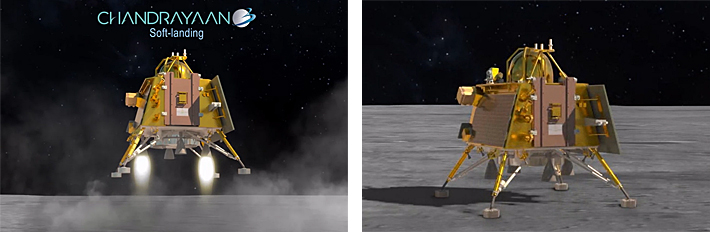
India's current focus is on the maiden uncrewed and crewed Gaganyaan missions scheduled for launch in 2027. The crewed Gaganyaan mission in 2027 will be India's first human spaceflight, launching a crew of three into Earth's orbit for three days before bringing them back safely. The Indian Space Research Organisation (ISRO) has formulated a long-term roadmap that officially targets landing Indian astronauts on the Moon by 2040. This long-term milestone will make India one of the few nations to put humans on the lunar surface. These crewed flight ambitions are in addition to India's successful uncrewed lunar programmes, such as Chandrayaan-3 and the upcoming Chandrayaan-4 sample-return and Chandrayaan-5 missions. Prior to 2040, India plans to set up the Bharatiya Antriksh Station (BAS) in Earth's orbit.
The ILRS will serve as a comprehensive scientific experiment base built on the lunar surface or in lunar orbit that can carry out multi-disciplinary and multi-objective scientific research activities
On January 3, 2019, China's Chang'e-4 spacecraft successfully landed on the far side of the Moon. In 2021, an International Lunar Research Station (ILRS) was jointly announced, led by Russia's Roscosmos and the China National Space Administration (CNSA), with construction aimed to begin by 2031. In the same year, Roscosmos and CNSA announced that the project would be "open to all interested countries and international partners", and made efforts to engage members of the European Space Agency (ESA), which did not work out because the ILRS was viewed as being in competition with the US-led Artemis Accords. However, in 2023, Venezuela, South Africa, Azerbaijan, Pakistan, Belarus and Egypt joined the ILRS, followed by Thailand, Nicaragua, Serbia, Kazakhstan and Senegal in 2024.
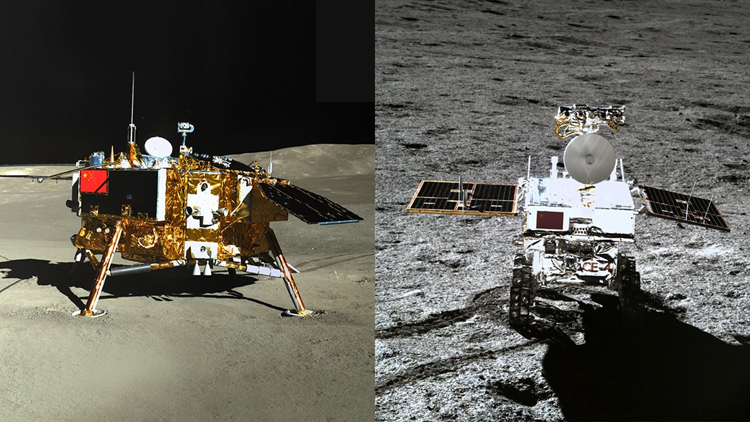
The ILRS will serve as a comprehensive scientific experiment base built on the lunar surface or in lunar orbit that can carry out multi-disciplinary and multi-objective scientific research activities, including exploration and utilisation, lunar-based observation, basic scientific experiments, technical verification, and long-term autonomous operation.
The construction of the base at the lunar south pole is scheduled to take place between 2026 and 2035, with a major nuclear power plant component planned for completion by 2036?
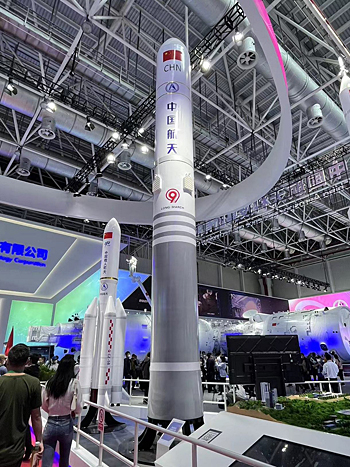
The ILRS construction missions are expected to begin in 2031, and will utilise the super heavy-lift Chinese Long March 9 and Russian Yenisei rockets currently in development. ILRS will build on the robotic lunar missions of the Chinese Lunar Exploration Programme and Roscosmos' Luna-Glob Programme. China's 2028 Chang'e 8 mission will test in-situ resource utilisation for the ILRS.
The construction of the base at the lunar south pole is scheduled to take place between 2026 and 2035, with a major nuclear power plant component planned for completion by 2036. Phase 3 objectives of the ILRS, beginning in 2036, aim to undertake lunar research, exploration and technology verification; support crewed lunar missions with the completed ILRS; and expand and maintain modules as required.
But looking at global rivalries, weaponisation of space, commercialisation of space warfare, and technological advances, are we headed for conflict on the Moon?
The Moon is about one-quarter (27 per cent) the size of Earth by diameter, and its diameter is roughly 3,476 km. It has enough space for multiple lunar stations. But looking at global rivalries, weaponisation of space, commercialisation of space warfare, and technological advances, are we headed for conflict on the Moon?