






The insightful articles, inspiring narrations and analytical perspectives presented by the Editorial Team, establish an alluring connect with the reader. My compliments and best wishes to SP Guide Publications.

"Over the past 60 years, the growth of SP Guide Publications has mirrored the rising stature of Indian Navy. Its well-researched and informative magazines on Defence and Aerospace sector have served to shape an educated opinion of our military personnel, policy makers and the public alike. I wish SP's Publication team continued success, fair winds and following seas in all future endeavour!"

Since, its inception in 1964, SP Guide Publications has consistently demonstrated commitment to high-quality journalism in the aerospace and defence sectors, earning a well-deserved reputation as Asia's largest media house in this domain. I wish SP Guide Publications continued success in its pursuit of excellence.
India's new Self-Propelled Air Defence Gun Missile System (SPAD-GMS) programme seeks to provide mobile air-defence cover for mechanised formations against evolving aerial threats
 |
The Author is Former Director General of Information Systems and A Special Forces Veteran, Indian Army |
Reports dated June 4, 2026, the Indian Army has patented an anti-drone shield engineered specifically to protect its armoured vehicles. The mechanism utilises a distinctive coaxial blade setup that spins above the tank's turret, forming an active physical shield to block airborne threats, especially explosives dropped by drones onto the heavily exposed upper sections of the tank.
The patent documents mention a protective canopy comprising two distinct layers of blades attached to a single central mast. Visual blueprints from the patent place this spinning array squarely above the turret. Running on a dedicated motor and transmission, the top layer spins clockwise while the bottom layer moves in the opposite direction. This counter-rotating propeller system acts to bat away, damage or snare incoming aerial projectiles before they can make contact with the vehicle's hull.
The spinning blade umbrella allows the tank to maintain full combat mobility and unhindered turret rotation without sacrificing overhead security
By moving at high velocities, these blades create an active defensive umbrella capable of taking down small drones, explosively formed projectiles and loitering munitions diving from above. The powerful air currents and direct physical strikes are engineered to shatter fragile drone parts, thereby stopping explosives from detonating on critical zones such as the engine bay, crew hatches and turret roof. Unlike static steel cope cages, slat armour or mesh screens currently adopted by various global militaries, this approach offers a significant operational advantage. The spinning blade umbrella allows the tank to maintain full combat mobility and unhindered turret rotation without sacrificing overhead security.
The Indian Army has previously experimented with passive cage armour, which increases the weight of the tank and restricts overall performance. This innovation is derived from the changed nature of modern battlefields, drawing lessons from the ongoing Russia-Ukraine war, where the lethal efficiency of top-attack drones and First Person View (FPV) kamikaze systems has been demonstrated against tanks and mechanised vehicles.
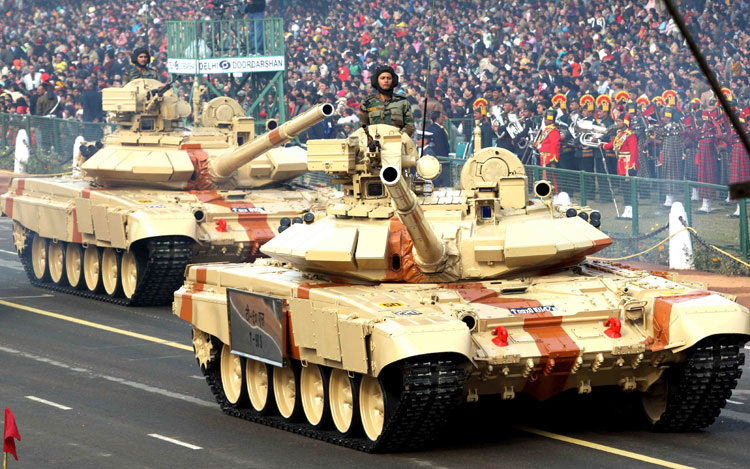
The Indian Army envisions retrofitting this technology onto its existing fleet of T-72 and T-90 Bhishma tanks
The Indian Army envisions retrofitting this technology onto its existing fleet of T-72 and T-90 Bhishma tanks, as well as integrating it into future indigenous combat vehicles, granting them enhanced survivability in drone-heavy conflict zones. This development complements the Army's broader modernisation efforts. In early 2025, the Army actively began seeking integrated Counter-Unmanned Aircraft Systems (C-UAS) to shield its roughly 3,700 Russian-origin tanks deployed across varied terrains.
The system, however, must undergo rigorous testing to resolve potential issues regarding power consumption, battlefield durability, maintenance of moving parts, and ensuring that the blades do not block the tank's own radar and defensive sensors. The active blade concept offers distinct advantages over bulky passive metal cages, including significant weight reduction, unhindered visibility for the tank crew, and strong resistance against low-cost FPV drones. However, its efficacy against swarms of kamikaze drones needs testing, especially if the active blade is damaged or destroyed in the initial wave. This could be tested using dummy or mobile robot tanks.
The programme is designed to replace ageing, obsolete Soviet-era ZU-23-2 towed anti-aircraft guns and the Bofors L70 guns
At the same time, this active blade shield is part of the rapidly expanding anti-drone arsenal of the Indian Armed Forces, comprising a network of advanced countermeasures recently inducted or tested by the Indian Armed Forces, including the newly inducted SAKSHAM unified counter-UAS grid, portable jammers by AXISCADES, laser-based directed-energy weapons, and indigenous hard-kill systems developed by companies like Zen Technologies and Bharat Electronics Limited (BEL).

India's Self-Propelled Air Defence Gun Missile System (SPAD-GMS) is an ongoing modernisation programme to equip the Indian Army with highly mobile, short-range, all-weather air defence (AD). Its primary objective is to protect frontline mechanised formations from low-flying aircraft, helicopters, drones and cruise missiles. The programme is designed to replace the ageing, obsolete Soviet-era ZU-23-2 towed anti-aircraft guns and the Bofors L70 guns.
The integrated vehicles are equipped with a mix of radar, rapid-fire guns and surface-to-air missiles mounted on a single or dual 8×8 high-mobility chassis
The integrated vehicles are equipped with a mix of radar, rapid-fire guns (30 mm or larger), and surface-to-air missiles mounted on a single or dual 8×8 high-mobility chassis. These systems are engineered to shadow advancing ground troops, allowing them to acquire and engage targets while on the move.
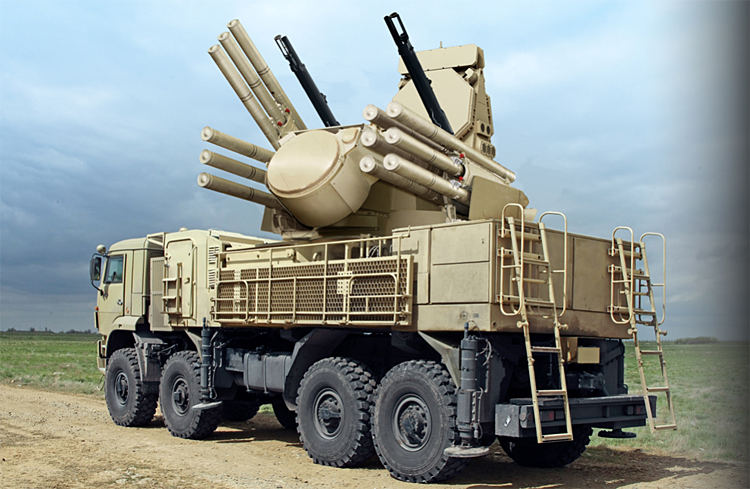
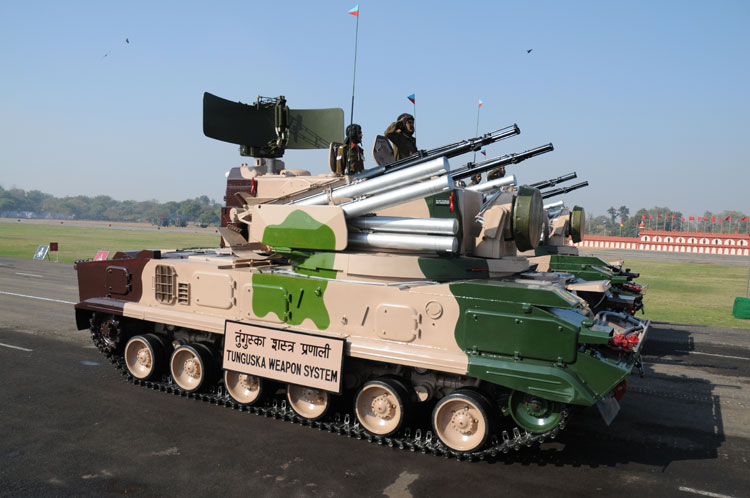
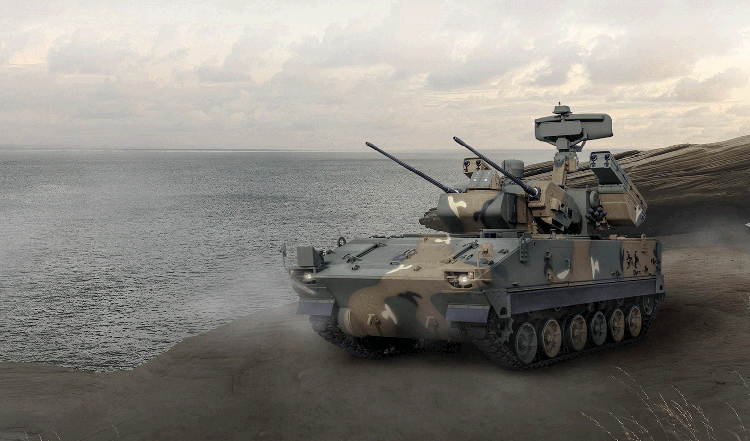
According to sources, the SPAD-GMS will be produced locally by the Indian bidders. However, production will be carried out in accordance with the operational requirements and guidelines of the Indian Army. Before arriving at this decision, the Indian Army tested South Korea's K-30 Biho 30 mm twin-barrel, guided missile-armed self-propelled anti-aircraft artillery (AAA), and the Russian gun-missile systems Tunguska M1 (SA-19 Grison) and Pantsir-S1 (SA-22 Greyhound). Later, the K-30 was selected and an order for 104 systems was placed, amounting to $2.6 billion. However, under the Atmanirbhar Bharat initiative, the deal was cancelled in September 2020 in favour of $0.9 billion worth of indigenously produced systems.
India's new SPAD-GMS would be a step towards improved Operational Security (OPSEC) of its forward-deployed ground forces
India has recently revived and updated the long-delayed tender through a Request for Information (RFI) to ensure high indigenous manufacturing content under the Atmanirbhar Bharat initiative. South Korea's Biho-II (Hanwha Aerospace) and Russia's Pantsir-S1 platforms have emerged as leading contenders in recent evaluations. The Indian Army plans to procure roughly five regiments, totalling more than 100 systems, thousands of missiles, and hundreds of thousands of rounds of ammunition. India's new SPAD-GMS would be a step towards improved Operational Security (OPSEC) of its forward-deployed ground forces. In addition to providing point-defence capabilities against cruise missiles, free-fall bombs and Precision-Guided Munitions (PGMs), the SPAD-GMS retains the potential to provide considerable OPSEC for Integrated Battle Groups (IBGs) in a Cold Start scenario.

Given the rapid proliferation of drones and loitering munitions in modern conflicts, India must accelerate induction of both active anti-drone protection systems for armoured vehicles and mobile air-defence systems for mechanised formations.