





The insightful articles, inspiring narrations and analytical perspectives presented by the Editorial Team, establish an alluring connect with the reader. My compliments and best wishes to SP Guide Publications.
"Over the past 60 years, the growth of SP Guide Publications has mirrored the rising stature of Indian Navy. Its well-researched and informative magazines on Defence and Aerospace sector have served to shape an educated opinion of our military personnel, policy makers and the public alike. I wish SP's Publication team continued success, fair winds and following seas in all future endeavour!"

Since, its inception in 1964, SP Guide Publications has consistently demonstrated commitment to high-quality journalism in the aerospace and defence sectors, earning a well-deserved reputation as Asia's largest media house in this domain. I wish SP Guide Publications continued success in its pursuit of excellence.
Skyroot Aerospace's Vikram-1 milestone marks a significant step for India's private space sector, advancing indigenous launch capability and opening new commercial opportunities.
 |
The Author is Former Director General of Information Systems and A Special Forces Veteran, Indian Army |
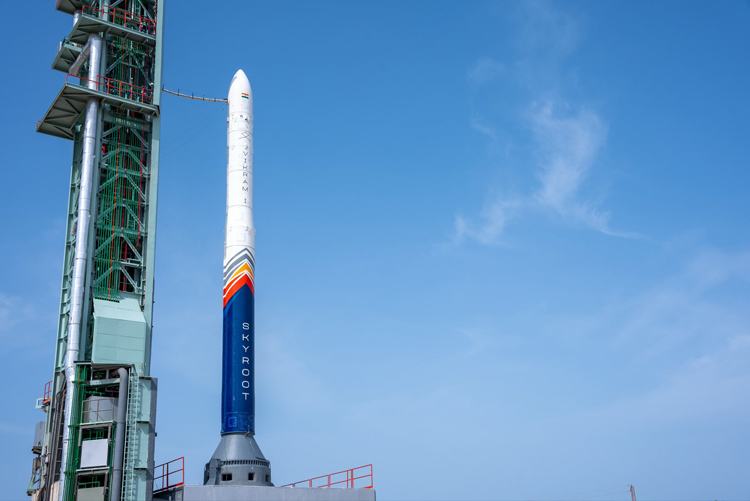
July 18, 2026, was a historic day for the Indian space programme when Hyderabad-based Skyroot Aerospace's Vikram-1 rocket successfully completed Test Flight-1 under Mission 'Aagaman', marking India's first privately developed orbital launch. The vehicle lifted off at 1205 pm from the Satish Dhawan Space Centre, Sriharikota, deploying multiple technology-demonstration payloads and symbolic artefacts into Low Earth orbit (LEO).
Skyroot Aerospace's Vikram-1 successfully completed Test Flight-1 under Mission Aagaman, marking a major milestone for India's private orbital launch capability.
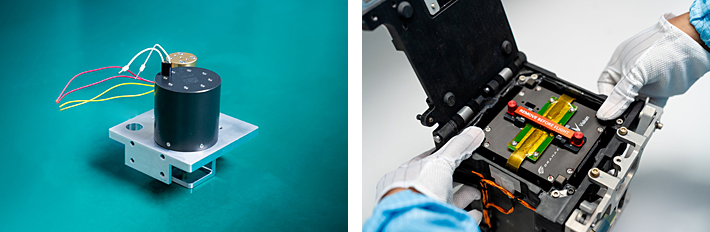
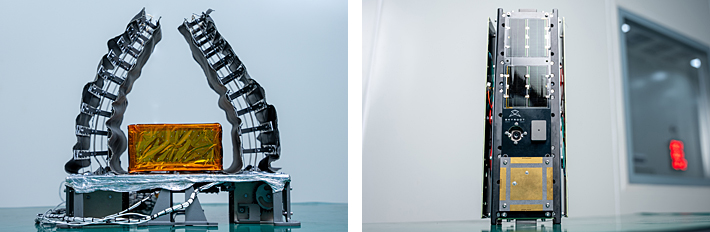
Mission Aagaman carried four satellites: Skyroot's own SCOPE platform, two from Indian startups Grahaa Space and Cosmoserve, and a fourth from German startup Dcubed. In addition, the rocket also carried symbolic payloads: three micro-sculptures honouring Indian scientists C.V. Raman, Vikram Sarabhai and A.P.J. Abdul Kalam - all smaller than a grain of rice; a lotus artwork embedded with 32 lab-grown diamonds valued at ₹10 lakh; a handwritten postcard from Prime Minister Narendra Modi bearing the words Vande Mataram; messages from various engineers, scientists, investors, and astronauts.
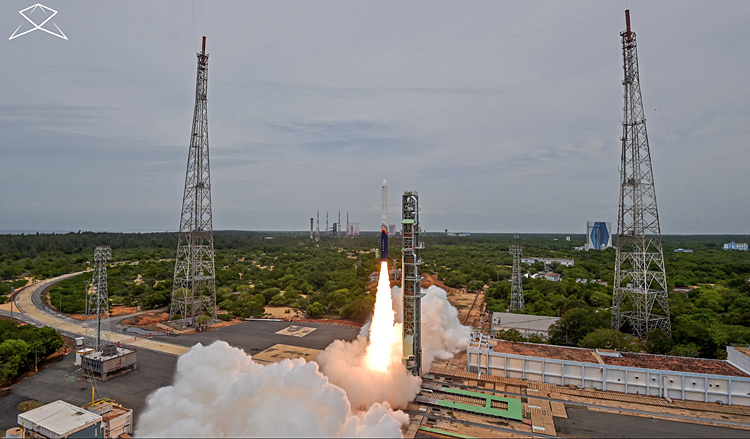
Vikram-1 rocket, developed by Skyroot Aerospace, is a seven-storey-tall, four-stage launch vehicle built entirely from advanced carbon composite materials. It is capable of carrying payloads of up to 350 kg into a 450 km orbit at a 60-degree inclination. The rocket incorporates several innovations, including India's first fully 3D-printed liquid engine, an ultra-low-shock pneumatic separation system, and the nation's longest monolithic carbon composite rocket stage. These features highlight the engineering breakthroughs achieved by the private sector.
The four-stage Vikram-1 is a carbon-composite launch vehicle capable of carrying payloads of up to 350 kg into a 450 km orbit at a 60-degree inclination.
The flight sequence lasted approximately 15 minutes, culminating in the successful deployment of payloads into LEO. Engineering data collected during the mission will be used to validate guidance, navigation and control systems, ensuring reliability for future commercial launches. This test flight represents a crucial step towards establishing rapid, on-demand launch services for small satellites, a market segment that is growing rapidly worldwide. Mission Aagaman builds on Skyroot's earlier success with Vikram-S, a suborbital rocket launched in November 2022. The transition from suborbital to orbital capability demonstrates the rapid progress of India's private aerospace ecosystem.
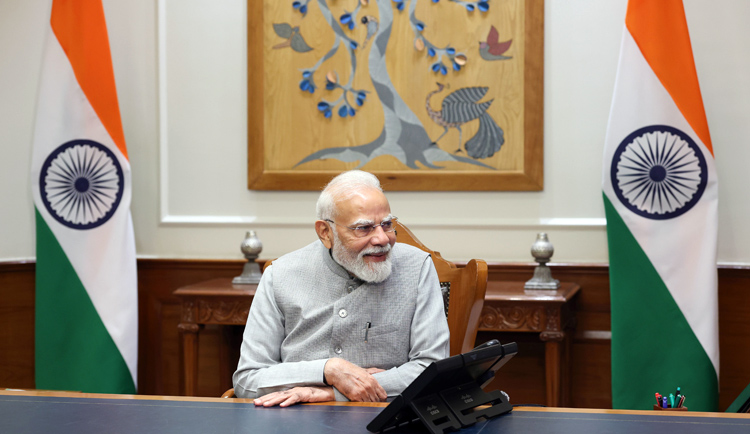
Prime Minister Narendra Modi congratulated the Skyroot team over the telephone and described the launch as "a historic new frontier for India's space journey." He emphasised that the mission reflects the talent, determination, and entrepreneurial spirit of India's youth, and demonstrates how reforms in the space sector are unlocking opportunities for innovation and enterprise. He urged citizens, particularly young people, to follow the mission and support Skyroot's success.
The mission carried four satellites and several symbolic payloads, while flight data will help validate guidance, navigation and control systems for future commercial missions.
The collaboration between ISRO, INSPACe, and private firms has created a framework where innovation and commercialisation can thrive, positioning India as a competitive player in the global launch services market. The successful launch of Vikram-1 marks a turning point in India's space programme. Until now, orbital launches were exclusively conducted by the Indian Space Research Organisation (ISRO). With Skyroot's achievement, India joins a select group of nations where private companies have independently developed and launched orbital-class rockets. This milestone is expected to attract significant investment, foster international partnerships, and accelerate India's ambition to build a $45 billion space economy. The phrase "One Rocket, a Billion Believers" has become the defining sentiment of Mission Aagaman. The successful flight of Vikram-1 is not only a technological triumph but also a symbol of national pride and optimism. It represents the resilience and ingenuity of India's private sector and signals the dawn of a new era in Indian space exploration.
In an article titled 'Diamonds and 'cab to orbit': Rocket aiming to transform India's space ambitions takes off', published in the BBC, the author asks: "What if launching a satellite was as easy as calling a cab?" The write-up describes Skyroot Aerospace, which recently became India's first space-tech unicorn after reaching $1 billion valuation, launching the Vikram-1 rocket from ISRO's launch facility in Sriharikota; making India only the third country after the US and China, with a private company capable of orbital launches.
Skyroot plans to begin commercial Vikram-1 launches after completing its testing programme, with Vikram-2 planned to offer a proposed payload capacity of 1,000 kg.
Skyroot came into being in 2018 when Pawan Kumar Chandana and Naga Bharath Daka (colleagues at ISRO) quit their jobs and co-founded the space-tech start-up to build rocket components for satellites. In 2020, India opened the space sector to private firms, allowing them to build rockets and satellites and use ISRO's launch facilities with the aim of increasing the country's share in the global space business market from two per cent at present to 10 per cent by 2030. Since then, the Indian government says more than 400 space start-ups have been set up in India, but Skyroot remains the most successful of them, and the only unicorn in the sector. After the successful test flight of Vikram-1, Chandana said, "We have the capacity to build one rocket every month at our factory in the southern city of Hyderabad."
Skyroot expects to begin commercial launches with the Vikram-1 rocket early next year after completing its testing phase, according to Chandana, "Vikram-1 will remain Skyroot's workhorse in the near term, with multiple missions planned before Vikram-2, with a proposed payload capacity of 1,000 kg, enters service. Vikram-2 is targeted for next year. But until then, Vikram-1 will be launching multiple missions."