






The insightful articles, inspiring narrations and analytical perspectives presented by the Editorial Team, establish an alluring connect with the reader. My compliments and best wishes to SP Guide Publications.

"Over the past 60 years, the growth of SP Guide Publications has mirrored the rising stature of Indian Navy. Its well-researched and informative magazines on Defence and Aerospace sector have served to shape an educated opinion of our military personnel, policy makers and the public alike. I wish SP's Publication team continued success, fair winds and following seas in all future endeavour!"

Since, its inception in 1964, SP Guide Publications has consistently demonstrated commitment to high-quality journalism in the aerospace and defence sectors, earning a well-deserved reputation as Asia's largest media house in this domain. I wish SP Guide Publications continued success in its pursuit of excellence.
India's emergency acquisition and co-production plans for the US Javelin anti-tank missile highlight persistent gaps in defence procurement. The decision bypasses indigenous platforms, raising concerns over self-reliance and strategic consistency.
 |
The Author is Former Director General of Information Systems and A Special Forces Veteran, Indian Army |
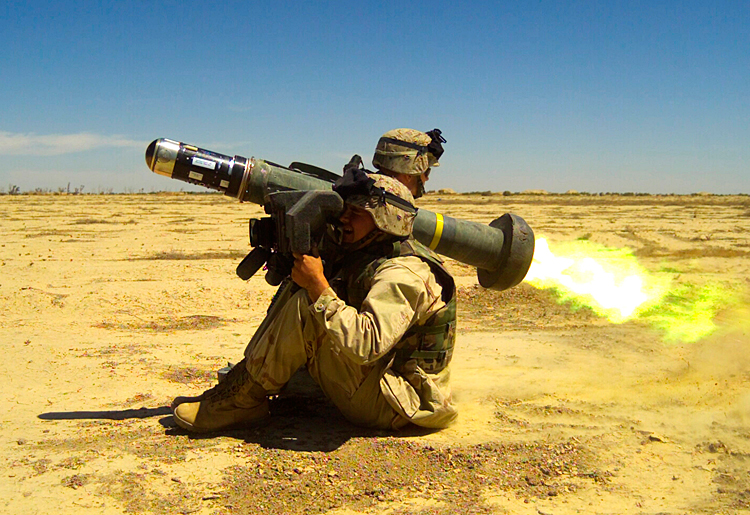
According to reports, India has formally signed a Letter of Offer and Acceptance with the United States for the acquisition of the FGM-148 Javelin anti-tank guided missile system (ATGM). The deal, valued at approximately $45.7 million, was notified to the US Congress by the Defence Security Cooperation Agency in November 2025.
In a post on X Sergie Gor, US Ambassador to India expressed happiness over the deal. Under the agreement, India will procure 100 Javelin rounds, one missile for "fly-to-buy" evaluation, and 25 Javelin Lightweight Command Launch Units, also referred to as Block-1 Command Launch Units. The package includes training equipment, missile simulation rounds, a battery coolant unit, technical manuals, lifecycle support, spare parts, and systems integration and testing.
India has formally signed a Letter of Offer and Acceptance with the United States for the acquisition of the FGM-148 Javelin anti-tank guided missile system (ATGM)
The Javelin FGM-148 ATGM, produced jointly by America's Raytheon and Lockheed Martin, has an effective firing range of 2,500 to 4,000 metres, depending on the variant and launch setup. Early variants were generally limited to 2,500 metres, while newer versions utilising updated Command Launch Units (CLUs) reach up to 4,000 metres in the field. Weighing 15.8 kg, this fire-and-forget missile can be operated by a single soldier.
Deployed in the US and multiple international allies, its primary operators are: Europe – Britain, Ukraine, Poland, France, Norway, Estonia, Lithuania, Czech Republic, Croatia and Albania; Asia & Oceania - Australia, New Zealand, Taiwan, Indonesia, Georgia; Middle East & Africa: Jordan, Saudi Arabia, United Arab Emirates (UAE), Oman, Qatar, Bahrain, Ireland, and Libya.
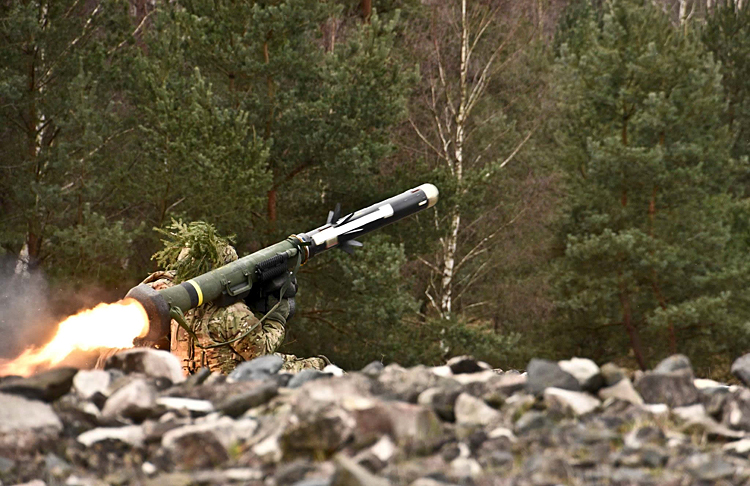
Indian defence sources say the immediate procurement is primarily an emergency acquisition. The long-term objective is to establish a domestic manufacturing capability for the Javelin in India, following an agreement signed in February 2026 between Bharat Dynamics Limited and the Javelin Joint Venture, owned by Raytheon and Lockheed Martin. Lockheed Martin stated that the arrangement would allow the joint venture to evaluate the feasibility of producing Javelins domestically to meet future requirements of India's Ministry of Defence (MoD) and strengthen India's anti-tank capabilities.
The long-term objective is to establish a domestic manufacturing capability for the Javelin in India, following an agreement signed in February 2026 between Bharat Dynamics Limited and the Javelin Joint Venture
According to another news report, Lockheed-Raytheon signed a MoU with Tata Advanced Systems for final assembly of FGM-148 Javelin ATGM using US-made subassemblies from Troy Alabama and Tucson Arizona plants. The co-production plan would provide India not only with access to the weapon system but also with the potential to build a domestic manufacturing ecosystem around one of the world's most widely used man-portable anti-armour systems.
The hype in the media is that the Javelin is best suited for the Indo-Pacific because Russia doesn't have an ATGM matching the Javelin. But where is the Russian armour expected to advance or attack in the Indo-Pacific? The armour threat in the Indo-Pacific is from China, not Russia, and China does have an ATGM that directly matches America's FGM-148 Javelin; China's HJ-12, which is also known as the Hongjian-12 or Red Arrow 12.

In August 2010, then Defence Minister A.K. Antony informed Parliament that a Letter of Request would be issued to the US under the Foreign Military Sale route, with transfer of technology for this ATGM. At that time, the Indian Army faced a shortfall of 44,000 ATGMs against a sanctioned strength of 81,000. By 2012, however, the Javelin deal had stalled due to disagreements over transfer of critical technology and the US government's reluctance to participate in field trials. India subsequently opted for Israel's Spike ATGM, but the larger procurement plan collapsed after the Defence Research and Development Organisation (DRDO) insisted it could develop a similar indigenous system.
Lockheed-Raytheon signed a MoU with Tata Advanced Systems for final assembly of FGM-148 Javelin ATGM using US-made subassemblies
While India initially planned to import 8,000 Spike missiles from Israel, it has imported only 240 Spike missiles along with 12 launchers to prioritise domestic weapon programs and local manufacturing. But the MoD signed a contract with Kalyani Rafael Advanced Systems (KRAS), a joint venture between India's Kalyani Group and Israel's Rafael Advanced Defence Systems to locally manufacture newer batches of Spike missiles in Hyderabad to fulfil the Indian Army's long-term demands.

The exact number of Spike missiles produced by KRAS at its Hyderabad facility is classified due to strict confidentiality clauses by the MoD. However, when the ₹70 crore dedicated Spike facility was inaugurated in Hyderabad, the leadership stated the plant was built with ready infrastructure to manufacture 2000 Spike missiles per month – 24,000 annually or 72,000 in a 3-year period. The missiles built at the Hyderabad facility feature 90 per cent locally sourced components, meaning KRAS fully builds and integrates the physical missile units locally, excluding only the specialised explosives and propellants. In addition, KRAS openly shares milestones for other systems built at the same Hyderabad plant, for example, KRAS has successfully manufactured and rolled out its 100th Medium-Range Surface-to-Air Missile (MRSAM) kit for the Indian Armed Forces as part of a larger $100 million order to deliver 1,000 missile subsystems.
The production rate of indigenous Nag and Helina has not been accelerated apparently by design to facilitate foreign ventures and investments
Notably, India's indigenous ATGM 'Nag' along with its man-portable version, the 'MPATGM', is a third-generation weapon, featuring true fire-and-forget capability, and has an operational range of 500 metres to 4,000 metres for the core land versions. Its helicopter-launched variant 'Helina' (Dhruvastra) has a range up to 7,000 m. Just like the American Javelin or Israeli Spike, the Nag and MPATGM can climb steeply into the air after launch and strike a tank vertically from above, puncturing the thin upper armour. It features two consecutive explosive charges designed specifically to neutralise modern Explosive Reactive Armour (ERA) protection.
An analysis of the above would lead to multiple conclusions, including the following:
Finally, it is about time the politico-bureaucratic nexus starts taking Atmanirbhar (self-sufficiency) in Defence more seriously.