






The insightful articles, inspiring narrations and analytical perspectives presented by the Editorial Team, establish an alluring connect with the reader. My compliments and best wishes to SP Guide Publications.

"Over the past 60 years, the growth of SP Guide Publications has mirrored the rising stature of Indian Navy. Its well-researched and informative magazines on Defence and Aerospace sector have served to shape an educated opinion of our military personnel, policy makers and the public alike. I wish SP's Publication team continued success, fair winds and following seas in all future endeavour!"

Since, its inception in 1964, SP Guide Publications has consistently demonstrated commitment to high-quality journalism in the aerospace and defence sectors, earning a well-deserved reputation as Asia's largest media house in this domain. I wish SP Guide Publications continued success in its pursuit of excellence.
India's fighter jet programmes face severe headwinds due to delayed engine deliveries, escalating costs, and domestic titanium processing bottlenecks. To safeguard operational readiness, India is exploring global 6th-generation combat initiatives.
 |
The Author is Former Director General of Information Systems and A Special Forces Veteran, Indian Army |
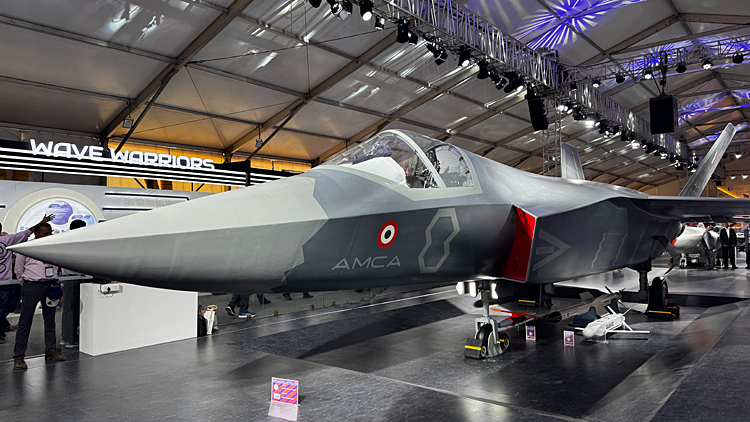
India's import dependency for aero-engines remains a strategic vulnerability, with GE F404 supplies delayed, heightened costs and technology-transfer concerns affecting LCA Tejas and future combat-aircraft programmes. As on date, GE Aerospace has delivered only seven F404-IN20 engines against India's order of 212 engines for the LCA Tejas fighter programme. GE has also sharply hiked F414 engine cost from ₹70 crore to ₹200 crore, raising fresh questions on costs, timelines and supply-chain reliability for India's fighter jet programme.

Commercial negotiations for the GE F414 engine to power the Tejas Mk-2 and the initial variants of AMCA are stalled. Despite an earlier agreement on transfer of technology (ToT), GE Aerospace is also has nearly tripled the per-unit cost, and in addition seeks an investment of over $800 million (₹6,000 crore) to establish a dedicated GE F414 power plant in India; assembly and manufacturing line to provide aero-engines for the Tejas Mk-2 and the initial twin-engine Advanced Medium Combat Aircraft (AMCA). All this threatens the development and induction timelines of these aircraft, desperately needed to maintain and restore the Indian Air Force's (IAF) depleting jet fighter squadron strength.
GE Aerospace has delivered only seven F404-IN20 engines against India's order of 212 engines for the LCA Tejas fighter programme.
In a hard-hitting public comment made on the LCA Tejas project, recently retired IAF Vice Chief Air Marshal Nagesh Kapoor has said the Tejas Mk-2 may not be operationally relevant in a frontline role when it starts entering service in significant numbers in the mid-2030s. Asked if it makes sense for India to have a 4th generation aircraft in 2035 when China has moved onto 6th generation platforms and Pakistan is considering 5th generation jets, he categorically said, "No, operationally, definitely No." Social media is hounding him as disloyal but he is right. As brought out in these columns earlier, none of the additional 114 Rafael jets proposed to be acquired will be 5th generation.
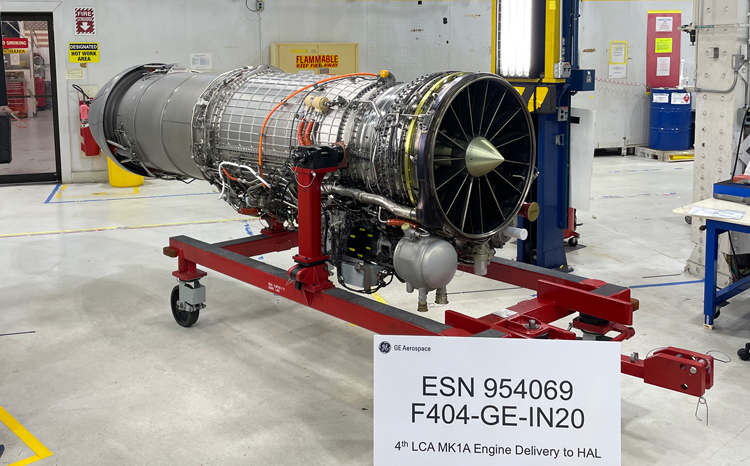
The Tejas MK-2 prototype is now likely to take to the skies only in mid-2027, according to news reports of August 28, 2026. HAL has now mapped a four-prototype development plan that stretches well into the next decade: first prototype maiden flight in 2027; second prototype roll out end- 2027 or early 2028; third and fourth prototypes are scheduled to follow in 2029 and 2030 respectively. The first two aircraft will be dedicated primarily to flight and systems testing, assessing aerodynamics, performance and systems integration. Weapons trials will not begin until the third prototype joins the fleet around mid-2030; Full production clearance is not expected until roughly 2031.
GE has also sharply hiked F414 engine cost from ₹70 crore to ₹200 crore, raising fresh questions on costs, timelines and supply-chain reliability for India's fighter jet programme
The AMCA engine race is intensifying, with Reliance–Rolls-Royce and Safran–GTRE competing to develop India's indigenous fighter engine. According to news reports, Sigma Advance Systems, has secured another contract with Rolls-Royce through its recently acquired UK subsidiary, Bromford Precision Solutions based in Leicester. Valued at nearly £125m (₹1,600 crore), the agreement adds to the recently secured £300m (₹3,800 crore) Rolls-Royce agreement. Under the agreement, Bromford will manufacture aeroengine rings, casings, lock plates and other critical engine structures at Sigma's India and UK manufacturing facilities, creating a more comprehensive dual-source solution as directed by Rolls-Royce.
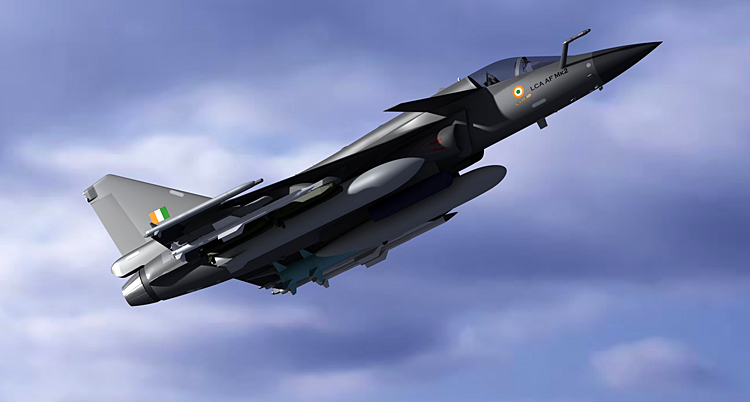
With Nasmyth and Bromford now operating as complementary businesses within Sigma's UK aerospace platform, the Group continues to execute its strategy of building scale through targeted acquisitions that deepen customer relationships, broaden technical capability and increase participation in high-value, long-duration aerospace programmes.
Other than the shortage of aero-engines, the LCA Tejas and AMCA face the 'Titanium Bottleneck' that no one is talking about
Other than the shortage of aero-engines, the LCA Tejas and AMCA face the 'Titanium Bottleneck' that no one is talking about, according to news reports of August 20, 2026. India's defence ambitions are expanding faster than its titanium capacity. Titanium is important in jets for two reasons; it carries high loads at high temperature, and it does so at roughly 60 per cent the density of steel while resisting corrosion.

That combination makes it the material of choice for the parts an airframe cannot afford to have fail, the load-bearing bulkheads that hold the aircraft together under g-load, engine-bay structure, high-strength fittings and fasteners. Inside the engine, titanium alloys form fan and compressor discs and blades in the cooler stages of the compressor. The AMCA is designed to be composite-heavy, carbon-fibre skins over much of the fuselage and wing, but its primary load paths still run through titanium, including a monolithic bulkhead of the kind machined for the F-35.
The constraint is turning that ore into titanium sponge. The shortage in aerospace-grade sponge is met through imports from Russia, Japan and China, despite sitting on some of the largest titanium-bearing reserves on Earth
Submarines lean on the same metal for a different reason: it does not rust in seawater and it is non-magnetic. Pressure-critical components and propulsion hardware draw on the same narrow domestic alloy chain that the fighters do. That shared dependence is the heart of the problem. The paradox is that India holds the world's third-largest ilmenite reserves and second-largest rutile reserves. But the constraint is turning that ore into titanium sponge, the porous metallic feedstock from which alloys are made. The shortage in aerospace-grade sponge is met through imports from Russia, Japan and China, despite sitting on some of the largest titanium-bearing reserves on Earth.

India has now formally entered the 6th generation fighter race as a dialogue partner in the UK Japan Italy Canada Global Combat Air Program (GCAP), while simultaneously pursuing deeper collaboration with France's Future Combat Air System (FCAS), according to news reports of August 28, 2026. India has entered the GCAP program as a Dialogue Partner. The programme, popularly known as Tempest, recently secured $6.1 billion to advance its full scale design phase, with induction planned for 2034.
India has now formally entered the 6th generation fighter race as a dialogue partner in the UK/Japan/Italy/Canada Global Combat Air Program (GCAP), while simultaneously pursuing deeper collaboration with France's Future Combat Air System (FCAS)
The Dialogue partner status does not make India a buyer or developer, but it grants access to discussions on the jet's progress, technology, and capabilities. For Indian decision makers, this is a window into the conceptual framework of a 6th generation platform, offering insights that could shape long term choices for the IAF. The FCAS, now led by France after Germany's exit, is emerging as another pathway. Spain remains a partner, and the aircraft is expected to take flight around 2028 29. This timeline coincides with the planned first flight of India's 5th generation AMCA. This move comes as the IAF faces a deficit of 13 fighter squadrons against an authorised strength of 42, with 110 to 120 Jaguar fighters scheduled for retirement between 2028 and the mid 2030s.

6th generation fighters are expected to be transformative, featuring all aspect stealth shaping, digital first engineering, variable cycle engines, advanced radars powered by gallium nitride transistors, and directed energy weapons. Integrated artificial intelligence, cyber warfare tools, and manned unmanned teaming with loyal wingman drones will define their operational edge. These capabilities go beyond current designs, offering a decisive leap in aerial combat. Globally, the race is intensifying. The United States is advancing its F-47 under the Next Generation Air Dominance project alongside the Navy's F/A XX. China is testing prototypes designated J-36 and J-50.