





The insightful articles, inspiring narrations and analytical perspectives presented by the Editorial Team, establish an alluring connect with the reader. My compliments and best wishes to SP Guide Publications.
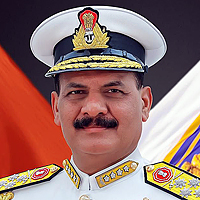
"Over the past 60 years, the growth of SP Guide Publications has mirrored the rising stature of Indian Navy. Its well-researched and informative magazines on Defence and Aerospace sector have served to shape an educated opinion of our military personnel, policy makers and the public alike. I wish SP's Publication team continued success, fair winds and following seas in all future endeavour!"

Since, its inception in 1964, SP Guide Publications has consistently demonstrated commitment to high-quality journalism in the aerospace and defence sectors, earning a well-deserved reputation as Asia's largest media house in this domain. I wish SP Guide Publications continued success in its pursuit of excellence.
FCAS, launched in 2017 by France and Germany was envisioned as Europe's flagship next-generation air combat system
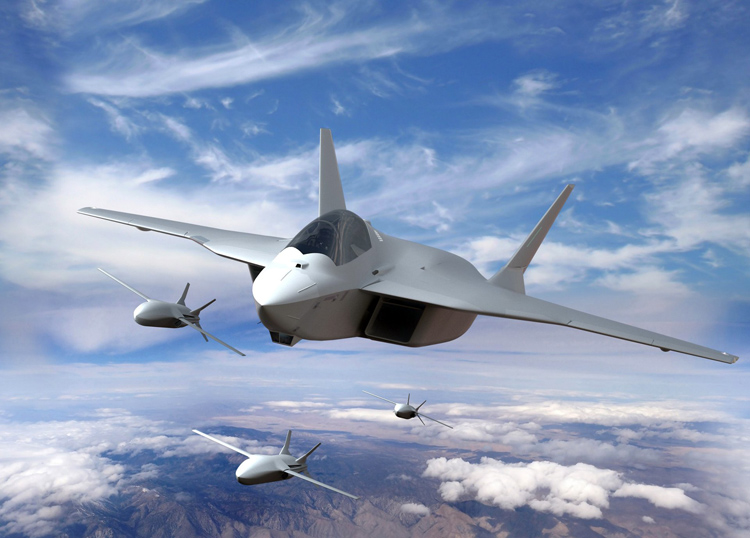
The collapse of the flagship Franco-German Future Combat Air System (FCAS) programme has opened a new dimension in the global race for a new combat jet. At the same time, it also presents a potential partnership for other country which is in fray to developing next gen fighter programme. What was once projected as Europe's answer to next-generation aerial warfare has now fragmented under the weight of industrial rivalry, strategic mistrust, and competing national ambitions.
Projected as Europe's answer to next-generation aerial warfare, FCAS has now fragmented under the weight of industrial rivalry, strategic mistrust, and competing national ambitions
The ambitious FCAS programme — launched in 2017 by France and Germany, later joined by Spain — was seen as a highly integrated combat ecosystem combining a sixth-generation stealth fighter, unmanned "remote carriers," advanced engines, sensors, and a secure combat cloud.
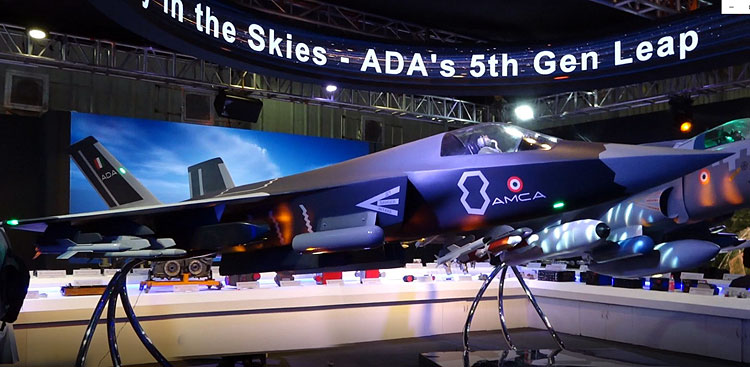
India is pursuing its own Advanced Medium Combat Aircraft (AMCA) while simultaneously evaluating international collaborations for future technologies. FCAS represented one of only two major non-American sixth-generation fighter pathways. The other is the UK-Japan-Italy-led Global Combat Air Programme (GCAP).
The FCAS project began unravelling over long-standing disputes between France's Dassault Aviation and Airbus Defence & Space. The two aerospace giants clashed over intellectual property, leadership roles, workshare distribution, and export control. While Dassault, maker of the Rafale, insisted on retaining design authority for the next-generation fighter, Airbus sought a larger operational and industrial role on behalf of Germany and Spain.
After years of negotiations, delays, and political mediation, Paris and Berlin effectively abandoned the idea of a jointly led sixth-generation fighter. European officials are now attempting to salvage selected technological components — especially the "combat cloud" digital networking architecture — while France and Germany pursue increasingly separate national or smaller-group aircraft concepts.
After years of negotiations, delays, and political mediation, Paris and Berlin effectively abandoned the idea of a jointly led sixth-generation fighter
However, according to the statement from Germany's chancellor Mertz, the breakup does not mean all FCAS technologies disappear. Research on AI-enabled combat networking, manned-unmanned teaming, and sensor fusion may continue in some form. But no doubt, the grand vision of a unified European sixth-generation fighter has effectively collapsed.
India has been carefully balancing three parallel objectives: Developing indigenous stealth capability through the AMCA programme, securing access to next-generation propulsion, avionics, and sensor technologies and crucially, avoiding excessive dependence on any single foreign supplier. The FCAS breakdown affects all three calculations.
First, France has long been one of India's most reliable defence partners, with cooperation spanning Rafale fighters, submarines, missiles, and space systems. A stable FCAS could have offered India opportunities in advanced avionics, combat cloud networking, and possibly collaborative research.
Second, the collapse strengthens the relative position of GCAP as the only major consolidated international sixth-generation programme currently moving ahead with a clearer political and industrial structure. Britain, Japan, and Italy have maintained stronger programme cohesion so far, and the project is already progressing on engine development, digital engineering, and system integration timelines.
Third, Europe's fragmentation may complicate India's long-term fighter diplomacy. Instead of engaging one large European programme, New Delhi may now face multiple competing national designs, each with different export policies, technology-sharing limits, and industrial expectations.
The development may also reinforce India's push for greater self-reliance in combat aviation. The AMCA is already central to India's future airpower planning, intended to provide stealth, supercruise, advanced sensors, and network-centric warfare capability. However, critical challenges remain, especially in engine technology, electronic warfare systems, and high-end materials.
New Delhi may now face multiple competing national designs, each with different export policies, technology-sharing limits, and industrial expectations
France is still likely to remain a major defence partner for India despite the FCAS rupture. Dassault's relationship with India has deepened significantly through the Rafale procurement and potential future industrial cooperation. But any future collaboration would now likely occur on a bilateral basis rather than under any European sixth-generation framework.
The FCAS collapse also offers a broader lesson about multinational defence projects. Such programmes promise shared costs and technological synergy, but they often become vulnerable to industrial politics, sovereignty concerns, and unequal expectations among partners. Europe's defence industry has repeatedly struggled with this tension. The Eurofighter Typhoon succeeded operationally but was plagued by delays and political compromises. FCAS has now succumbed to deeper structural fractures.
For India, the takeaway is significant. Collaborative programmes can accelerate capability acquisition, but they must be built on clearly aligned strategic interests, transparent workshare arrangements, and credible technology-sharing commitments. Otherwise, political symbolism can outpace industrial reality.
For India, the takeaway is significant. Collaborative programmes can accelerate capability acquisition, but they must be built on clearly aligned strategic interests, transparent workshare arrangements, and credible technology-sharing commitments
The United States continues to dominate advanced fighter technology, though technology-transfer constraints remain substantial. GCAP could emerge as a more viable external collaboration avenue if political trust and industrial compatibility deepen. France may still offer bilateral next-generation technologies independent of FCAS. And India's own AMCA could evolve into the primary foundation for future sixth-generation ambitions if development timelines and engine partnerships remain on track.
The Indian Air Force is looking at strengthening its squadron on an urgent basis at a time when airpower competition is entering a new technological era defined by stealth, AI, autonomous systems, electronic warfare, and real-time battlefield networking.
Manish Kumar Jha is a Consulting & Contributing Editor for SP's Aviation, SP's Land Forces and SP's Naval Forces and a security expert. He writes on national security, military technology, strategic affairs & policies.