





The insightful articles, inspiring narrations and analytical perspectives presented by the Editorial Team, establish an alluring connect with the reader. My compliments and best wishes to SP Guide Publications.

"Over the past 60 years, the growth of SP Guide Publications has mirrored the rising stature of Indian Navy. Its well-researched and informative magazines on Defence and Aerospace sector have served to shape an educated opinion of our military personnel, policy makers and the public alike. I wish SP's Publication team continued success, fair winds and following seas in all future endeavour!"

Since, its inception in 1964, SP Guide Publications has consistently demonstrated commitment to high-quality journalism in the aerospace and defence sectors, earning a well-deserved reputation as Asia's largest media house in this domain. I wish SP Guide Publications continued success in its pursuit of excellence.
For India's growing space economy–projected to expand dramatically over the next decade–the success of Vikram-1 sends a powerful message: Indian private industry is now capable of designing, building and operating sophisticated orbital launch systems that meet global standards
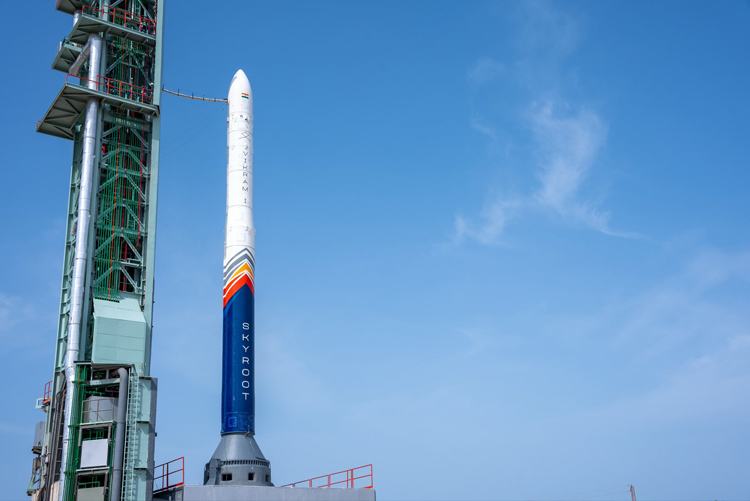
India has entered a new era in space exploration. In a landmark achievement that could redefine the country's commercial space ambitions, Skyroot Aerospace's Vikram-1 successfully reached orbit on its maiden mission, becoming India's first privately developed orbital launch vehicle to achieve this feat.
More significantly, the mission succeeded on its very first attempt, placing India among a select group of nations whose private companies have independently developed and launched orbital-class rockets.
The mission succeeded on its very first attempt, placing India among a select group of nations whose private companies have independently developed and launched orbital-class rockets
The successful launch marks a decisive milestone in India's rapidly expanding private space ecosystem, demonstrating that the country is no longer relying solely on the Indian Space Research Organisation (ISRO) to drive innovation and access to space.
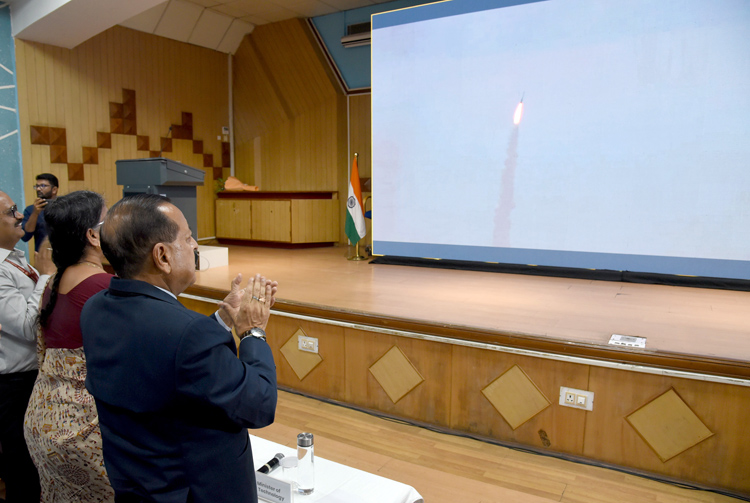
On July 18, 2026, Vikram-1 lifted off from the Satish Dhawan Space Centre on Sriharikota Island at 06:35 UTC (around midday local time on India's southeast coast) after a brief delay of more than thirty minutes to resolve a last-minute technical issue.
Once the countdown resumed, the rocket roared to life as its solid-fuel first-stage motor ignited, beginning a mission that will be remembered as a turning point for India's space industry.
The successful launch marks a decisive milestone in India's rapidly expanding private space ecosystem
The launch profile unfolded precisely as planned. Three solid-fueled stages fired sequentially to propel the vehicle beyond Earth's atmosphere. A liquid-fueled fourth stage then ignited, accelerating the rocket to orbital velocity of nearly 27,000 km/h (17,000 mph) before successfully deploying its payload into low-Earth orbit.
For any new launch vehicle, the maiden flight represents the greatest technical challenge. Globally, many first-generation rockets fail before reaching orbit.
Vikram-1's flawless debut therefore stands out as an extraordinary engineering accomplishment.
Pawan Kumar Chandana, Co-founder and Chief Executive Officer of Skyroot Aerospace, described the achievement as one of the defining moments in India's technological journey.
"We achieved one of the biggest milestones ever in India's space sector—the first private orbital rocket reaching orbit on the very first attempt. It still feels like a dream, and you all made this dream happen."
Founded by former ISRO engineers, Skyroot has become one of the leading symbols of India's emerging commercial space revolution
His remarks reflected years of effort by hundreds of engineers, scientists and technicians who transformed a startup into India's first private company capable of independently placing satellites into orbit.
Founded by former ISRO engineers, Skyroot has become one of the leading symbols of India's emerging commercial space revolution.
Standing 22 metres (72 feet) tall, Vikram-1 is a compact yet capable launch vehicle designed primarily for the rapidly growing small-satellite market.
The rocket can carry payloads of up to 350 kilograms into low-Earth orbit for Earth observation satellites, defence reconnaissance payloads and technology demonstrators.
Vikram-1 is a compact yet capable launch vehicle designed primarily for the rapidly growing small-satellite market
The rocket's architecture combines the simplicity and reliability of solid propulsion with the precision offered by a liquid-fuelled orbital stage. This hybrid approach provides high mission reliability while keeping launch costs competitive.
The successful mission also validates several indigenous technologies developed by Skyroot, including advanced propulsion systems, lightweight composite structures, autonomous flight software and precision guidance systems.
The Vikram-1 mission is much more than the success of a single company.
It demonstrates the transformation of India's space programme following the government's decision to open the sector to private participation. For decades, ISRO dominated all launch activities. However, reforms introduced over the past few years—including the establishment of IN-SPACe and greater private-sector access to launch infrastructure—have encouraged startups to develop independent launch capabilities.
The successful mission also validates several indigenous technologies developed by Skyroot, including advanced propulsion systems
Companies such as Skyroot Aerospace, Agnikul Cosmos, Pixxel, Bellatrix Aerospace and Dhruva Space are now creating an entirely new commercial ecosystem around satellite manufacturing, propulsion technologies, launch services and space applications.
Vikram-1's success validates this policy shift and proves that Indian private industry is capable of delivering world-class launch systems.
The implications extend well beyond commercial spaceflight.
Small launch vehicles have become strategically valuable as governments increasingly require rapid deployment of satellites for communications, intelligence, navigation and disaster management.
reforms introduced over the past few years—including the establishment of IN-SPACe and greater private-sector access to launch infrastructure—have encouraged startups to develop independent launch capabilities
For India, indigenous private launch capability offers several advantages, including faster satellite deployment with lower launch costs.
The growing demand for responsive launch capability has become particularly important as nations build large constellations of small satellites for surveillance and secure communications.
The international market for launching small satellites is expanding rapidly. Thousands of satellites are expected to be launched during the coming decade for broadband internet, climate monitoring, agriculture, maritime surveillance and defence applications.
India has traditionally earned global recognition through ISRO's cost-effective launch services. With companies like Skyroot entering the market, the country now possesses the opportunity to become a major global provider of commercial launch services.
Vikram-1's success validates this policy shift and proves that Indian private industry is capable of delivering world-class launch systems
Private launch providers offer greater scheduling flexibility, dedicated missions and customised orbital insertions—advantages increasingly valued by commercial satellite operators worldwide.
From launching India's first satellite to executing the Chandrayaan and Mars Orbiter missions, ISRO established the scientific expertise, infrastructure and engineering culture that has enabled private companies to flourish.
Rather than replacing ISRO, firms such as Skyroot complement the national programme by expanding launch capacity, accelerating innovation and allowing the space agency to focus on deep-space exploration, planetary science and advanced research.
The successful orbital debut of Vikram-1 marks only the beginning of India's private launch era.
Firms such as Skyroot complement the national programme by expanding launch capacity, accelerating innovation and allowing the space agency to focus on deep-space exploration, planetary science and advanced research
Skyroot is expected to conduct regular commercial launches while developing more capable vehicles capable of carrying heavier payloads. As launch frequency increases, India could emerge as a preferred destination for affordable, reliable and responsive satellite launches.
For India's growing space economy-projected to expand dramatically over the next decade-the success of Vikram-1 sends a powerful message: Indian private industry is now capable of designing, building and operating sophisticated orbital launch systems that meet global standards.
As India seeks to become a leading global space power, the emergence of private launch providers like Skyroot Aerospace complements ISRO's achievements and strengthens India's strategic, economic and technological position.
Manish Kumar Jha is a Consulting & Contributing Editor for SP's Aviation, SP's Land Forces and SP's Naval Forces and a security expert. He writes on national security, military technology, strategic affairs & policies.